All the dirty details on this year’s ‘strange’ mushroom season in Colorado
How to find fungi in the forests of Colorado


Shelby Reardon/Vail Daily
Fungi are already perplexing. They’re not animal, nor plant, but provide crucial support to both while serving as one of the planet’s main decomposers.
But the fruiting bodies of fungi, widely known as mushrooms, are acting especially strange this year in Colorado.
The wet spring was expected to create a moist haven for mushrooms across the state this summer, but the organisms are just starting to appear.
“It’s a very strange season because we’re late,” said Jon Sommer, the president of the Colorado Mycological Society. “We’re three to four late, behind on everything. We had all that rain earlier, we were expecting lots of mushrooms, but they didn’t grow because it was cool.”
Despite a heatwave hitting much of the state in July, soil temperatures remained cool from excess moisture acquired through the spring. So, the summer mushrooms that typically make themselves known when the soil reaches 60 degrees Fahrenheit, remained hidden.

Support Local Journalism
But, they are starting to appear now.
“We’re definitely expecting abundance,” Sommer said. “We haven’t seen it yet, but we’re expecting it.”
Typically, mushroom season begins toward the end of June and can last through September, usually cutting off when it gets too dry or too cold.
The past two years have been especially good for mushrooms despite varying amounts of moisture, so it’s hard to forecast how a mushroom season will turn out.
“2021 was probably one of the best years in 30 or 40 years,” Sommer said.
Mushrooms have been increasing in abundance, as have those searching for them. The popularity in mycology and foraging in general has bloomed over recent years, which reflects in the membership of the Denver-based Colorado Mycological Society.
“We went from 200 members to 2,000 members in five years,” Sommer said. “And during the pandemic it just exploded. It just mushroomed.”
Foraging for fungi
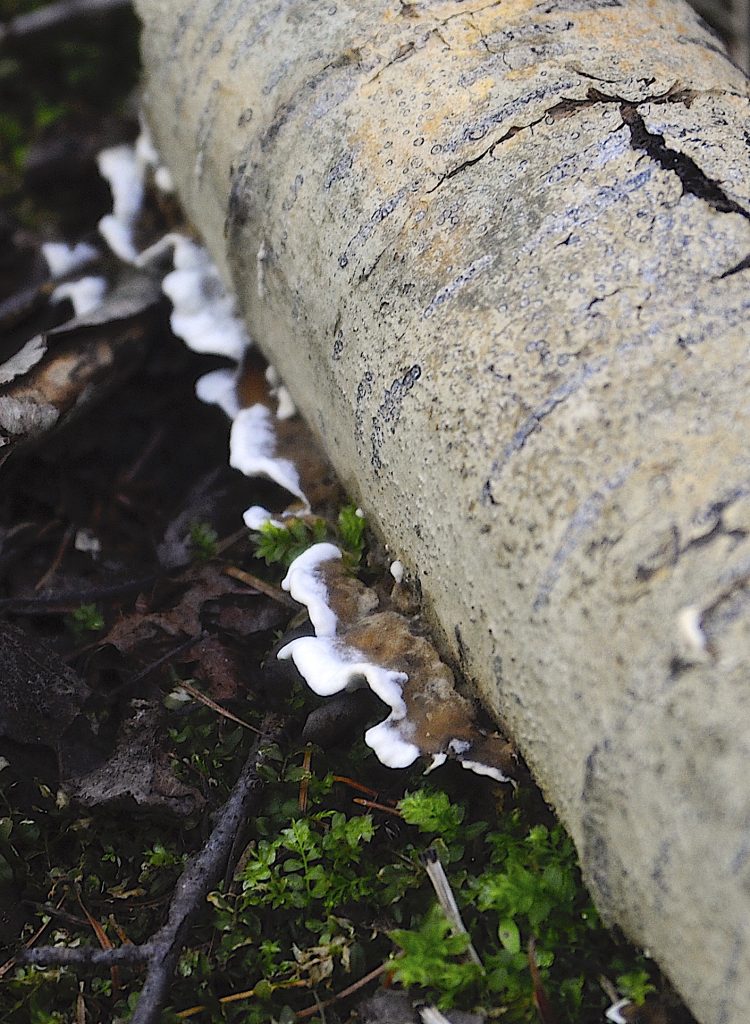
Fungi are literally everywhere across the planet, on every continent. Still, when it comes to finding mushrooms, you have to know where to look. In Colorado, any forest is a great starting point.
Like wildflowers, mushrooms appear at lower elevations first and the “peak bloom” shifts up the mountains.
But there are some important things to know before you start turning over logs.
“You must be skilled enough to identify mushrooms to species to eat it. You never want to do this by just looking on the internet or in a book. You must have hands-on experience with somebody who at least knows that particular species that you’re hunting. That’s the critical thing.”
@fishandfungi – Chris Ricci leads mushroom forays in Southwest Colorado
@foragecolorado – Orion Aon will teach you where to find mushrooms, how to identify and cook them
@blackforager – Alexis Nikole is an expert on all things wild food and how to use them or eat them every day
Some of the most populous mushrooms in Colorado include porcinis, including the boletus rubriceps and boletus edulis.
“They’re relatively easy to identify. They’re big. You can get them 12 inches across,” Sommer said. “They’re delicious edibles when you get them fresh.”
Chanterelles are found on the western side of the state more than anywhere else in Colorado, and are frequently sought out by foragers.
The matsutake mushroom is prized in Japan, according to Sommer, and can be found under lodgepole pines
Mushrooms can be found under trees and alongside rotting logs, but each species has its own preferences, so finding a guide or going with a friend who knows their stuff is best practice when it comes to mushroom foraging.
The biggest reason to go with someone with expertise is to avoid getting sick. Edible mushrooms can be tricky to identify and often have lookalikes that are less friendly.
“We have poisonous mushrooms, we have toxic mushrooms, and we have mushrooms that aren’t good to eat,” said Brian Barzee, a mushroom identification expert with the Pikes Peak Mycological Society. “The toxic mushrooms will make you wish you were dead. The deadly mushrooms can definitely kill you.”
He added that all wild mushrooms must be cooked thoroughly, and to only eat a mushroom when you’re 100% certain of what it is.
“When in doubt throw it out,” Barzee said.
Rules and etiquette

In Western Colorado, there is ample forest to explore to find mushrooms. White River National Forest and Routt National Forest require permits to collect mushrooms for personal use, which are free.
The White River National Forest gives out about 125 permits a year, according to Dillon District Ranger Adam Bianchi. There is no limit on how many permits the forest gives out a year.
Personal use permits are also free in Routt National Forest, while commercial permits are $20. The forest in northwest Colorado also offers specific collection zones.
Mushrooms can be gathered from most Forest Service land, except for wilderness areas, research natural area or special interest area.
Other Forest Service rules include:
- Harvesting is not permitted within 100 feet of a Forest Road, or developed area such as a campground or picnic area.
- Cut or break the mushroom at ground level.
- Raking or similar activities are prohibited.
- Matsutake mushrooms must be cut in half at time of harvest, and cannot be sold.
It’s also common practice to not take all the mushrooms from a certain area. Leaving some behind allows the stash to return year after year.
Searching mushroom community and learning more
Thankfully, finding people who love mushrooms is far easier than tracking down a morel. Finding a mycological society or club is the best place to start and safely forage while learning from others.
There is the Colorado Mycological Society, Pikes Peak Mycological society, and a new Roaring Fork group forming out of Carbondale, said Sommer.
The nonprofit groups teach classes, have monthly forays and host lectures to educate those fascinated by fungi.
The Colorado Mycological Society is working on publishing a book about foraging mushrooms that will include information on about 70 edible species of mushrooms in the state.
U.S. Forest Service Offices provide pamphlets and books for people seeking mushrooms as well.
“We definitely always encourage people to bring mushroom guides with them in case they are not super confident about the mushrooms they’re taking,” said Marissa Herzog with the Dillon Ranger District.
Thanks to social media and the surge in foraging interest, there’s never been more resources to learn about mushrooms and other foraging.
Eagle’s mushroom festival, which was canceled in 2023, is normally a great educational event as well. Aspen Ideas Festival hosted TikToker Alexis Nikole for a foraging hike and cooking session, literally feeding people’s desire to learn more about mushrooms.