Should Colorado establish a constitutional right to hunt and fish? Amendment 83 asks voters to decide.
Supporters and opponents of the petitioned ballot measure do not agree on its necessity, what it will mean for future wildlife management and more

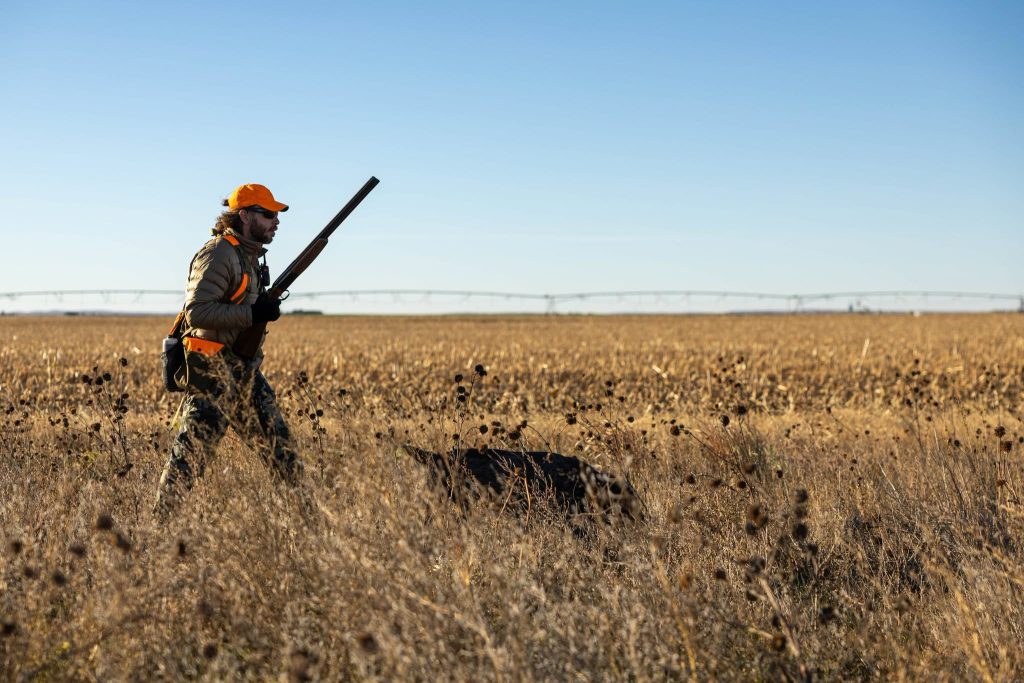
Colorado Parks and Wildlife/Courtesy Photo
In November, Coloradans will be asked whether the right to hunt and fish should be enshrined in the state constitution, defining those activities as the preferred way to manage the state’s wildlife.
Amendment 83 was brought forward by a conservative law firm, West Group, but has been largely funded and supported by the International Order of T. Roosevelt, a Wisconsin-based hunting advocacy nonprofit that has been working to establish similar constitutional rights in multiple states.
Advocates argue the measure would help protect hunting and fishing from a growing number of threats from advocacy groups, the Colorado Parks and Wildlife Commission and lawmakers. They claim its passage will maintain the status quo in wildlife management in Colorado.
Opponents, however, argue that a recreational activity does not belong in the Constitution. They claim that there are already statutory protections for hunting and fishing opportunities, and, if passed, it would also reduce Parks and Wildlife’s flexibility to manage wildlife and lead to more lawsuits.
What would Amendment 83 do?
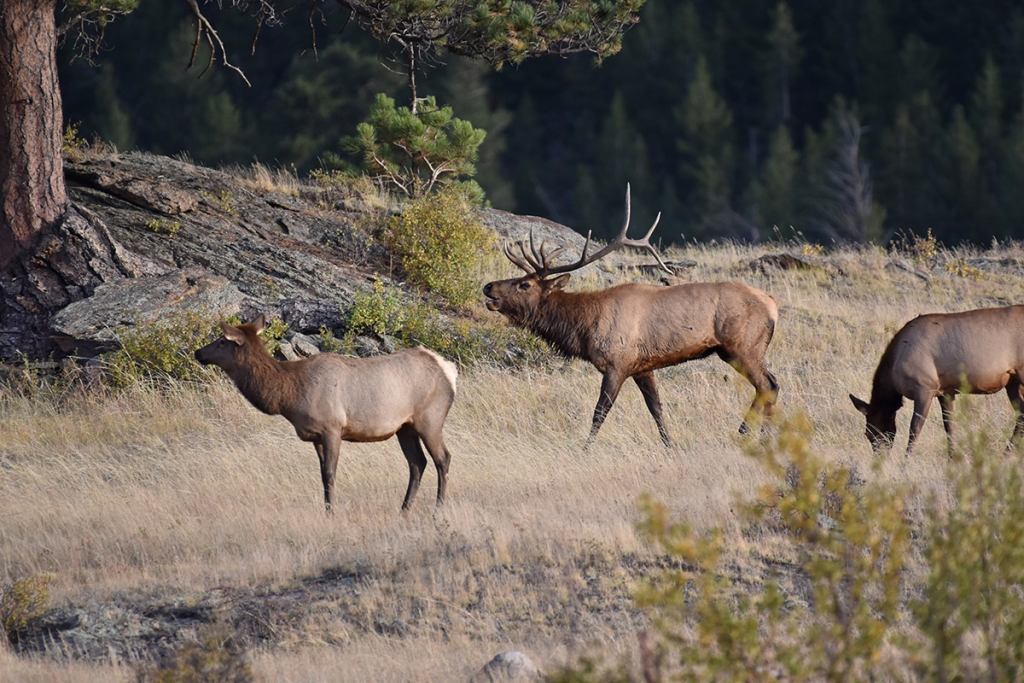
Amendment 83 would create a new right in the state constitution to hunt and fish certain wildlife. It would also establish hunting and fishing as the “preferred means” of managing fish and wildlife, according to Colorado’s nonpartisan ballot information booklet.

Support Local Journalism
As a constitutional amendment, it requires 55% of the vote to pass.
The right would apply to “traditional” hunting and fishing methods — a term that has spurred debates between the measure’s opponents and proponents — and not to species that are not typically hunted or fished as well as endangered species and those illegal to hunt under federal law.
Currently, state law requires that Colorado Parks and Wildlife protect, preserve, enhance and manage wildlife and their environment for the use, benefit and enjoyment of residents and visitors. This statute — Title 33 — declares that “the state shall utilize hunting, trapping and fishing as the primary methods of effecting necessary wildlife harvests.”
Parks and Wildlife — and its governor-appointed commission — guide Colorado’s current hunting and fishing regulations, including setting seasons, limits, allowable areas and methods as well as license and permit requirements.
As an enterprise agency, Parks and Wildlife’s revenue comes almost entirely from the sale of licenses, state park passes and other fees. In fiscal year 2025-26, hunting and fishing license sales alone generated around $123.92 million — nearly 44% of its total revenue. The state agency issues around 1.7 million hunting and fishing licenses annually.
Supporters say Amendment 83 is a response to rising threats against hunting and fishing
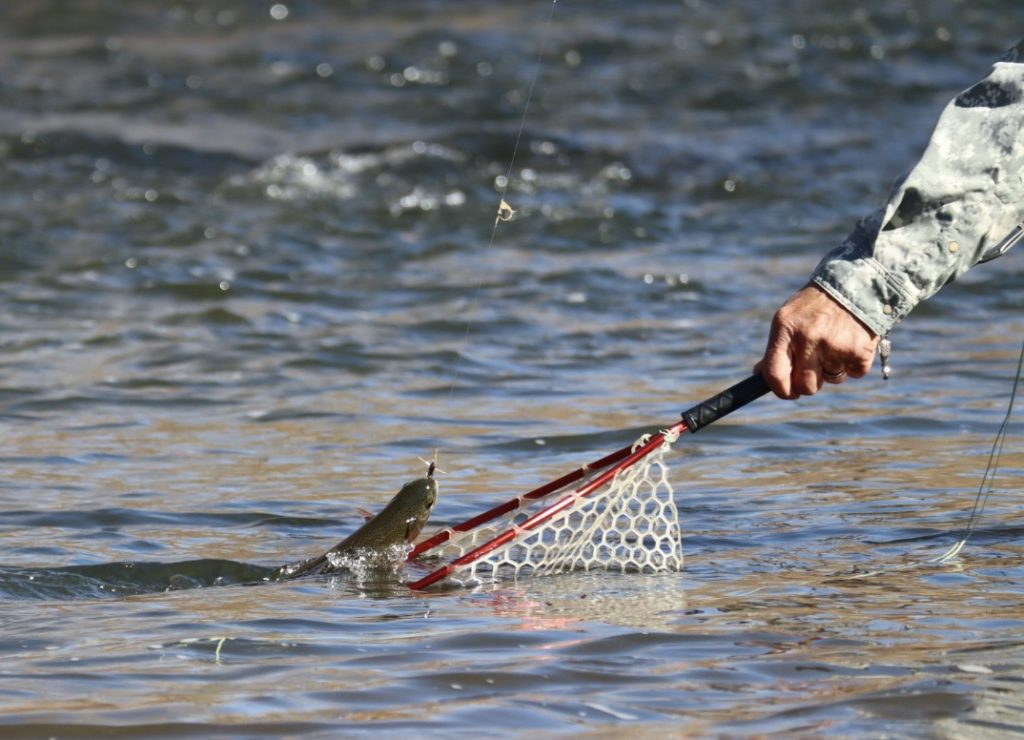
Amendment 83 started as a citizen petition filed by West Group, but has been primarily backed by the International Order of T. Roosevelt, which has contributed around $1.6 million to committees supporting the measure. Two committees — Vote Yes on 83 and Colorado’s Wildlife Deserve Better — have reported raising just over $2 million and spent around $1.9 million to fundraise and campaign for its passage, according to the latest secretary of state filings.
Travis Thompson, the Florida-based director of policy and coalitions for the International Order of T. Roosevelt, said the nonprofit has been working to establish constitutional rights for hunting and fishing in states without one to protect them as conservation tools and due to a belief that “science should drive wildlife policy, not voters at a voting booth.”
Vermont was the first state to have a constitutional right to hunt and fish in 1777. Florida was the most recent, after the International Order of T. Roosevelt led a successful ballot measure there in 2024. If passed, Colorado would become the 25th.
“IOTR was seeing states without constitutional protections,” Thompson said. “Regardless of political views of a state, the states that don’t have a constitutional right to fish and hunt saw more pushback on hunting from animal rights activists — actually I’ll say animal rights extremists — because all of us are ultimately animal rights activists to some degree.”
Colorado, Thompson said, has seen “a lot of pushback against hunting and fishing,” with “extremists” not necessarily looking to outright ban hunting and fishing, but taking an incremental approach through the imposition of species-specific bans or limits.
Dan Gates, executive director of Coloradans for Responsible Wildlife Management and president of the Colorado Trappers and Predator Hunters Association, said that hunting and fishing are “imperative” in Colorado, not only as a part of the North American Model of Conservation and as an economic driver that provides Parks and Wildlife with critical funding, but as a food source for generations of people who have maintained the activities as part of their heritage and lifestyle.
Gates said that the constitutional amendment is the state’s sportsmen and women going “on the offense to try to prohibit some of the attacks and the assaults that have been continually thrown at Colorado Parks and Wildlife, science-based wildlife management and at sportsmen and women.”
Proponents say attempts to alter Colorado’s hunting and wildlife policies have come through legislation, citizen petitions, the Parks and Wildlife Commission and statewide ballot measures.
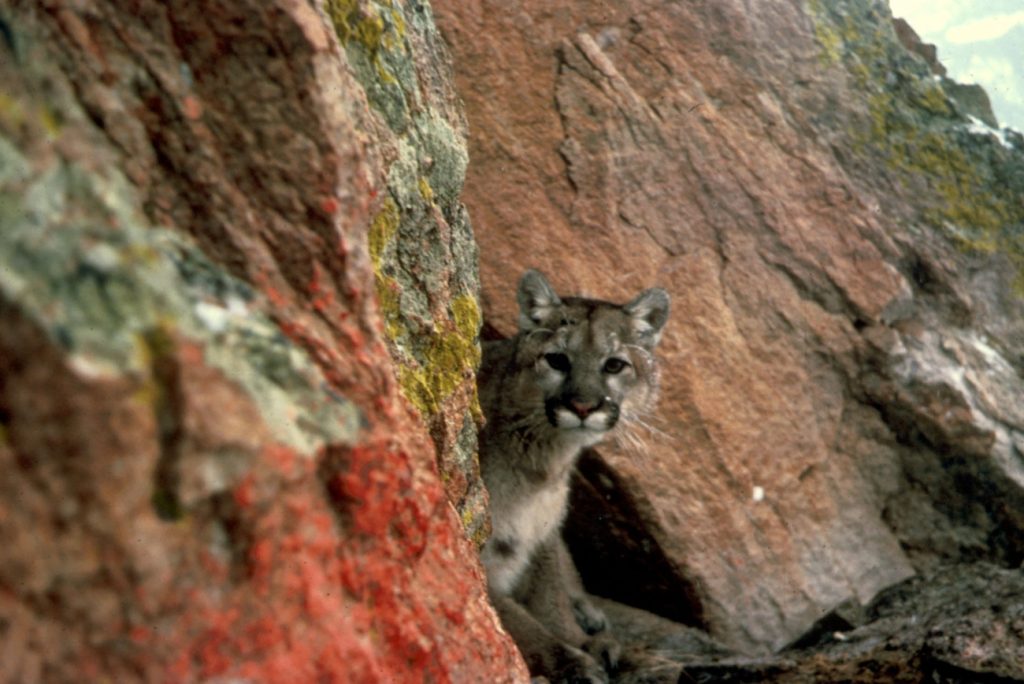
This includes Senate Bill 22-031, which, while ultimately was killed, attempted to ban big cat hunting, and Proposition 127, the failed 2024 measure that aimed to bar the same activities over ethical and scientific concerns. It also includes House Bill 25-1258 — an unsuccessful act that attempted to remove Colorado’s statutory language around hunting, trapping and fishing — as well as a failed citizen petition to bar commercial fur sales and a July vote by the commission that imposed a daily limit for the 17 small carnivore species the state classifies as “furbearers,” against the agency’s own recommendation. Previously, unlimited hunting of these species was allowed with a permit.
“I do not think hunting disappears tomorrow if Amendment 83 fails. The concern is the direction of travel,” said Charles Whitwam, founder of California-based Howl for Wildlife, a digital advocacy platform designed to mobilize against anti-hunting legislation across all 50 states and in Canada.
Proponents argue that while Colorado state law currently authorizes and regulates hunting, this can be changed. Amendment 83 would “raise the bar” for how wildlife-related decisions are made in Colorado, Whitwam said.
“It creates a constitutional right and places the standards for restricting that right — including sound scientific wildlife conservation and management, public safety and preserving future hunting and fishing opportunities — into the Constitution rather than leaving the entire question to ordinary statute,” he said. “The right to hunt and fish helps make sure future attempts to rewrite wildlife policy through the ballot box face a higher standard, especially when those efforts would undermine a constitutionally protected opportunity.”
Whitwam added that there is an important distinction between this measure and the “ballot box biology” like Proposition 127 that the proponents want to make more difficult to pass.
“Amendment 83 does not set a lion quota, season length, bag limit or population objective. It establishes a constitutional framework while leaving wildlife management in the hands of the agencies and professionals responsible for it,” he said.
Opponents see it as an ‘unnecessary’ measure with long-term consequences

Figures like Gov. Jared Polis and Attorney General Phil Weister, the Democratic candidate running for governor in November, are joining conservation and wildlife groups in speaking out against Amendment 83.
So far, two issue committees — Protect Colorado’s Constitution and Colorado Hunters and Anglers for Sensible Wildlife Conservation — have reported raising around $168,730 and spending around $121,423 to campaign against its passage, according to filings from the secretary of state. Two other committees have registered but have yet to file any contributions or expenditures.
Opponents argue that Amendment 83 is an unnecessary change that will have long-term consequences and lead to lawsuits. They claim it will lock citizens out of wildlife decisions, irresponsibly prioritize hunting over other tools and believe it is a veiled attempt to bring back currently illegal methods of hunting and fishing like leghold traps, poisons and more.
Gary Skiba, retired Colorado wildlife biologist, wildlife program manager for the San Juan Citizens Alliance and board member for the Rocky Mountain Wolf Project, said that the constitution is not where the activities belong.
“Hunting is not a right. Hunting is a privilege. It has always been a privilege. It will always be a privilege,” Skiba said, adding that it should be regulated like driving or other privileges, with licenses, rules and penalties.
“It should not be considered a right any more than you should have a right to hike or paddleboard or any other recreational activity,” he said. “If it’s a right, that elevates it to the same thing as your right to free speech, which can be restricted in some ways, but only under very, very extreme circumstances.”
The measure’s supporters argue that the difference is that other recreational activities are not under attack. “I see threats to hunting and fishing every day. I do not see threats to skiing or snowboarding every day — or at all,” Whitwam claimed.
Garrett Royer, political director of Sierra Club Colorado, said the opposition’s main concern is “just how unnecessary this ballot measure is.”
“What it is essentially trying to do is already protected within state statute and going an extra step to ensure that a right to hunt and fish is constitutionally protected would just create more redundancies and issues down the line,” he said. “We think that wildlife policy should be fundamentally managed by the people of Colorado and the legislature and not ultimately by the courts, which is where I think that a lot of potential decisions might end up being made if 83 were to pass on the ballot this year.”
This has led opponents to argue that something else is motivating the measure.
“Its intent is clear,” Skiba said. “They want to prevent others from using the ballot initiative process to influence wildlife decisions and to give them the ability to legally challenge any decision made by the legislature or the commission in terms of wildlife management.”
Will Amendment 83 lead to lawsuits and the reversal of current hunting bans?
One of opponents’ main concerns with the measure is that the uncertainty created by its vague language could affect wildlife management and eventually lead to the repeal of existing bans on types of hunting.
“There’s just so many things that aren’t defined that it’s, in a sense, inviting litigation,” said Jennifer Best, director of the Friends of Animals Wildlife Law Program. “And that means that Coloradans’ taxpayer money may be spent litigating these questions rather than just focusing on what’s the best way to manage wildlife.”
Colorado’s voter booklet acknowledges that the measure could “result in increased legal costs for the state,” both for the agency to adopt new rules and regulations or to fight possible legal challenges to new or existing rules.
Proponents have acknowledged the possibility of future litigation.
“Could someone file a lawsuit over a particular regulation? Yes. That is possible whenever a new constitutional right is adopted,” Whitwam said. “I do not think supporters should promise that no litigation could ever occur. But ‘someone could challenge a regulation’ is very different from saying Amendment 83 automatically legalizes every previously prohibited hunting method. It does not.”
A few phrases used in the measure — “sound scientific wildlife conservation,” “traditional methods” and “preferred means” — are likely to require litigation to define. One major concern for many lies with the measure’s assertion that the right applies to the “use of traditional methods” without defining them.
Proponents claim that “traditional methods” apply only to what is legal at the time of passage.
Thompson, with the International Order of T. Roosevelt, said Amendment 83’s language — including “traditional methods” and “preferred means” — is the same in 12 of the 24 states that have passed a constitutional right to hunt and fish.
“It’s a pretty safe amendment. … It doesn’t undo anything. It really, truly is a proactive measure to protect hunting and fishing,” Thompson said, describing opponents’ claims about the language as “fear-mongering” and “pure baloney.”
“This right isn’t some magical right that allows you to just run around like the Wild, Wild West,” he said. “It’s simply protecting one of the most important conservation tools we have in this country, and a tool that benefits all Coloradans and all Americans.”
Adam Sopko, an associate professor of law at the University of Colorado Law School where he teaches state constitutional law, said that “the group that is backing this made a choice in being vague about this,” adding that in looking at the text, it was not clear what problem they are trying to solve with the right, referring to it as “diffuse and atmospheric.”
Sopko, who expressed neither support nor opposition to the measure, said the language “is giving a lot of discretion to the courts.” He added that defining what traditional means are, whether the constitutional right would supersede older laws banning certain hunting and trapping methods, and whether future bans on species-specific hunting could outrank a constitutional right to hunt and fish are all questions a court would have to decide.
Eric Washburn, president of the opposition committee, Colorado Hunters and Anglers for Sensible Wildlife Conservation, is a Steamboat Springs resident and big game hunter.
Washburn said that while he likely speaks for the minority of hunters, he has supported Colorado’s hunting regulations over the past 40 years, including the 1996 voter-approved constitutional ban on leghold traps, snares and poisons; the 1992 voter-mandated statutory ban on spring hunting seasons as well as the use of bait and hounds for black bears; and the commission’s 2020 ban on wildlife killing contests.
“I’m really proud of Colorado for banning them in the first place because I don’t think they belong in an ethical system of hunting and harvesting, and I think the hunting community would do well to respect that instead of trying to overturn it,” Washburn said, adding that while 83 will not immediately reverse these, it is a “backdoor way” to do so.
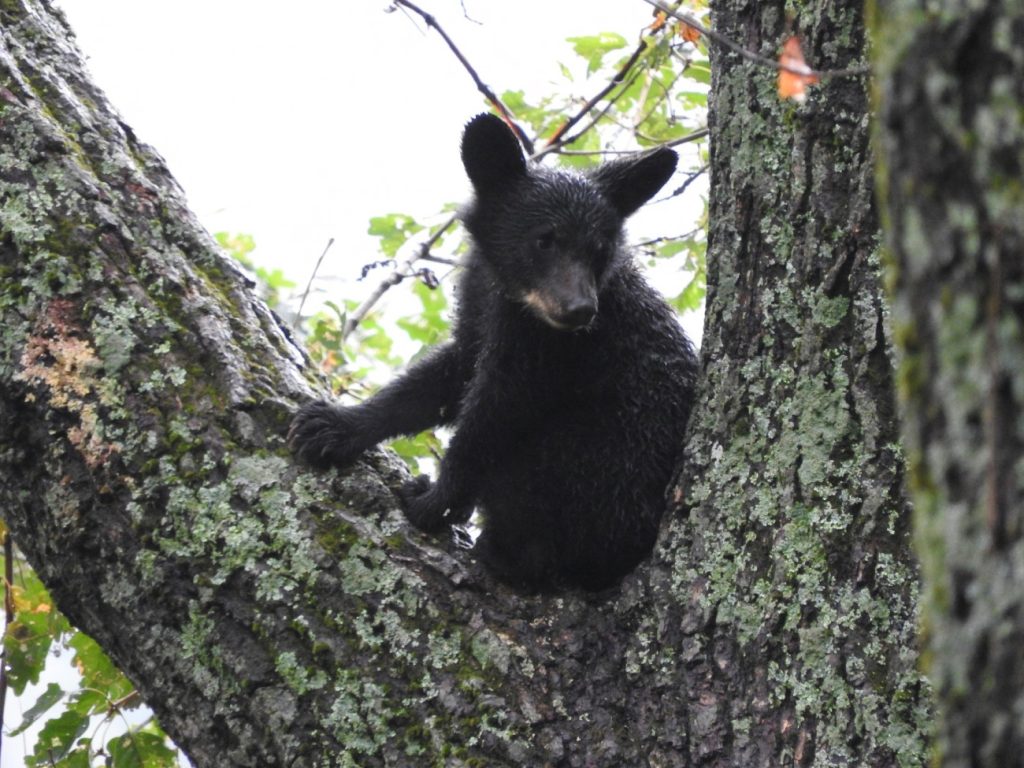
Opponents have pointed to recent interviews and podcasts from proponents as evidence that individuals would use the Amendment 83’s passage to try and overturn some of these previous regulations. This includes an article from Wyoming’s Cowboy State Daily in August, where Gates is quoted as saying that “CPW’s hands are tied” by the 1992 ballot initiative when it comes to bear hunting regulations. It states that Gates and other Coloradans would like to “see a reinstatement of the state’s spring bear hunting season, as well as allowing hunters to use bait or hounds” amid this year’s increase in bear activity due to drought.
While there are season and method restrictions, black bears can be legally hunted in Colorado with permits.
In his interview with the Aspen Times on the measure, Gates said that the constitutional right would work in parallel with the state’s existing bans.
“If somebody wants to change any of that stuff, that’s their prerogative down the road,” Gates said. “But I want to emphasize, those tools are available for somebody to go back and change that now. They could have gone back at multiple levels, and they did at several different occasions to the legislature to try to bring back bear hunting in some capacity or to at least alleviate some of the restrictions that have been put on Colorado Parks and Wildlife.”
What would Amendment 83 mean for wildlife management?
Neither side agrees on what Amendment 83 would mean for wildlife management in Colorado.
The measure would establish hunting and fishing as the “preferred means of responsibly managing fish and wildlife,” while stating the right “does not limit the authority” of any state agency or the legislature to regulate these activities “if the law is necessary for sound scientific wildlife conservation and management, public safety or to preserve the future of hunting and fishing opportunities for all species statewide.”
Gates said the measure would merely “solidify Colorado’s wildlife management opportunities with using hunting and fishing” and add a “legitimate line of defense and a protocol” so that wildlife has to be managed from “a science-based perspective as opposed to an ideological perspective.”
“It just stops the ability for those individual groups or entities or organizations, maybe administrations, from changing the way that the experts manage our wildlife resources,” Gates added. “It just allows them to continue to do what they’ve been doing without political interference or public intervention by unknowing individuals who are trying to impose their beliefs and not the facts and the data.”
Whitwam added that hunters share the desire to conserve and protect wildlife species.
“A right to hunt or fish is meaningless without healthy wildlife and fish populations to exercise that right on,” he said.
Opponents, however, argue that not only would the measure grant the courts a lot of power, but it would restrict a core tenet of Colorado’s current wildlife management: the flexibility to adapt to changing science and environmental conditions.
“I think the biggest concern is that it’s mandating that hunting and fishing are the preferred means of managing wildlife,” said Best with Wildlife for All. “What that’s going to do is take away input from experts and take away input from all Coloradans and push away evidence so that hunting has to take priority over other measures, even if the other measures might be better for the wildlife and they might be better for other recreation and they might be better for balanced ecosystems.”
Royer with the Colorado Sierra Club acknowledged that while Colorado’s wildlife management is not perfect, he said it “needs the perspectives and representation of folks that are game hunters, but it also needs the perspectives of folks who are more interested in public lands management and wildlife management and the larger ramifications.”
“The current system needs to make sure that it is responsive and flexible for the changing times because what CPW is ultimately responsible for is habitat restoration, biodiversity, disease management, relocation, research — a number of priorities — and by putting such vague language in the state constitution, it doesn’t allow CPW to retain that flexibility that it currently needs to have,” he added.
Amendment 83, Best added, is an example of out-of-state interests attempting to impact what should be left up to the experts and individuals living in Colorado.
“If Coloradans decide that certain regulations are reasonable and they want wildlife to be driven by other goals, like protecting ecosystems and protecting a variety of recreation, then Coloradans should be able to do that,” Best said. “They shouldn’t sort of be stuck in the past or stuck in this idea that hunting and fishing is the only way to manage wildlife.”
Colorado’s midterm election is on Nov. 3. Ballots were mailed to registered voters starting Oct. 2. Check your voter registration status at GoVoteColorado.gov.