Colorado’s record-shattering water year was ‘ridiculously warm,’ a little bit ‘scary’ and offered a ‘new perspective’ on how climate change will affect the state
The Colorado Climate Center’s Water Year 2026 in Review report details how the past 12 months smashed temperature records

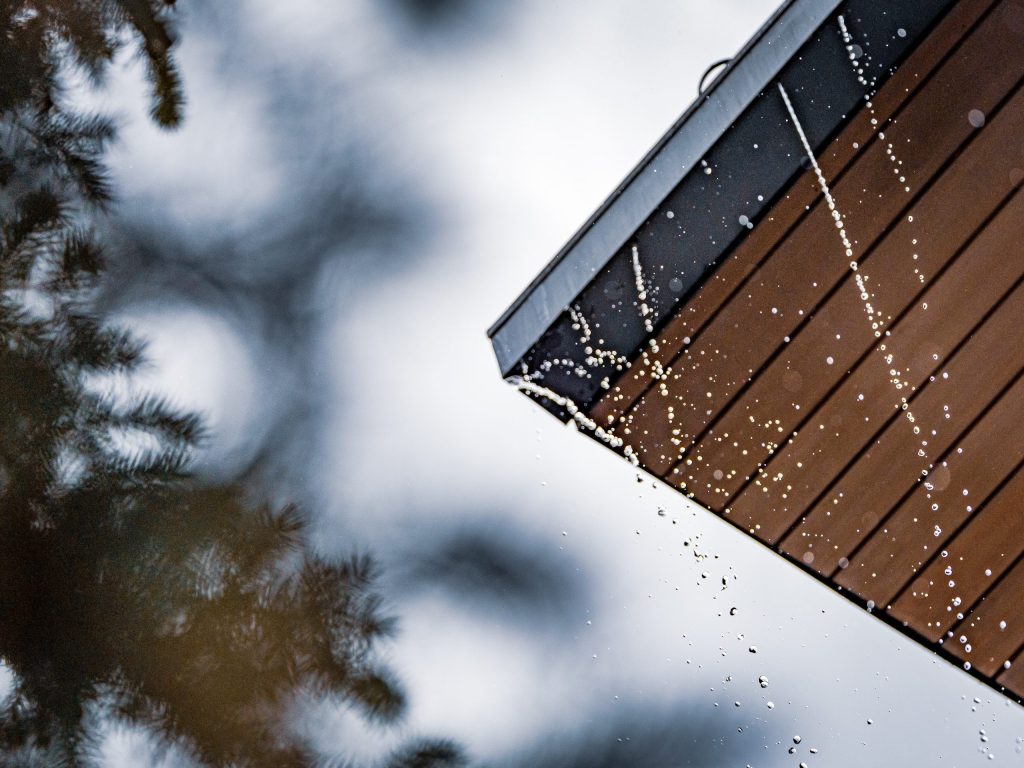
Austin Colbert/The Aspen Times
Colorado climatologists say the past water year was one for the record books.
The 2026 water year smashed heat records across the state and was also one of the driest on record, according to an annual report published by the Colorado Climate Center on Tuesday, Oct. 20. The hot, dry conditions produced Colorado’s worst winter snowpack in history and severe drought conditions that had ripple effects across the state, from water shortages to economic impacts.
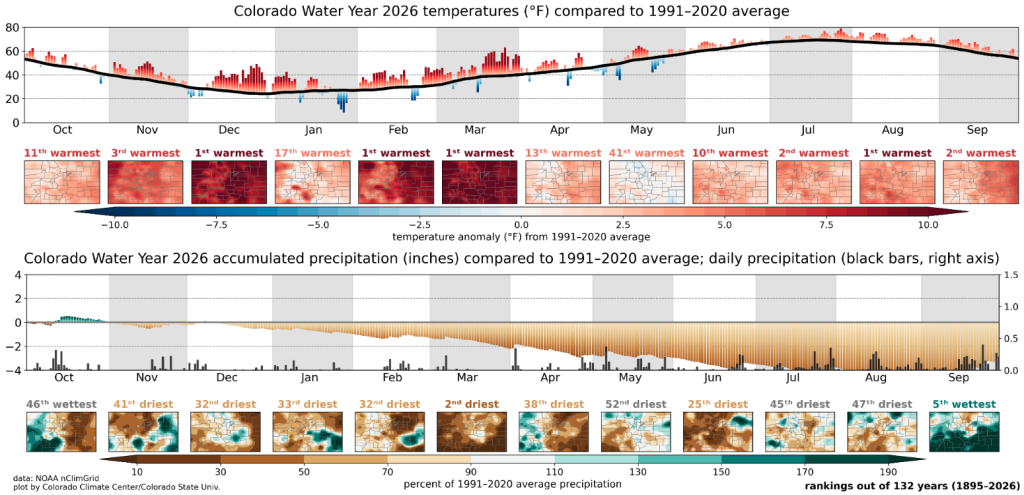
“The piece that stood out the most this year was the record-setting heat we had,” said Allie Mazurek, the engagement climatologist with the Colorado Climate Center. “It was just ridiculously warm the last 12 months. It wasn’t like we just had some one-off months — every month we experienced over the past 12 months was above-average.”
Because it tracks better with seasonal weather patterns, climatologists often follow the water year that begins in October, rather than the calendar year. The past water year began Oct. 1, 2025, and ran through Sept. 31, 2026.
The months of December, February, March and August were all the hottest ever documented in Colorado, which has 131 years of records, according to the report. November went down as the third warmest November on record and both July and September were the second warmest.

Support Local Journalism
Statewide, the report found that temperatures during the 2026 water year were 4.5 degrees Fahrenheit above the 1991-2020 average — and more than 2 degrees warmer than the previous hottest water year on record.
Amid climate change, Mazurek said it’s not surprising that Colorado experienced a year with above-average temperatures — but she said the water year was so hot that she expects it to stand out for years to come.
“The last couple decades for sure we’ve seen that warming trend across the state really start to ramp up,” Mazurek said. “But I will say, this year, at least in terms of temperatures — we know it was pretty unprecedented but I also don’t think it’s necessarily the new normal that we should expect for Colorado going forward, at least in the next couple decades.”
Still, some of the impacts of the hot, dry conditions Colorado experienced during the 2026 water year were “kind of scary,” Mazurek said — and exposed issues that the state will have to continue to contend with as the climate is projected to continue warming.
The low-snow winter led to the lowest ski visitation in Colorado in more than 35 years — and carried over into the summer season as drought led to campfire bans and record-low streamflows that impacted the state’s outdoor recreation industry. The severe drought helped fuel devastating wildfires, including the Aspen Acres Fire that destroyed hundreds of homes near Pueblo and several other major blazes that forced thousands to evacuate. The hot, dry conditions also exacerbated the long-term water crisis on the Colorado River, which supplies water to more than 40 million people across seven states.
“I think it gives a new perspective on how bad things can get in our state as a result of these warm temperatures and precipitation (patterns),” Mazurek said of water year 2026. “I do think this year pushed the bounds of what even scientists thought might be possible at this point of climate change.”
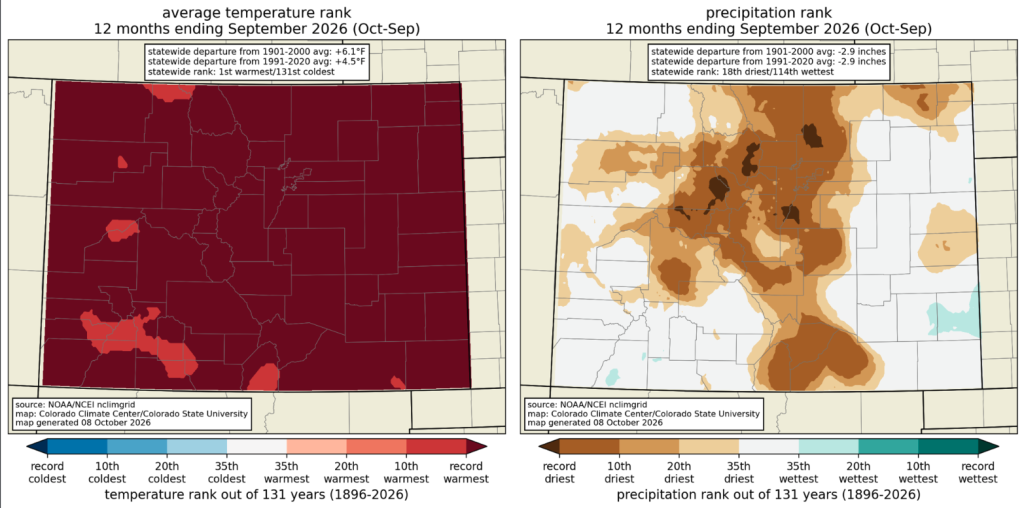
Hot, dry weather dominated the 2026 water year
March stood out as one of the most anomalously hot months due to a heatdome — or a ridge of high pressure — that set up over the West, deflecting storms and trapping heat over a multi-state region, Mazurek said. Temperatures averaged 9.8 degrees Fahrenheit above normal in Colorado that month as nine other states also experienced their hottest March on record, she said.
March was also the third driest on record in Colorado — and, when combined with the heat, the conditions fueled a rapid retreat in the state’s already poor winter snowpack. As of April 1, 60 of the state’s 64 snow course sites with data dating back at least 50 years reported record-low snowpack, according to the report.
The data shows that a few snow course sites that never had less than 4-6 inches of snow water equivalent on April 1 reported no snow at all on that date during the past water year. That includes a site in Routt County that had never recorded less than 6.5 inches of snow-water equivalent and one in Grand County that had never recorded less than 5.8 inches.
March was so hot in Colorado, that temperatures statewide averaged higher than in April, which was the 13th warmest ever recorded in the state, according to the report.
But the entire winter featured above-average temperatures — and below-average precipitation, according to the report. Mazurek recalled reports of rain at some ski resorts on Christmas Day amid what was a record-hot December. The January to March period was also the fourth driest on record for the state — and among the 10 driest on record for most of the mountain region, the report states.
Then, Colorado also experienced its hottest spring and summer on record — with the report noting that historically bad snowpack resulted in a poor runoff season that left streams and reservoirs at record-low levels.
There were more heatwaves in Colorado in the 2026 water year than any year dating back to at least 1951, according to the report. Three of the top 10 heat waves on record that were documented in Colorado occurred during the last water year, and the heatwave from July 25-28 was the hottest statewide ever recorded.
Some locations in Colorado saw more than twice as many 90-degree days than average, the report states. Steamboat Springs, for example, saw 29 days where the temperature exceeded that threshold — almost five times as many 90-degree days as the 1991-2020 average, according to the climate center.
While water year 2026 ranked as the 13th driest on record statewide, Mazurek said that two wetter months — October 2025 and this past September — masked how dry it was the rest of the year. Remove those two months, and the November through August period ranked as the third driest.
Colorado’s central mountain region and Front Range urban corridor experienced some of the worst precipitation deficits, with the report finding that some areas recorded a water year that ranked among the top 10 driest, according to the report. These regions were also at the epicenter of some of the worst drought conditions throughout the year.
“The lack of precipitation definitely drove some of those drought conditions, but the heat also played a major factor there,” Mazurek said. “We saw kind of ridiculous off-the-chart levels of evaporative demand, which is a metric for how thirsty our soils are.”
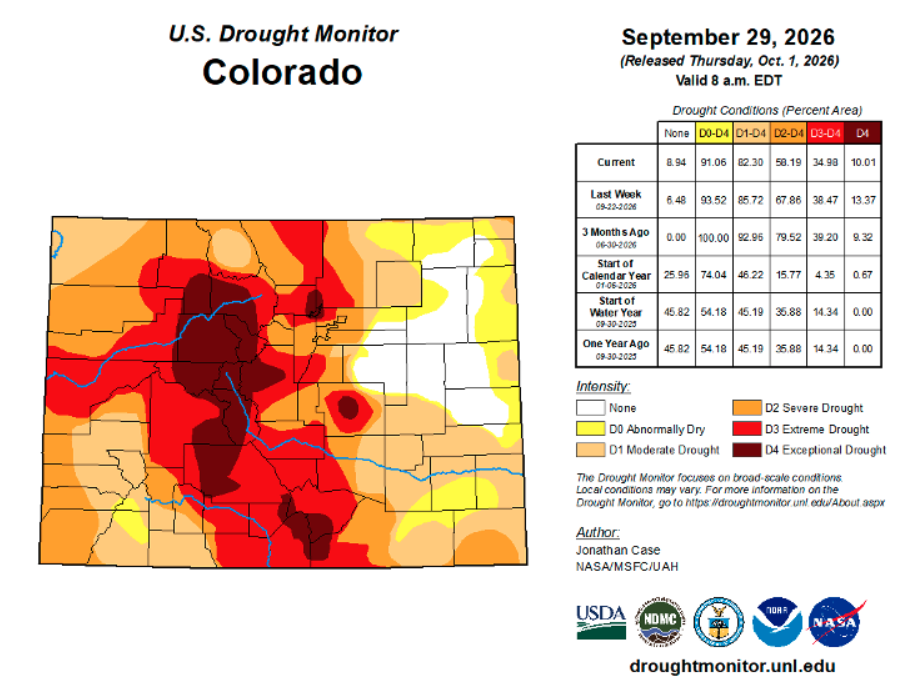
At the start of the water year, Colorado’s Western Slope was already experiencing drought, while most of the eastern half of the state remained drought-free. But by the end of water year 2026, 82% of Colorado was experiencing some level of drought and nearly one-third of the state was experiencing extreme drought, Level 3 of 4, or worse, according to the U.S. Drought Monitor.
The report notes that parts of Garfield and Pitkin counties have experienced “relentless drought” with extreme conditions for 15 straight months and counting.
Several weeks into the water year 2027, Mazurek noted that October so far has been rainy, with above-average precipitation throughout much of southern Colorado and parts of the Western Slope.
With the strong El Nino pattern that has developed in the Pacific Ocean, there is some evidence to suggest that Colorado — especially southern parts of the state — could see higher levels of precipitation in the coming months, she said. But the so-called “super El Nino” also doesn’t guarantee a snowy winter.
“El Nino is here and it’s very strong, so that will no doubt be influencing the climate system globally,” Mazurek said. “How that translates to affect us locally is still to be determined.”
But Mazurek noted that the water year has also started with above-average temperatures across the state, continuing the long streak of hotter-than-average months seen throughout the previous water year. In the mountains, she said temperatures so far this month have been about 4-6 degrees above average.
Because of the deep deficits in water year 2026, Mazurek said it would require significant precipitation in water year 2027 for Colorado’s mountain region to see relief from the severe drought.
“Even at the end of the water year and a few weeks into the new water year, we still see a lot of those extreme to exceptional drought conditions, especially over a lot of our mountain areas,” she said. “That’s really a result of having these long-term deficits that, even with recent precipitation, haven’t fully alleviated the major hydrological drought that those places are experiencing.”