Eagle County’s hazy skies are expected to become rainy skies later in the week
Much of Western Colorado impacted, could last through the week

Vail Daily archive
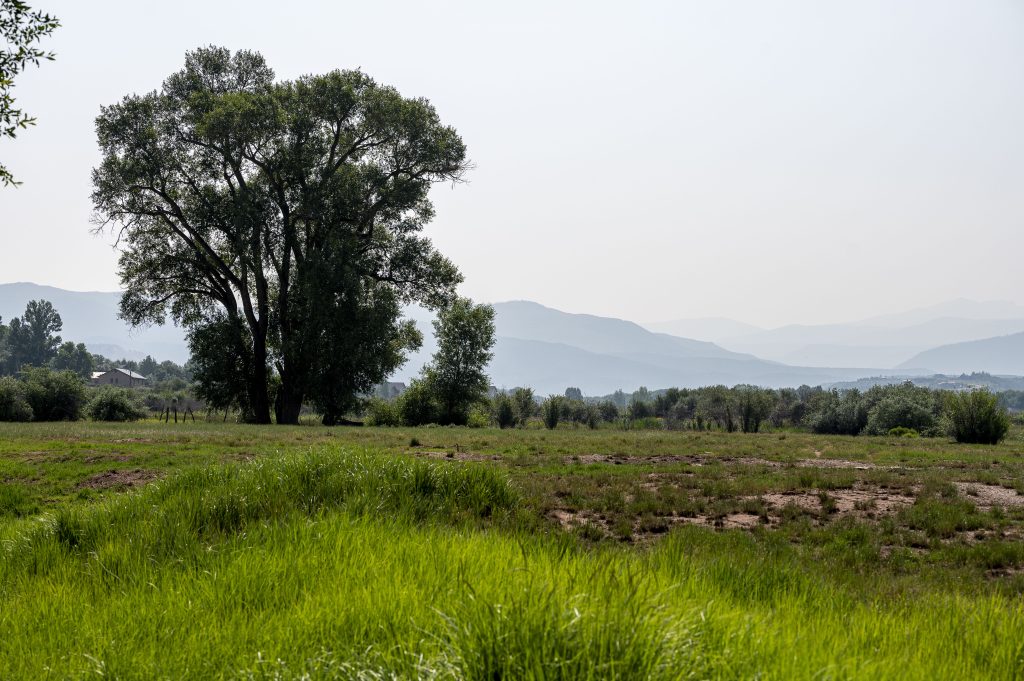
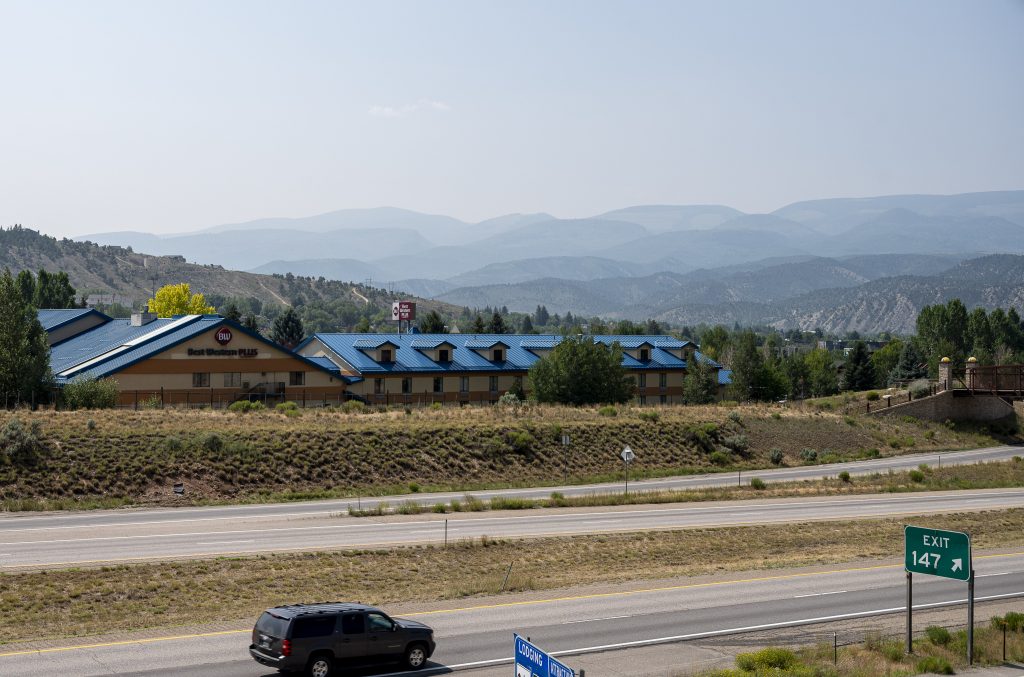
A high-pressure system north of Colorado is bringing smokey air into the state from wildfires in Canada and could continue to do so throughout the week, according to the National Weather Service.
Much of Colorado will continue to see moderate-to-low air quality as winds swirl clockwise, said Tom Redwick, a meteorologist with the National Weather Service in Grand Junction.
“We’re thinking maybe, hopefully, on Friday, that system might move through and the winds become more southerly,” he said. “If it doesn’t happen Friday, then maybe Saturday,” he said.
The other natural force that could affect the air quality is rain, Redwick said, which could also bring clearer skies. And plenty of rain might be headed our way as a push of monsoonal moisture is expected by late week, Redwick said. Thunderstorms could result.
The potential for monsoon moisture prompted the National Weather Service to issue a hazardous weather outlook for the Eagle County area on Tuesday, saying isolated to widely scattered thunderstorm development is possible again on Tuesday and Wednesday over the higher terrain of eastern Utah and western Colorado.

Support Local Journalism
“Gusty outflow winds and localized moderate to heavy rainfall rates will be the main threats through sunset,” according to the outlook.
Redwick said if the hazy skies are worse in the mornings, it’s probably due to winds dying down at night.
“During the day, you have some mixing and the wind can churn up the smoke and haze so it’s not as dense,” he said.
To the north, about 170 wildfires are burning across the Albertan province in Canada, forcing evacuations in a repeat of a scenario the country also witnessed during the summer of 2023.
A record number of wildfires in 2023 forced more than 235,000 people across Canada to evacuate and sent thick smoke into parts of the U.S., according to the Associated Press. Eagle County was also impacted by reduced air quality at that time.
On Tuesday, roughly 25,000 visitors to Canada’s Jasper National Park fled west over the last mountain road remaining open in the area, but those people were told to make a U-turn and head east if they needed a place to stay, because another 300 wildfires were burning in the British Columbian province to the west.
Wildfires are also burning south of British Columbia in the Northwestern United States, but the fires sending smoke into Colorado are likely to be those burning in the Albertan province.
“Where that high pressure is located, it’s almost directly to the north, so it’s bringing all that smoke down here,” Redwick said.