Eagle rock climber Lucie Hanes isn’t your average Leadville 100 Trail Run silver medalist
The 29-year-old freelance writer and sports psychologist, who has autism and battled an eating disorder last year to take second in her debut 100-mile race, started running in 2018
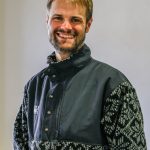

Life Time/Courtesy photo
Lucie Hanes can’t recall any poignant moment in her past where she envisioned winning an ultra trail race.
Makes sense.
The pro rock climber’s running story only started in 2018.
“Those miles you had to do for fitness tests — I would walk those,” said Hanes, who admitted to likely “never running a step in high school.”
“I was not a runner before this at all.”

Support Local Journalism
Last Saturday, the 29-year-old Eagle athlete took second place in the women’s Leadville 100 Trail Run, completing the course in 23 hours, 16 minutes and 51 seconds.
A Scarpa-sponsored runner and climber, freelance writer, media event director and sports psychologist, Hanes wears many hats — “too many hats!” she laughed. Her story of resiliency, reward and redemption extends beyond the outdoor adventure community, too. She’s battled an eating disorder since college and recently realized she lies on the autism spectrum. Pursuing her athletic limits — in both sports — is a therapeutic means to “find mental peace and clarity outside of them,” she stated.
“I do what I do because I could never make myself choose between all these different ways of expanding my mind.”
“Running kind of happened by accident.”

Hanes grew up whitewater kayaking with her dad on the James River in Richmond, Virginia. The club where she honed that original outdoor outlet also introduced her to climbing. After an acquaintance perished kayaking, she took time away from rapids and explored climbing more seriously in college. She occasionally ran as cardiovascular training for climbing.
When the 2015 University of Virginia graduate moved to Eagle in 2018, having trails right out her door — coupled with her all-in personality — launched her out of the recreational running realm.
“I’m not really a moderation-type person,” Hanes admitted. “If I enjoy something, I tend to dive in head first, even if I don’t realize it in the moment. So, that kind of happened with running. I was finding a lot of mental peace, clarity and satisfaction in ramping that up.”
In the summer of 2019, she placed a relatively nondescript 45th-place in her trail race debut, the Leadville Marathon. Her five-hour finishing time put her 1 hour and 38 minutes behind the winner, Glenwood Springs’ Tara Richardson.
“I fell in love both with Leadville and the feeling of pushing myself in that way,” Hanes recalled. “I was not really focused on competition at that point — I was just enjoying the process.”
She improved to 17th overall for women at the Continental Divide Trail Run 50k in Steamboat Springs that August, and discovered her body responded well to high mileage during the COVID lockdown year.
“And realized that I really enjoyed the feeling of pushing distance, being out for hours and just getting in touch with myself that way,” she said.
Her breakthrough moment came at the 2021 Leadville Silver Rush 50 miler, where she placed sixth for women in 8:46:08. “That was kind of my first taste of ‘oh, this could actually be something I could pursue a little more seriously,'” she said.

That same year, Hanes started working toward her Master’s in sports psychology from Adams State University, fascinated by the mind’s influence over the body.
“I think it’s really powerful how you can use it in either way, positive or negative, and it comes down to a choice and the intention,” she said.
“I think I was very fascinated by the various sorts of impacts that physical activity and athletics can have on the brain and vice versa and I was excited to learn more about that and figure out how to optimize my own performance using my mental capacity — and help other athletes do the same.”
She hopes to go all in on her own sports psychology consulting practice, InsideOutAthlete — which focuses on consulting with outdoor athletes — this fall.
“I went through a very deep, dark period where I was using my mind in the wrong way, too,” she continued, referencing an eating disorder experience during her undergraduate years.
“It’s something I’ve been dealing with for the past decade and I think even when I am doing well, I recognize that it can always come back. I think that was kind of the impetus of wanting to get to know myself better and the athlete brain in general better.”
The eating disorder did in fact resurface, just last year. Hanes leveraged sports and her type-A mindset to “facilitate an energy deficit instead of a way to make me a better version of myself.” While her college days lacked elite training loads, 2022 saw Hanes more seriously construct her life around high-level climbing and running. As a result, when her eating disorder returned, it was obvious.
“It came to a point where I literally hit a wall,” she said, recalling one specific workout she cut short. “And it wasn’t just a feeling of like, ‘oh I can’t do it today.’ I knew somehow, deep down, it was like, ‘OK, I can’t run anymore. This is it. I’ve completely tapped myself.'”
Because of their hyper-focus on strength-weight relationships, climbing and running present a double-whammy for athletes naturally wired for a mentality of sacrifice for achievement.
“I think there tends to be a lot of overlap there,” she said. “So, a lot of us are just kind of at risk in general, even if we don’t know it.”
Hanes said one reason for spiraling down the hole instead of pulling herself free was because “the results and changes — for someone who has that predisposition — they feel good.”
“I had to have a little come-to-Jesus moment with myself,” she continued. “I was like, I’ve hit the point of no return. I have to make a change now.”

She started working with Carbondale nutritionist Kylee Van Horn, who helped her see the actual energy demand derived from training for both activities simultaneously.
“It’s very easy to fall into the trap of normalizing things,” she said. “Just because we do get more use to them doesn’t mean that they’re not taxing. So I think that was kind of that cognitive disconnect for me.”
Hanes put the pause button on running and reorganized her priorities.
“Do I want to be small or do I want to see what I’m capable of?” she rhetorically asked.
When she started running again last fall, she noticed a rise in energy, focus and passion. “The difference was incredible,” said Hanes, who pairs an easy 45-60 minute jog on the three days a week she climbs and plans longer, faster runs on days she doesn’t.
She opened her year with wins at the Valkyrie 50k in May and Ring the Springs 100k in June. The Colorado Springs showings boosted her confidence going into Leadville, where she wasn’t targeting a specific place, but knew her sub-24-hour time goal would place her in podium contention.
She also knew the conventional Leadville wisdom: start slow and save something. “I did not do that,” she laughed.
Instead, Hanes replicated her Ring the Springs strategy of mixing it up in front early and trying to hold on. She relied on instincts and perceived effort level, trusting her training and the terrain to control the pace.
“I’m just learning that’s the biggest impact of training,” she said. “It’s not just to get you ready for the race; it’s to get you understanding that, ‘OK this is what this level of effort feels like in my body’ or this is what I can hold onto, maintain for a long period of time.”
She averaged 9:24 per mile pace through the first 29.3 miles of the race, sliding from fifth into second. With the podium in sight, she reoriented her sights on a possible podium finish.
“My goals did kind of change mid-race where I realized how much I really wanted that and I hadn’t even considered it was a possibility before,” she said.
After reaching Winfield, the halfway point, in 9:41:42, Hanes admitted to getting complacent over the Powerline return climb. It allowed eventual fourth-place finisher Colleen Noonan to surprise leapfrog her with around 30 miles remaining.
“I remember just getting this rush of energy and my pacer and I were like, ‘OK, we’re going,'” Hanes said. Running with her best friend and favorite running partner, Lina Simpson, Hanes created a decent gap, but she was far from being home free.
“It did get a little bit tough there,” she said. Having slowed considerably with eight miles remaining, Hanes calculated the time she likely had left on course based on her current pace. The math thrust her into two literal panic attacks.
“The feeling of a relatively small number of miles seemed so great,” she said.
Simpson guided her rhythmic breathing back in step, calming her hyperventilation. With the help of her crew — coach Kelly Lutz, Simpson and her husband Joel, and Hanes’ fiance, Ben — Hanes arrived in the downtown Leadville finish area a little after 3 a.m.
“I couldn’t have done it without them,” she said.
Finding a way to maintain a consistent pace while shouldering “the most extreme physical and mental pain I’ve ever felt” in the last 10 miles — which Hanes easily considered the hardest part of the entire ordeal, by far — was the most satisfying accomplishment.
“Being able to do that, and before I crossed the finish line, knowing I was running through those sensations and convincing myself to continue going when pretty much everything was telling me to not keep going — that was a really rewarding feeling,” she said.
Believing in yourself
Hanes jokingly agreed that anyone willing to run 100 miles might have a few loose screws, but her “why” is appropriately about “exploring the power of personal belief.”
“There are countless reasons why I shouldn’t be able to do half the things I’m doing. People hear ‘you shouldn’t’ or ‘that’s a bad idea’ all the time from those looking in from the outside,” she stated.
“But to paraphrase Brené Brown here, those people aren’t in the arena with you. They don’t know you, your body, your brain, or what you’re capable of. The only way to know is to try for yourself.”
Presently, Hanes has been back at Rifle Mountain Park targeting some seriously challenging climbing objectives. She sent a 5.13c rated climb in the same week as her Ring the Springs win earlier this summer and has her sites set on her first 5.14a. She’s not sure of her next race, but feels she doesn’t belong at other “big” races … despite last weekend’s momentous accomplishment.
“Maybe it’s a little imposter syndrome,” she laughed.
Locally, she’s interested in the TransRockies Run and the Run Rabbit Run 100 in Steamboat Springs. She also knows that she’d like to race the Rim to River 100 in West Virginia. Returning to her roots has immense personal value.
“I wouldn’t have found such important parts of myself if I hadn’t tried to do things my own way,” she stated.
“So I keep trying and keep experimenting — because who knows what else is there to find? The world needs more people willing to try.”