Vail is no stranger to controversy when it comes to public art

Danielle SeeWalker/Courtesy Photo
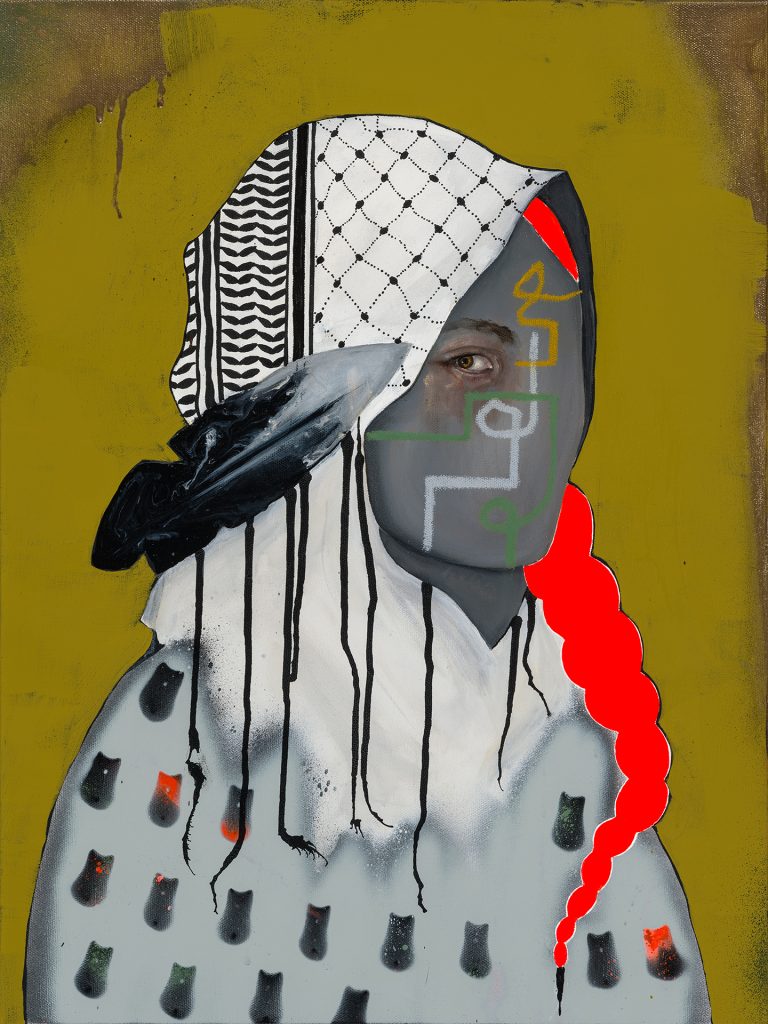
The town of Vail’s Art in Public Places program made a controversial decision last month in inviting and then rescinding an invite to artist Danielle SeeWalker for a summer residency, but it definitely wasn’t the first controversy surrounding public art in Vail.
SeeWalker was approached about the chance to participate in Vail’s Artist in Residency program in January, but the town withdrew the deal a month before the program was expected to start due to SeeWalker’s apparent support of Palestine in the ongoing war in Gaza.

SeeWalker said she was disappointed in the decision and other artists came to her defense, saying the town had erred in its decision.
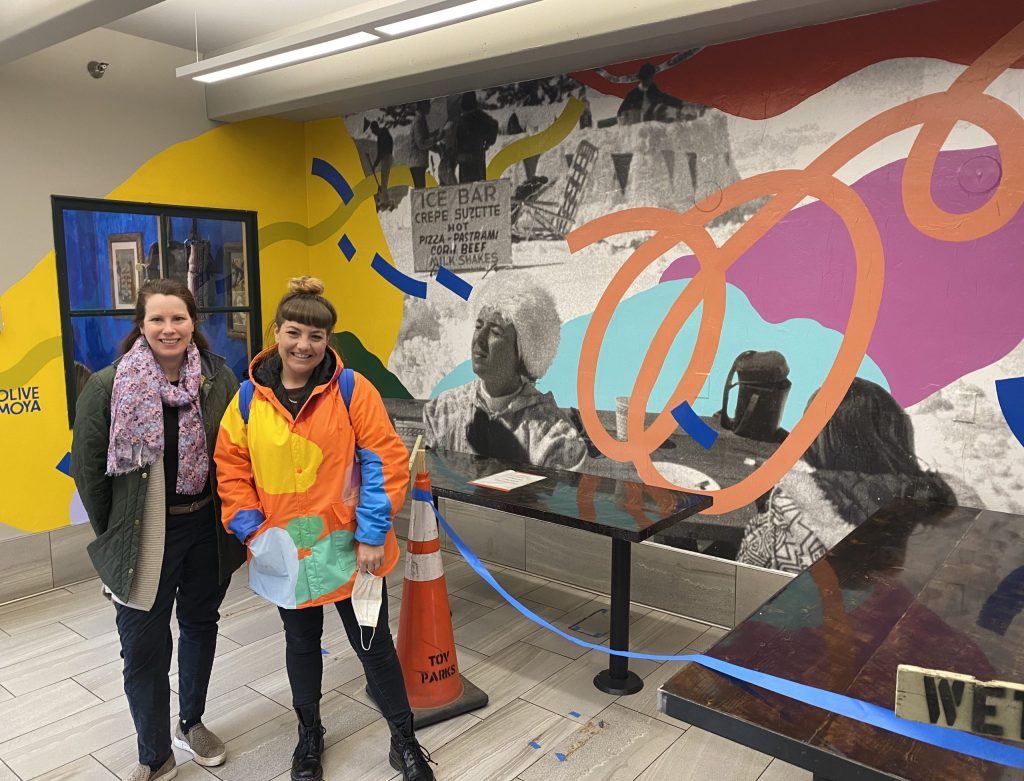
Olive Moya, who created the “Ice Bar” mural in the Vail Transportation Center in 2021, said she is disappointed in how the situation was handled.
“The point of creating art is to spark thought, provoke discussion and open up dialogues; Danielle makes work that does that,” Moya said. “It was wrong to pull this residency out from under her instead of having a conversation. The town of Vail has deprived itself of having the type of rich, impactful work it would benefit from.”

Support Local Journalism
The result is another unrealized project for the town of Vail and a controversy around art that probably won’t be the last.
The effort to bring public art to Vail began in 1981 around an unrealized project which created a controversy that dwarfs today’s, and when the first piece of public art finally arrived in Vail in 1983, that piece also was controversial, bumping yet another unrealized project.
Birth trauma
The town of Vail’s entrance into the world of public art — art that’s in a public place, paid for with public funds — could not have been more dramatic.
It began when the town received a $50,000 grant from the National Endowment for the Arts in 1981, the first public money ever committed to art in the town. The town commissioned internationally renowned artist Claes Oldenburg to submit a design for a sculpture in Lionshead, and Oldenburg’s idea was immediately controversial.

The idea — a 60-foot fishing pole hooking a giant tin can — was criticized as being a metaphor for the destruction of nature, with Town Council member Chuck Anderson saying the piece went against “the very strong environmental values” of the community.
Oldenburg himself denounced the suggestion in front of Anderson and others at the Vail Town Council in 1983. National news cameras visited Vail for the event, and more than 500 newspapers picked up the story via the Associated Press newswire.
“I never saw it in the sense of a polluting element,” Oldenburg told the Vail residents in attendance. “I’ve found quite a few things in the stream. The stream transforms these objects into nature as they decay.”
Nevertheless, the controversy continued, and shortly thereafter, “Oldenburg, tired of the hassle, withdrew his proposal,” the Vail Trail reported.
Today, the small model that remains from Oldenburg and his partner and spouse Coosje van Bruggen is likely to be the most valuable piece in Vail’s collection. An expert from Pace Gallery in New York estimated the piece’s value to be in the seven-figure range in an interview with the Vail Daily in 2021.
Had the full sculpture been realized, the value might have been closer to $10 million by now. In 2022, Oldenburg and van Bruggen’s 20-foot tall “Typewriter Eraser,” originally created as a massive piece of public art like the Lionshead fishing pole, sold for $8.4 million.
‘Anything other than traditional’
While unrealized, the Oldenburg proposal had the town of Vail thinking about public art, and as that controversy was happening another piece was installed in Vail — a bronze sculpture from Loveland artist Hollis Williford called “Need to Know” which depicts a boy reading a book.
But “Need to Know” — Vail’s first official piece of public art, installed in October of 1983 — turned out to be controversial, as well.
What matters in your community, delivered daily.
Sign up for our morning newsletter at VailDaily.com/newsletter
The Town Council, attempting to be less involved than in the Oldenburg sculpture, “tried to step back by appointing a selection committee of local artists, but in the end council members couldn’t keep out,” the Vail Trail reported. “After the volunteer committee spent hundreds of hours talking to artists and reviewing their work, the committee had its choice turned down in a quick meeting by the council and replaced with its third choice (“Need to Know).”
That original choice, another unrealized art project for the town, resulted in “anger and frustration among the artists, a feeling that they had wasted a lot of their time,” the Trail reported.

When the next project went in, in 1986, it was far less controversial. “The Skiers” was designed especially for Vail by Steamboat Springs sculptor Susan Raymond and included four bronze skiers on a 14-ton marble snowbank.
It was well received, the Trail reported, but may have had the opposite effect of the controversy created by the Oldenburg piece.
“Putting up sculptures of skiers in a ski resort is no proof that the council has anything special to add to the public art debate,” the Vail Trail argued, in a column, and later, the town’s Art in Public Places board was formed.
When the town next went after another National Endowment of the Arts grant, it was for something far less controversial — the 10th Mountain Division ski trooper statue near the Covered Bridge.
Former Mayor Rod Slifer, in 1983, summed up a debate that still exists today in Vail and many other towns over public art.
“When art is anything other than traditional it’s going to be controversial,” Slifer said.