Colorado barrels toward another tight budget year amid economic headwinds
The state's latest economic forecast shows a softening labor market and wage disparities that could hamper consumer spending and slow revenue growth

Robert Tann Follow
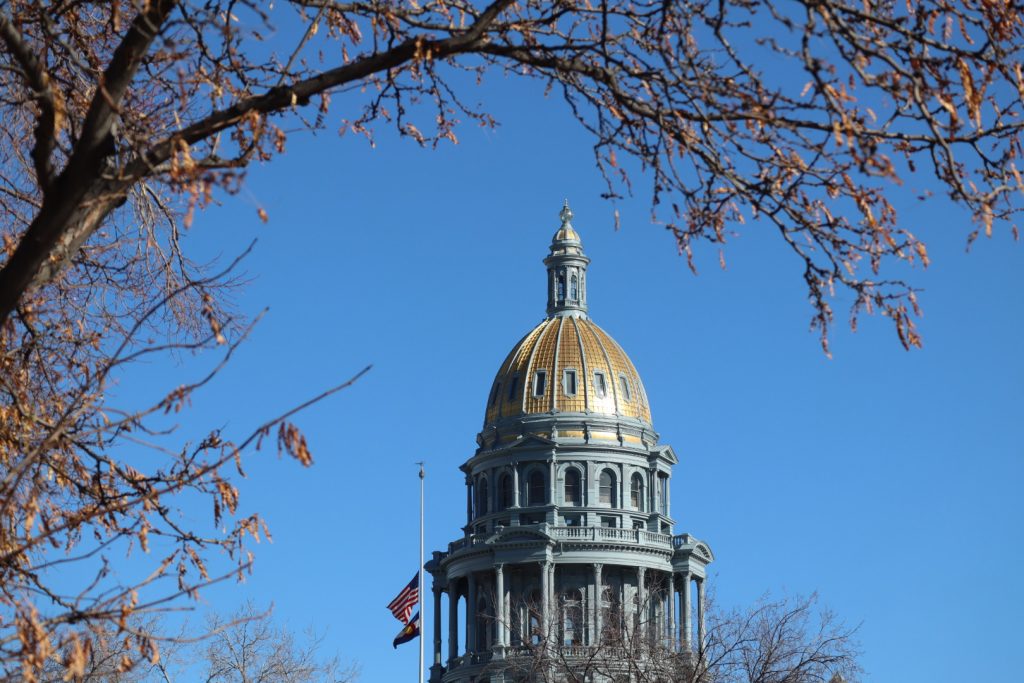
Robert Tann/Summit Daily News
Colorado lawmakers are once again preparing for a legislative session that will be clouded by a tight budget environment and economic uncertainty.
Lawmakers who sit on the Joint Budget Committee were briefed on Friday on the state’s latest economic forecast, which was presented by the Legislative Council Staff and the governor’s Office of State Planning and Budgeting.
Though the two offices’ reports differ in their numbers, both estimate that the state will see a decline in revenue by the end of the current fiscal year, which runs through June 30, 2026.
That, coupled with other fiscal pressures, like growing Medicaid spending and federal funding cuts, means lawmakers will likely need to slash roughly $850 million from next fiscal year’s state budget, which will be adopted in the spring.
Lawmakers already had to reduce state spending by about $1.2 billion this year, before cutting an additional $783 million over the summer due to federal tax code changes passed as part of congressional Republicans’ One Big Beautiful Bill Act.

Support Local Journalism
Much of the $1.2 billion reduction was achieved by shifting funds among accounts to supplement the state’s general fund, though some direct cuts were made. Transportation funding saw some of the most significant cuts, with over $100 million slashed for road and bridge projects over the next two years, and $71 million for multimodal transit projects scrapped. Still, lawmakers were largely able to avoid deep cuts in areas like health care.
In a statement following Friday’s economic report, Democratic state Sen. Jeff Bridges, a Joint Budget Committee member who earlier this year served as its chair, said, “We pulled a rabbit out of the hat with last year’s budget, cutting a billion dollars with minimal impact on the people of Colorado.
“This year, we’re all out of rabbits,” he said.
What budget forecasters are saying
The Legislative Council Staff anticipates that tax revenue for the state’s general fund, its largest fund account, will see a $304 million decrease by the end of the 2025-26 fiscal year compared to what was predicted in September.
The governor’s budget office has a different outlook, based on its previous predictions, and believes that general fund revenue will be $87 million less than what it had forecast in September. In both cases, general fund revenue is expected to sit at around $17 billion.
The governor’s budget office stressed that fewer economic data are available due to the 43-day federal government shutdown that lasted from October to mid-November.
What data is available shows a cooling labor market coupled with wage growth disparities between lower- and higher-income earners, according to the budget office’s report.
“The highest earners have seen stronger growth in income and wealth, and currently account for a majority of all consumer spending,” the report states. “As a result, the economy’s recent strength relies heavily on spending and investments from this group.”
The report mentions several risks that threaten that spending pattern, including “a pullback in AI investments, a slowdown in broader economic activity related to tariff-induced reductions in consumer purchasing power and business investments, or labor market weakness.”
The report identifies federal trade policies, and more specifically, tariffs, as well as the strength of the labor market, to be the “primary risks” to Colorado’s economy.
With the rollout of tariffs increasing costs on Colorado businesses and consumers, and slower job growth, the budget office says there is a 50% chance of a mild recession in 2026.
What it means for state spending
Both the Legislative Council Staff and the governor’s budget office say that state general fund revenue will fall below the growth cap dictated by the Taxpayer’s Bill of Rights, or TABOR, a 1992 voter-approved amendment to the Colorado Constitution that controls government revenue and spending.
TABOR limits the state’s revenue collection to the rate of population growth plus inflation, and any excess revenue the state collects must be refunded to taxpayers. Taxpayers will see money back in 2026, since the refunds are based on 2024-25 fiscal year revenue, but won’t receive any refunds in 2027 as a result of the current year’s revenue decline.
Falling below the TABOR cap also means that certain tax credits won’t be in effect during the 2026 tax year. Households won’t be able to claim either the Family Affordability Tax Credit or the Earned Income Tax Credit expansions in 2027 as a result.
Revenue surpluses are expected to return, however, in the 2026-27 fiscal year. Budget forecasters previously said that’s due in part to a continuation of revenue that was generated during a special legislative session earlier this year, as well as a lower TABOR cap due to lower inflation and population growth.
Still, the state is projected to face an overall deficit next year and into future years as TABOR constrains revenue growth and program costs escalate.
One of the largest drivers of state spending is Medicaid, which now accounts for roughly one-third of state expenditures. Factors behind the spending increase include an older population that is seeking long-term care, benefit expansions and medical inflation that is running ahead of the TABOR cap.
Gov. Jared Polis’ budget proposal next year calls for reducing Medicaid spending by nearly $300 million.
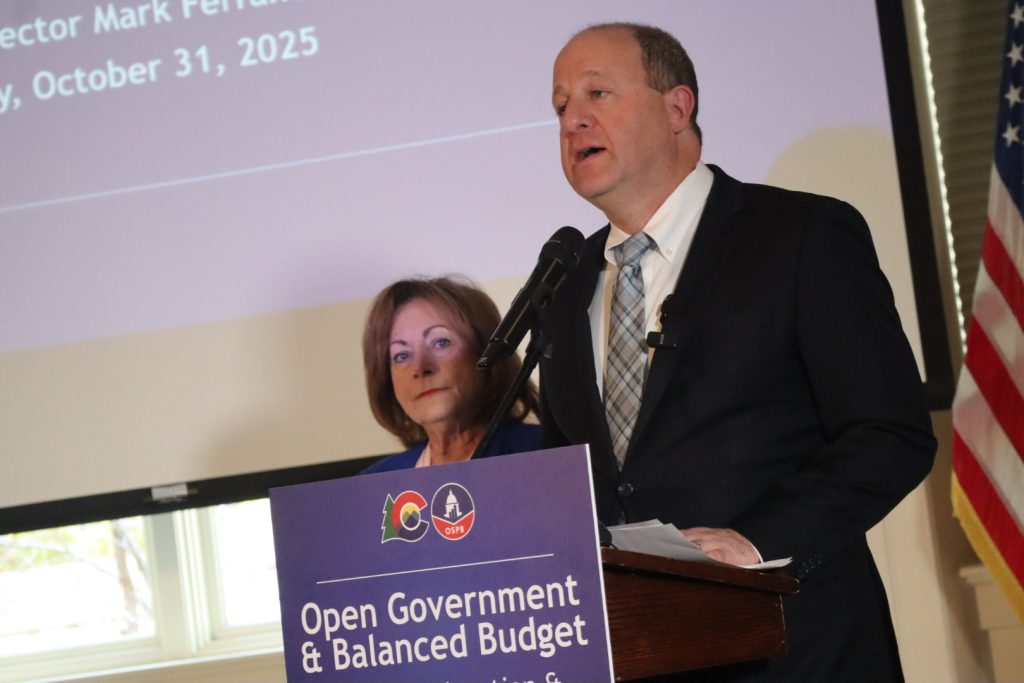
While Polis has pledged that his proposal won’t result in any loss of coverage, it would scale back services and benefits. That includes limiting billing hours for home health nursing and therapy services, reinstating a cap on dental benefits, and foregoing an increase to the state’s reimbursement rate for Medicaid providers.
Polis has defended the cutbacks as a way to make state Medicaid spending more sustainable.
“This gets worse if we don’t fix it,” Polis said in late October when he announced his Medicaid proposal, adding that Medicaid spending, if left unchecked, would “crowd out essentially everything the state does.”
Democrats and Republicans on the Joint Budget Committee have voiced concern about the governor’s plan, saying it would hurt low-income families.
“It’s a retreat from our basic responsibilities, things that we are supposed to be doing as a government,” said Republican state Sen. Barbara Kirkmeyer, who sits on the budget committee and is running for governor next year, during a hearing with Polis in November.
Republicans have urged the governor’s office to prioritize administrative cuts instead, though his office says those wouldn’t be enough to offset the growth in Medicaid spending. Polis issued a state hiring freeze earlier this year that will last through the end of February.
Colorado’s Constitution requires lawmakers to pass a deficit-free budget, meaning some spending reductions will need to happen next year.
In his statement, Bridges, the Joint Budget Committee member, blamed the budget situation on TABOR, which he called a “financial relic of the ’90s,” as well as federal policy decisions.
Republicans have consistently defended TABOR, calling it a check on government growth that is supported by most voters, and have pushed for other cuts to state agencies and programs as a way of reining in spending.