Over 100 years ago, Colorado miners and ranchers celebrated Christmas with gifts, decorated trees, and sometimes even Santa
From Summit County to the Steamboat Springs and Aspen areas, the holiday was also historically celebrated with dances and balls
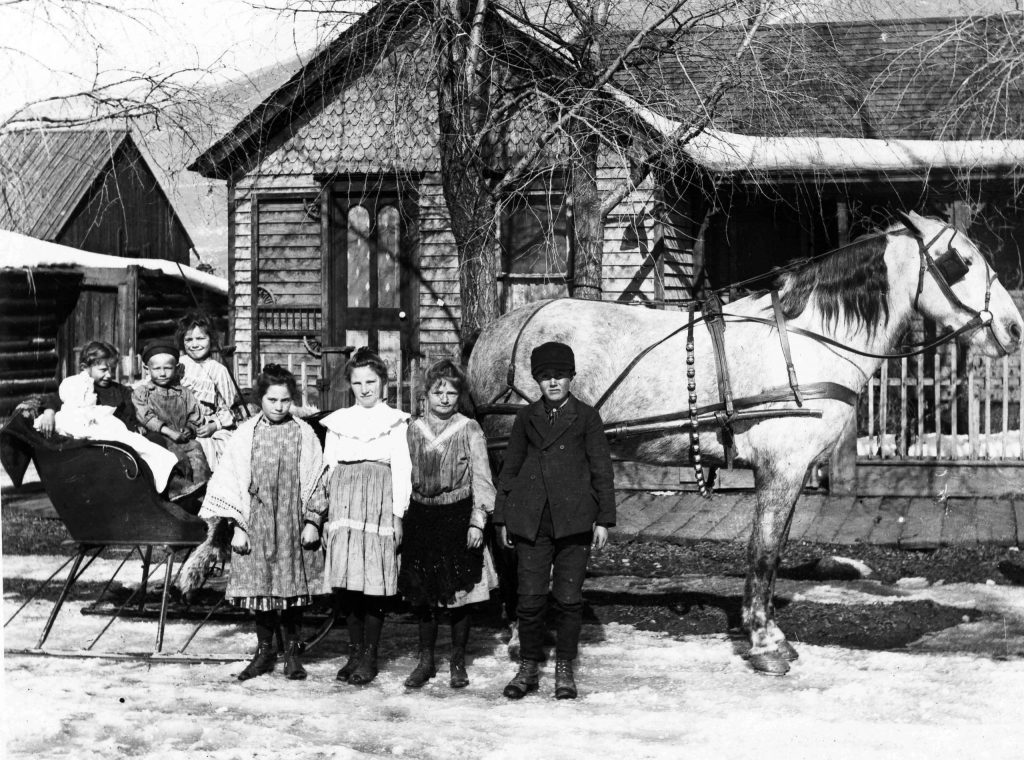
Aspen Historical Society/Courtesy photo
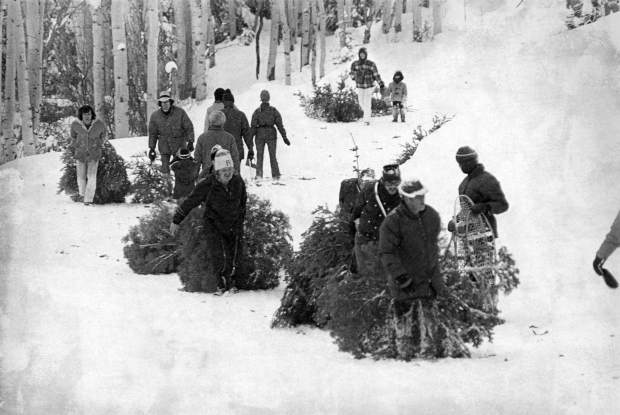
Despite the hardships of winter, Coloradans have been celebrating Christmas for over 100 years. Historians say early settlers celebrated the holiday much like modern mountain residents do today — with gift giving and feasts — even while facing cold, harsh weather.
“Picture a lighted evergreen, not one with colored electric lights but wax candles twinkling in tin stands,” Summit County Historian Mary Ellen Gilliland writes in “Summit,” a history of gold rush history in Breckenridge, Frisco, Copper, Dillon, Keystone, and Silverthorne. “Lit only once on Christmas Eve, the tree illuminated the faces of a family gathered to enjoy its glow. Children never forgot these moments.”
Many of Colorado’s early mining communities were made up of immigrants or first-generation descendants from countries like England, France, Italy, Sweden, Norway, Germany, and Switzerland who brought the Christmas customs with them from their countries of origin, according to Gilliland.
Across the Colorado High Country, historic newspapers from the late 1800s describe Christmas celebrations that included feasts, gift giving and even residents dressing up as Santa Claus to stoke excitement for the children.
Aspen Historical Society archivist Anna Scott noted that while most families in the High Country celebrated Christmas, there were also Jewish families who would have celebrated Hanukkah and Rosh Hashanah.

Support Local Journalism
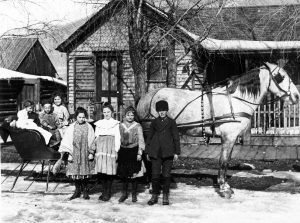
Even as far back as 1881, Scott noted that Christmas in Aspen revolved around gift giving, although the gifts were often smaller, like nuts, candies and household goods. She noted that for many years, until trains made their way into these mountain communities, wagons and sleighs were the only way to get goods into the mountains. Even when rail lines began connecting these communities with the outside world, the trains sometimes had a hard time making it through avalanches and deep snow in the winter.
Historic Colorado newspapers advertise books, dolls, silk handkerchiefs, jackets, dresses, gloves, fine shoes, pipes, cigars and fruits as potential gifts for loved ones during these early Christmases.
One feature of the holiday that might be less familiar to modern mountain dwellers were the dances and balls thrown to celebrate Christmas.
Katie Adams, a curator at The Tread of Pioneers Museum in Routt County, said that holiday dances were likely popular because it was difficult and dangerous to travel at night during the winter, so people would stay up until the early morning hours before heading home.
“Holidays were the one reason that people went to the effort and risk to gather together,” Adams said. “Often they would gather in someone’s home or the nearby schoolhouse, play live music and dance for the entire night then take the sleigh/wagon back in the morning.”
Summit County’s ‘deep snow Christmas’
Gold was first discovered in Breckenridge in 1859, sparking a wave of people who braved the untamed mountains in quest of wealth. While Gilliland noted that wives and children would often head down to Denver for the winter in the 1860s and 1870s, there were also some who stayed in the mountains.
One of the first Christmases in the High Country was celebrated in 1861, when Barney Ford — an escaped slave who became a civil rights leader and one of Colorado’s most successful businessmen — helped to throw a ball in the Breckenridge area.
According to a Dec. 31, 1898, Summit County Journal article, “old-timer” C.H. Blair fingered his snowy beard as he recalled the “memorable ball” he had attended as a kid in 1861. That Christmas, snow buried the region around the Bella Union hotel in Lincoln City, a former mining town in Summit County, where the celebration was hosted, Blair said.
“I think the deep snow Christmas, the one when we had the ball at the Bella Union, beat anything I ever saw,” Blair reminisced in the article.
At the roomy hotel, a number of extra rooms were arranged with a long dining table for the reception, while the large dining room was reserved as a dance floor, according to the Summit County Journal.
“Well, on Christmas Eve it was made up that we should have a big dance at the Bella Union the next night,” Blair said. “The snow was 4 feet deep on the level and it was hard to get about, but we youngsters hustled and got the invites around … got everything ready for the blowout.”
Most of the women lived up in Georgia Gulch, only two miles away, “but the snow was so deep that getting the girls over was a problem,” Blair recalled in the article. Some men dug out the road so that ox wagons could pick the women up for what turned out to be a three-hour journey through the snow to the hotel, he said.
Snow continued to fall through the night as the party-goers reveled, at one point dancing a folk dance known as the Virginia reel, the article states. The snow was so deep that many of the women reportedly had to stay the next day.
“Yes, that was a great Christmas — a great dance,” Blair recalled in the Summit County Journal. “It wound up with a Virginia reel — a regular old hoe-down — and didn’t we make those old boards talk!”
Other early Christmas celebrations
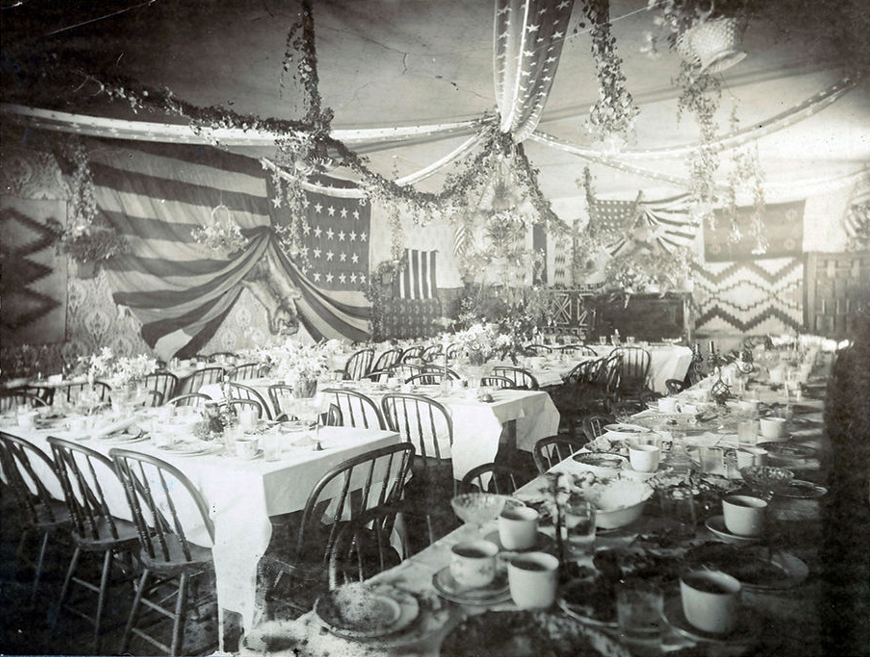
During the late 1800s, Colorado’s mining and ranching communities were sparsely settled.
Adams noted that the population in Steamboat Springs in 1890 was 91, but quadrupled within the next 10 years as electric power, sewer and water systems were established. In the Yampa Valley, cattle ranching was the primary industry and coal mining also took place especially in the Oak Creek and Hayden areas, she said.
While “everything was a small affair,” Adams said Christmas celebrations “were popular because, for the most part, people were otherwise isolated,” as farms were often several miles apart. With no weather forecasts to help predict snowstorms, families at the time would travel by sleigh or wagon.
On Christmas Day 1874, Tom Iles and John Newton were living in a “shanty” on the Yampa River near the present day site of Craig, according to an excerpt from “Where the Old West Stayed Young” shared by The Tread of Pioneers Museum. The historic text describes the holiday being celebrated with “a breakfast of fried grouse with gravy, hot biscuits baked in a Dutch oven, and black coffee.” While others set traps, Iles reportedly prepared a Christmas dinner consisting of boiled porcupine, raisin pudding and dumplings.
A Jan. 2, 1889, edition of The Steamboat Pilot featured another early Christmas in the Yampa Valley, where “Santa Claus” reportedly visited the residence of “Dug” Lees on Christmas Eve. Four families celebrated the holiday around a “well-illuminated tree with some very nice presents,” the article states. The families ate a supper “consisting of delicacies too numerous to mention,” read aloud to each other and played games until late at night, according to the article available on ColoradoHistoricNewspapers.org.
According to an April 23, 1881, edition of The Aspen Times, the first Christmas in Aspen took place in 1880. There were only 14 women who stayed the winter at the time but dozens of men, as mining continued through the winter thanks to temperatures in the mine shafts remaining close to 50 degrees, Scott said.
“These ladies invited the men of Aspen to a supper on Christmas night,” the historic article states, “and it most certainly can be said to the credit of the ladies that a more bountiful feast was never spread amid the wilds of the Rocky Mountains.”
The celebration featured toasts and speeches, according to the article. The men reportedly “returned the compliment” by inviting the ladies to a supper on New Year’s Eve.