Why a Colorado Supreme Court case could have ‘far-reaching consequence’ for short-term rental regulations on the Western Slope
The Colorado Supreme Court agreed to hear a lawsuit claiming regulatory fees imposed by the town of Breckenridge violate Colorado’s Taxpayers’ Bill of Rights

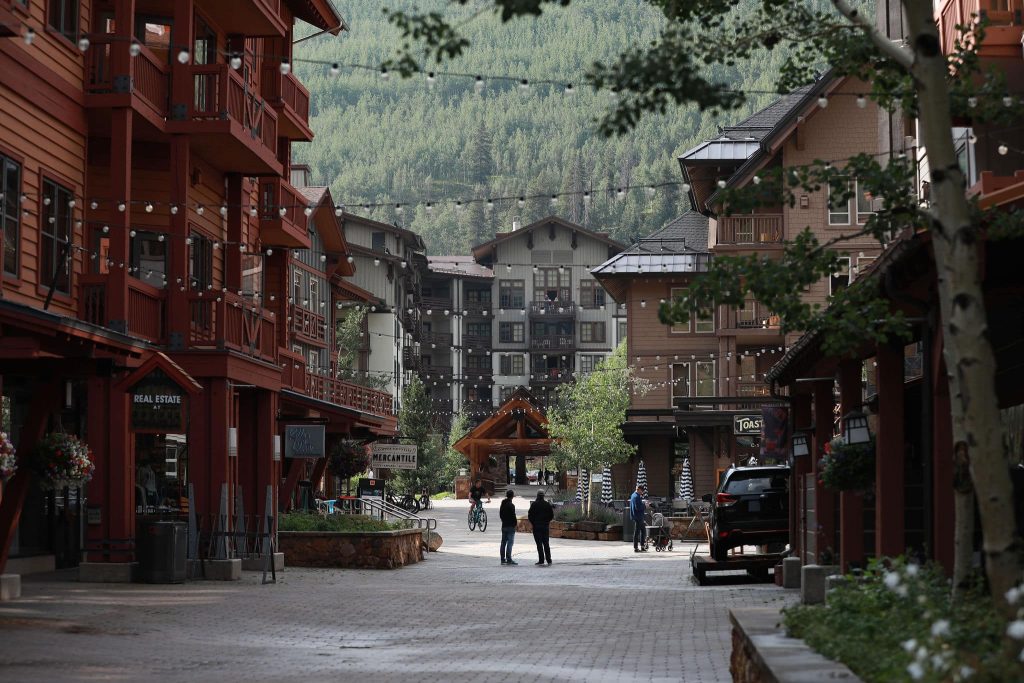
Ashley Low/Summit Daily News archive
After two years and two dismissals by lower courts, the Colorado Supreme Court has agreed to hear a lawsuit challenging the legality of short-term rental fees in Breckenridge.
Short-term rental owners and organizations say a reversal of the dismissals could open doors to more legal challenges across the Western Slope.
The Colorado Supreme Court made the announcement on Oct. 19, resurfacing two legal questions challenging whether regulatory fees imposed by the town of Breckenridge on short-term rentals violate the Colorado Taxpayer’s Bill of Rights.
The Breckenridge Town Council passed an ordinance establishing the fee in 2021, creating an annual per-bedroom charge on short-term rentals that has risen to $756 as of 2026. At the time, the town referred to a commissioned study as their reasoning for the fee, which found that spending by short-term rental guests — especially in services like retail, food and recreation — contributed to demand for local workers who typically don’t make enough money to afford market-rate housing.
Representatives with Economic & Planning Systems, who worked with the town to draft the ordinance and come up with the fee amount, said in 2021 that the $756 was based on the difference between the impact of a short-term rental unit compared to the impact a resident would have if they occupied the unit year-round, as well as the gap between what employees can afford and the cost to live in the town of Breckenridge.

Support Local Journalism
The ordinance stated revenue from the short-term rental fee would be directed toward municipal housing programs — including the acquisition and construction of deed-restricted housing, property buy-downs and programs that encourage homeowners to rent to local workers. The 2021 ordinance states revenue from the fee can also cover costs related to the “secondary impacts” of the short-term rental industry, including limited parking, loud noise and increased trash, and prohibits the town of Breckenridge from transferring the revenue to its general fund.
Alexander Dorotik, an attorney who founded Denver-based Ingenuity Law Colorado and owns a short-term rental property in Breckenridge, claims the fee violates state fiscal policy by essentially functioning like an unconstitutional tax, which would require voter approval under TABOR.
The Colorado Supreme Court held in a previous case that the purpose of a tax is to raise revenue for the general expenses of the government. If the purpose of the charge is to cover the direct and indirect costs of providing a service or regulating an activity, it can be classified as a fee.
Dorotik filed a lawsuit in Summit County District Court in September 2024, claiming the $756 charge does not meet the classifications of a fee because the revenue generated through sales and taxes on lodging, retail and food-related purchases already exceeds the costs created by short-term rentals.
“What I’m asserting is that it doesn’t qualify as a fee because Breckenridge doesn’t have any expense for the activity that they say necessitates the fee,” he said. “In saying, ‘This costs us money,’ they’re not accounting for the tax revenue that they get from all those activities. It dwarfs the amount they say it costs them.”
Dorotik said the lower courts dismissed his case because of the Colorado Supreme Court’s 2018 ruling in Colorado Union of Taxpayers Foundation v. City of Aspen, which upheld Aspen’s $0.20 paper bag charge as a regulatory fee rather than a tax requiring voter approval. Dorotik’s appeal argues that the fee is meant to address the distribution and impacts of single-use bags, not shopping itself (which generates tax revenue), challenging the court of appeals’ interpretation.
“Because (the lower courts) decided that the Aspen fee was a fee on shopping, and shopping obviously generates tax revenue, (they reasoned) that it must be okay for Breckenridge to do essentially the same sort of thing,” Dorotik said. “And so in my mind, they very much misunderstood the Aspen case because it’s not a fee on shopping, it’s a fee on handing out polluting plastic bags and paper bags.”
The Supreme Court also agreed to review the appeals court’s interpretation of the 2018 Aspen ruling.
“If the (Colorado) Supreme Court agrees with me and says that’s a tax, it invalidates the fee not just for me, but for everyone who has paid it,” Dorotik said. “If I’m successful, Breckenridge has to disgorge all of the fees collected from everyone for the last four years.”
The town of Breckenridge declined to comment on the pending litigation.
What could a ruling mean for short-term rental fees in other ski towns?
The Colorado Short-Term Rental Association, which is not involved with the lawsuit, projects that the town of Breckenridge has collected roughly $7 million per year through its short-term rental fee. Meanwhile, several of the town’s workforce housing units sat unoccupied in 2025.
“We are certainly not opposed to housing affordability, but we were opposed to the ordinance, the way it was written at that time, because it wasn’t really written to solve that problem,” said Julia Koster, executive director of the Colorado Short-Term Rental Association. “The money that is collected in this per-bedroom fee is supposed to be used to support affordable housing measures in the town. To my knowledge … it’s not really being used.”
According to short-term rental analytics published by market research platform AirROI, it costs short-term rental hosts in Breckenridge approximately $1,637 per year to acquire a license for a two-bedroom rental, combining a $125 license tax plus two per-room fees, which are $756 each. For a three-bedroom rental, that price climbs to $2,418.
Koster said the fees in Breckenridge — in addition to similar fees charged in other Western Slope ski towns — have deterred some property owners from renting out their vacant homes altogether, creating fewer short-term housing options.
“All these different things come together, and the fee just adds one more layer on top of it,” Koster said. “A lot of folks are saying, ‘Enough is enough. I’m just not going to rent anymore.'”
“All of these jurisdictions, they put these fees on short-term rentals, but they don’t put them on the large hotels or very large developmental resorts,” Dorotik added. “If you’re saying that people who stay in short-term rentals spend more in dining and retail, so do people who stay in hotels and resorts. Yet that doesn’t seem to be a concern. It does feel a little bit unfair.”
The Colorado Association of Ski Towns, which has not taken an official position on Breckenridge’s regulatory fees on short-term rentals, said these types of fees are a reasonable way to “ensure that short-term rental businesses help pay the actual costs associated with their impacts rather than shifting those costs to permanent residents.”
These impacts not only create more demand on hospitality services, but also on emergency and other public services, said Margaret Bowes, executive director of the Colorado Association of Ski Towns.
“Many of these hospitality and service jobs pay wages that don’t keep pace with the cost of housing in resort communities,” Bowes said. “In 2024, 16 of 39 CAST communities surveyed collected a tax or fee on short-term rentals. The case currently before the Colorado Supreme Court could have far-reaching consequences throughout Colorado’s tourism-dependent communities, reducing their ability to support affordable community housing programs.”
Whether or not a ruling from the Colorado Supreme Court in Dorotik’s favor could have broader implications on short-term rental fees in other parts of the Western Slope depends on the reason for the fee, he said. It is also possible that the Colorado Supreme Court will side with the lower courts and uphold the Breckenridge fee.
“Hypothetically, if I’m successful in Breckenridge, and another jurisdiction like Telluride has essentially the exact same fee, that doesn’t mean that automatically it disappears, but it is really subject to legal challenge,” Dorotik said.
Aspen’s $394 annual permit fee likely wouldn’t be impacted by the ruling, Dorotik explained, because of its smaller price and its function in covering administrative work for the city of Aspen.
“The administrative work doesn’t make Aspen any money, unlike people spending money in dining and retail. It’s just a cost,” he said.
Fees in towns like Telluride, Basalt and Granby, which partially mimic Breckenridge’s short-term rental fees, could potentially face similar legal challenges if the court were to rule in Dorotik’s favor, he said. Basalt’s $2,532 per-bedroom fee, adopted in 2025, also exists to fund workforce housing programs. Whether or not Basalt’s fee could face similar legal challenges would depend on the court’s reasoning for why Breckenridge’s fee violates TABOR.
“I have been getting some contacts from people in other jurisdictions wanting to do the same thing and try to get rid of their short-term rental fees,” Dorotik said. “A lot of short-term rental owners do feel quite squeezed by these fees.”
The Colorado Supreme Court has not yet announced a date for oral arguments, though Dorotik said it could be a slow process.
“Courts tend to take a lot more time than people think, so there’s very unlikely to be any ruling by the Colorado Supreme Court in less than a year,” he said.