Coloradans can witness a meteor shower and a supermoon to kick off the New Year
The Quadrantids meteor shower will peak on Jan. 3, the same night that a supermoon will rise over the opposite horizon

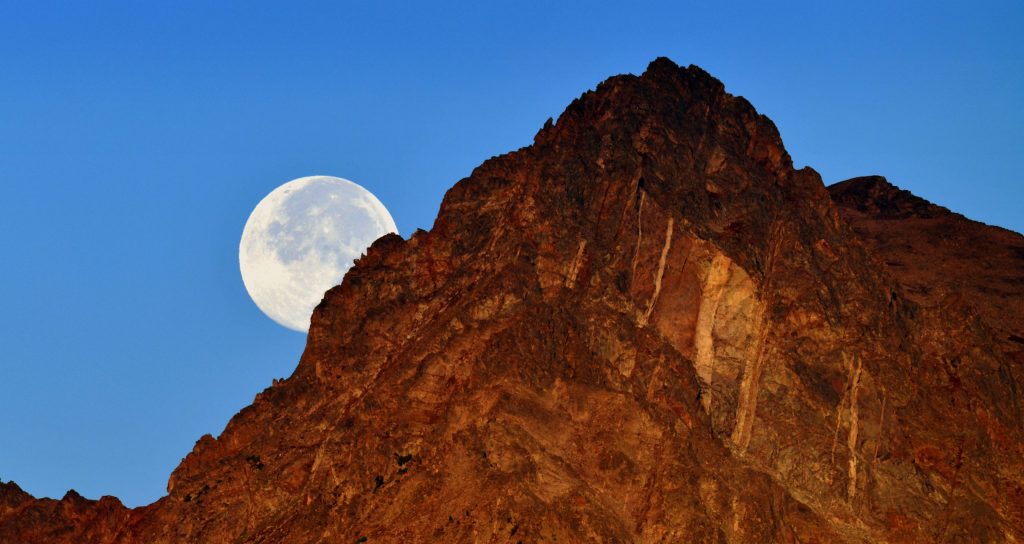
Ruth Carroll/Courtesy photo
Colorado stargazers could catch a glimpse of a celestial fireworks display just days into the New Year.
The Quadrantids meteor shower will peak on Jan. 3, Colorado astronomy guide Mark Laurin wrote in his January stargazing blog. While January nights may be frigid, Laurin said winter is among the best times for stargazing and rewards those who brave the cold.
“The chilly irony of winter is that while the months of January, February and March are mind-numbingly cold at night, spectacular gems, gorgeous celestial events and unique, colorful objects beckon you to come out and view them,” he wrote.
With tall mountains that help block light pollution, Colorado is a destination for stargazing. Dark Sky International has certified 19 places in Colorado, including towns, state parks and national parks, as Dark Sky Places, and even more are working to achieve that designation.
Laurin, who is a mentor for Dark Sky Colorado, the local branch of the international nonprofit, suggested dressing warmly, including in boots with thick sole, and bringing a chair, a blanket and a hot drink, like cocoa, to sip on while stargazing in the winter.

Support Local Journalism
Here’s how to view the Quadrantids meteor shower and other celestial happenings in January:
Quadrantids Meteor Shower
The Quadrantids meteor shower, which began in mid-December, will peak on the night of Jan. 3, with astronomers expecting more than 100 meteors per hour.
However, Laurin noted that many of those meteors may be drowned out by the first full moon of the year, which is the same night. Luckily, the meteor shower will be in the northern part of the sky, while the moon will be in the southern part of the sky, so some of the brighter meteors may be visible, he said.
A meteor, often called a “shooting star,” is the bright streak of light seen when a small piece of space debris burns up in the atmosphere. A meteor shower occurs when the Earth’s orbit passes through a stream of debris left by a comet, causing a shower of shooting stars as the debris burns up in the atmosphere.
In this case, scientists believe that a comet observed around 500 years ago by ancient astronomers in China, Japan and Korea is the source of the debris field for the Quadrantids meteor shower.
The best time to see the meteor shower is about 6:30 p.m. on Jan. 3, just after sunset, Laurin said. To locate the radiant point of the meteor shower, or the point from which the meteors will appear to emanate from, look to the north, he said.
Laurin suggested looking for a place with a clear view of the northern horizon, where the full moon will be behind you. Around about 8 p.m., the radiant point of the meteor shower will dip below the horizon before rising again after about 11 p.m., he said.
“Not all meteor showers are equal,” Laurin said. “The Quadrantids are fainter than most showers, so keep a sharp eye out in the area of the radiant point. Remember to scan the entire sky for meteor flashes, steaks, streamers, and bombs.”
First full moon of the year
The first full moon of the year — known as the Wolf Moon — will be a supermoon, or a full moon that occurs when the moon is near its closest point with the earth, making it appear larger and brighter.
The supermoon will occur on Jan. 3, the same night as the Quadrantids meteor shower, Laurin said. So, even if stargazers don’t witness any shooting stars, the full moon will be a spectacle worth watching.
Laurin noted that this will be the only supermoon until the tail end of 2026.
Jupiter: ‘King of the sky’
All month long, Jupiter — the largest and oldest planet in the solar system — will be visible in the night sky. On Jan. 9, Jupiter will be at its closest point to Earth, about 392 million miles away, Laurin said.
To find Jupiter, look for a very bright, star-like object in the eastern sky after sunset or in the western sky in the morning. Laurin said Jupiter will appear to have an off-white or ivory color, while the surrounding stars will be noticeably whiter.
“The beauty of the planet comes to life when you look through binoculars,” he said. “Look for the equatorial storm bands and the Galilean Moons and watch how they change positions throughout the night.”