Salomone: Winter perdigons

Michael Salomone/Courtesy photo
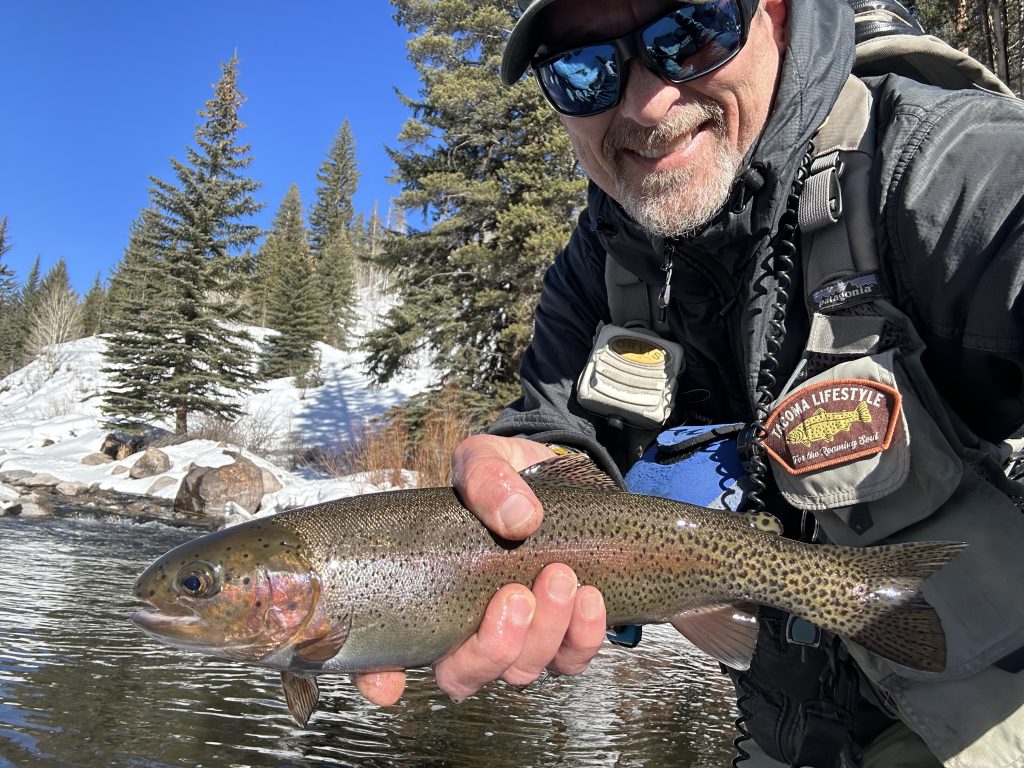
Fly fishing in the winter is a gift not many fishermen ever open. Once they do, the secret is out as the experience is incomparable. When the dots line up correctly under a bluebird colored sky with heavy pillows of snow stacked upon river rocks and a sparkle in the air from flakes that appear like crystals in the sky for a moment it is magical. Add in a fly rod, some waders and a few select perdigon patterns for nymphing in the cold and the day will reach bragging status with you sending photos to parents and friends before you leave the river.
Perdigons are a style of weighted nymphs developed in Spain for competitive fly fishing. They are constructed on barbless, jig-style hooks that allow the hook to ride point up, reducing the chances for foul hooking rock, weeds or fish. The incorporation of a heavy, tungsten bead to give the slim nymph sinking weight is a key component for perdigon style nymphs. The body of most perdigons is covered in a hard, ultra violet (U.V.) resin similar to epoxy but for fly tying. A thin, almost invisible fiber protrudes rearward from the tail of the fly.
A common characteristic but not a requirement is the addition of a hot spot, a bright piece of thread, dubbing or some other material that contrasts highly with the body of the fly and adds attraction. Wire ribbing or a tinsel wrap that indicates segmentation of the body has always proven to be desirable when I’m fishing with perdigons. No hackle or free flowing fibers are attached. This is a stream lined, thin, minimalist approach to creating a fly.
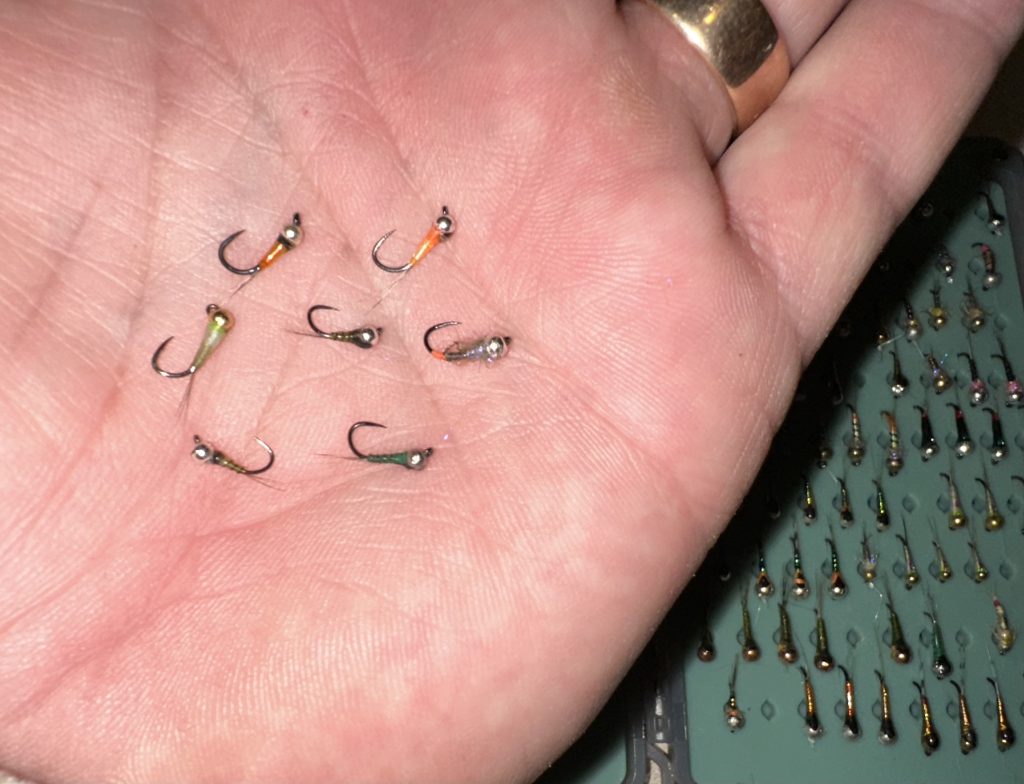
Perdigons are performance flies with premium components and excellent threadwork deserving of the elevated price point. I’ve never had a perdigon hook bend out. The hooks are barbless and extremely sharp. Consistent attention to pressure after the hook set is critical to keeping the fish on the steel. The heavy weight of the tungsten bead will help a trout throw a fly especially when slack enters the battle.
This style of nymph allows the angler to slow down but still stay connected. Fly fishers can work through a run or section of river meticulously. Winter trout don’t like to move far for food. The cold weather and slowed metabolism have reduced any desire in trout for chasing bites. Food needs to drift within a much smaller window in the winter to entice a bite. Calorie conservation is key to winter trout survival.

Support Local Journalism
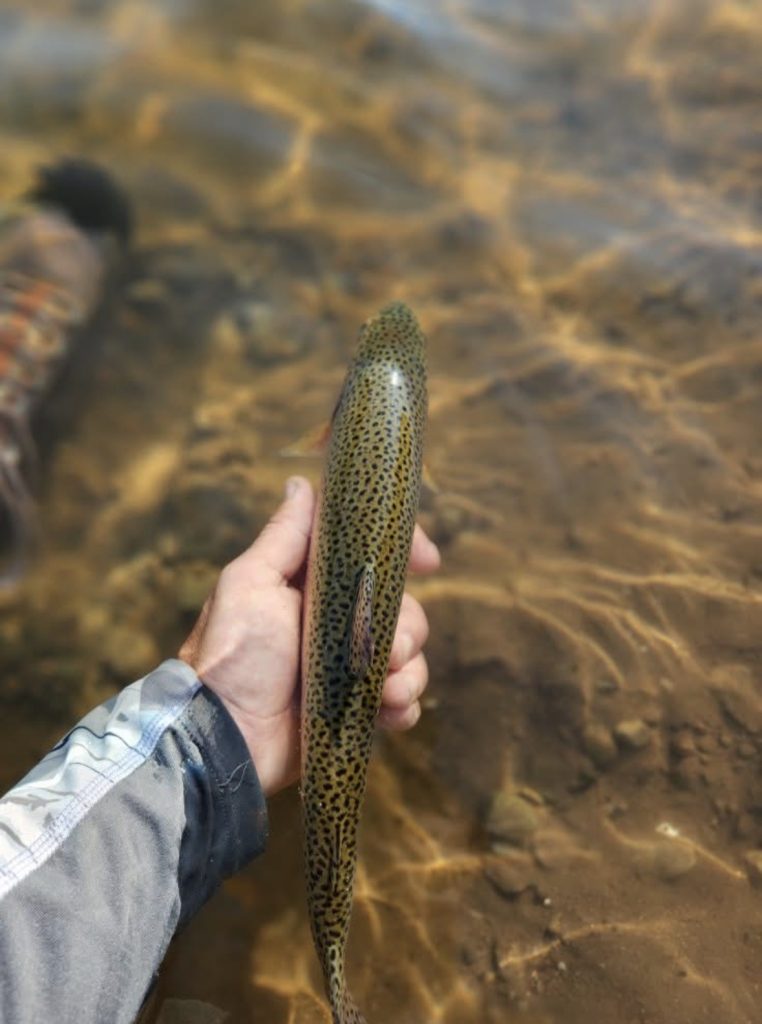
Presentation relies heavily on mending skills. Often stacking a series of mends to extend an effective drift. High sticking a set of nymphs through a run is how the flies were developed to be used. Fishing in this manner gives the angler a chance to steer the flies through an area while maintaining control.
High sticking flies with attention to direct contact to your flies so no bites are missed is all about how you hold your rod. Proper rod positioning ensures a short hook set is all that is necessary to sink the barbless hook. When used properly high sticking eliminates the negative effects from conflicting currents.
A nine foot 5 weight fly rod is the common tool for winter fly fishing. Winter conditions can be brutal on gear. Ice, snow and frequent falls illustrate why using your old, reliable rod rather than your top-shelf dry rod is a good idea. A nine foot leader and 5X tippet will cover most winter river situations. But the river water flows ultra clear in the winter which can necessitate the use of 6X to fool inquisitive eyes. Nine and half or ten foot rods work well for controlling fly presentation during a drift. The extra length that assists in making longer casts in the summertime is not needed in the winter. Most presentations are going to be in close quarters where line management is more important than a long cast. Longer rods are more adept at guiding subsurface flies through the water while maintaining contact.
Handling fish when landing is not a necessity. Cool air can freeze frail gill filaments depending on air temperature. Use a net to secure the fish, remove the fly and pose for a photo with the fish still in the water.
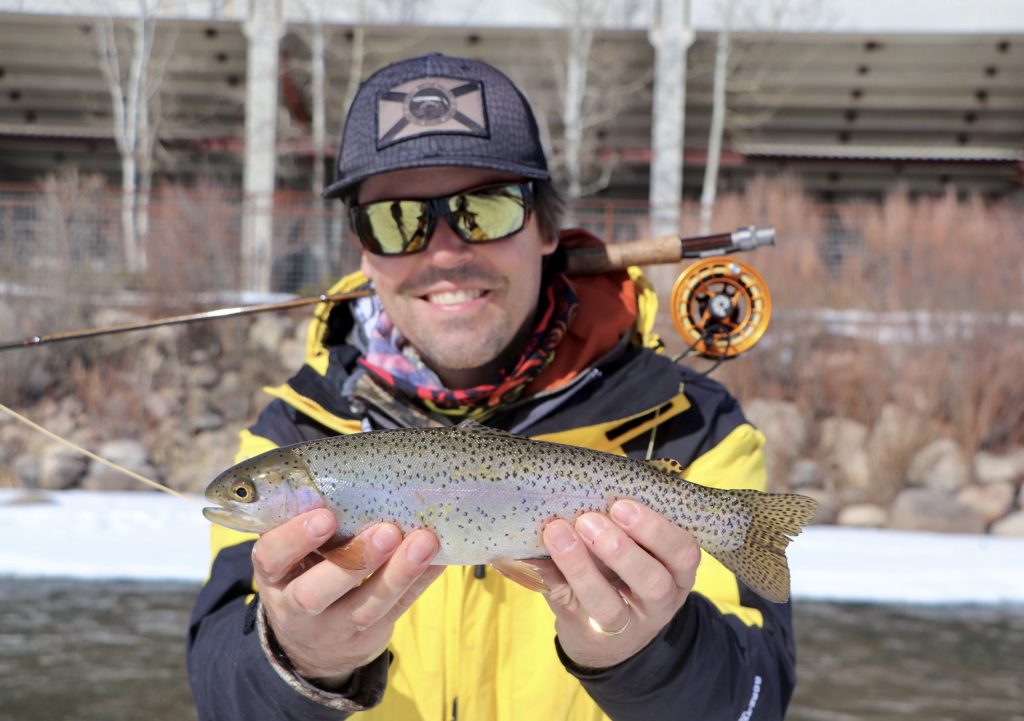
Whether fished deep on a nymph rig or dropped off a buoyant dry fly, perdigon style nymphs are an asset to the angler for winter fly fishing.
Michael Salomone has lived in the Eagle River valley since 1992. He started his professional guiding career in 2002 and currently guides for Vail Valley Anglers. He lives on the bank of the Eagle River with his wife, Lori, his youngest daughter, Ella and a yellow Labrador named Poppy. His published writing has appeared in Southwest Fly Fishing, Fly Rod & Reel, Eastern Fly Fishing, On the Fly, FlyLords, the Pointing Dog Journal, Upland Almanac, TROUT, American Fly Fishing, USA Today Hunt & Fish and Fly Fisherman magazines.