Trailblazers: Vietnam in his rearview, Jack Eck’s first week in Vail involved deadly Gilman cave-in

Vail Daily Archive
Editor’s note: This is the sixth installment in a series highlighting the Vail Public Library’s Vail Valley Voices Collection of oral histories featuring prominent local figures and conducted by Tony Mauro and sometimes David O. Williams. Click on Kent Rose for part 1, Dick Cleveland for part 2, Pete Seibert Jr. for part 3, the Vail Trail for part 4 and Rob LeVine for part 5.
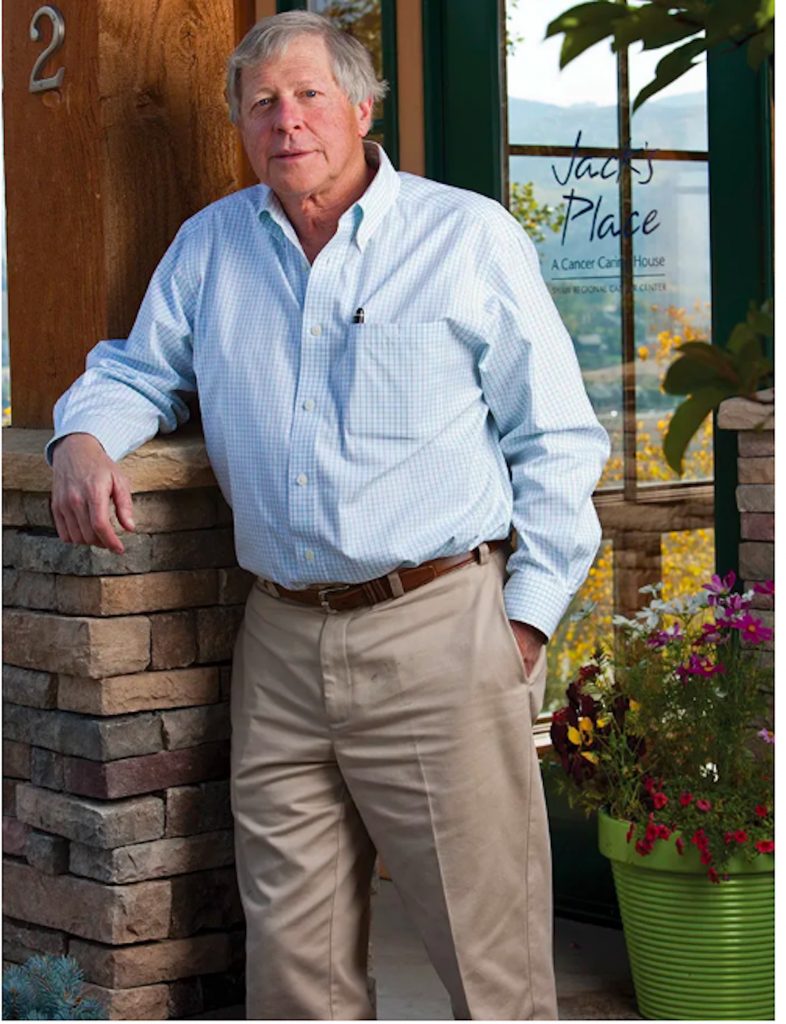
Dr. Jack Eck remembers crying when he first drove into Vail in October of 1971.
Coming off a stint as a helicopter flight surgeon with the 101st Airborne Division in Vietnam, Eck was heading straight to Vail to recover mentally and physically from the horrors of war in Southeast Asia. He was hired by Vail’s first doctor, Tom Steinberg, to be Vail’s third doctor.
“I had talked to Dr. Steinberg at the time. Dr. (Bill) Holm was the only other doctor then. And (Tom) said, ‘Come out here. We need time off,'” Eck told Tony Mauro in this 2020 Vail Valley Voices oral history for the Vail Library. “He put me right to work when I got here. I remember coming down the old Vail Pass … (I was) in the curve … and all of a sudden, I just started crying. I knew I was safe. I just felt the safeness with the mountains, the white snow, the peaks.”
Then, his first week on the job, Steinberg told Eck to go work a deadly mine cave-in in Gilman, just up Highway 24 above Red Cliff.

Support Local Journalism
“I remember Tom Steinberg being there (at Vail’s first clinic) and Tom said, ‘Well, there’s a mine cave-in down here at Gilman,” Eck said. “He said ‘Jack, why don’t you go down and look?’ So, I drove … sort of got lost getting down there, and I went through Minturn and then I started climbing up the mountain there … back and forth. And I did find the mine. And these fellows are all around the opening there …”
Eck remembers an old tower structure with chains that allowed cars to go up and down into the mine.
“The guys were all sitting around. Of course, being superstitious they didn’t really know what to do, but it was definitely a mine cave-in,” Eck said. “(The) superintendent was in there. He says, ‘Doc, I don’t know if you can do anything,’ but he said, ‘I hate to ask you this … could you go and take a look at this guy?'”
A miner was buried up to his waist in a cave-in inside the tunnels in the now-defunct zinc, lead and silver mines fenced inside an EPA Superfund site. At the time, though, Gilman was still very active.
“So, they had one or two guys come with me and they walked alongside of me,” Eck remembers. “It wasn’t tough walking. But the light wasn’t good. So, we wandered back and through … in and out of tunnels … because I was really amazed at how much the network was underground that you didn’t even see. When you’re going up there by Gilman, all you see is a hole in the of side of the hill.”
“This guy, I could see the top of him. And what happened is that the mine did cave in and squashed him … and he was gone. I went over him as best I could to see if there’s any way we could resuscitate him. So, I told them that. And, of course, these guys are really sad,” Eck said. “So, several of them left and then they sent a crew in just to extricate his body.”
Eck said the miners brought in a service stretcher and were still hopeful their coworker could somehow be revived. Finally realizing he had passed, they all started leaving the tunnels and taking their lights on their helmets with them.
“I ended up being the last person because they were a team coming out,” Eck said. “These guys start picking up and picking up … and finally they made one or two turns … what lights you had were just on your helmet. All of a sudden, they make a turn and there was nobody around. I started yelling and shouting and no one heard me,” Eck said. “So, finally, I put my hands on the side walls. I didn’t know if there’d be a hole down below. I had to take each step (carefully). And finally, I saw just a little hint of a light. I couldn’t see the light itself, but the reflection. and I breathed a sigh of relief.”
All the miners had gathered around their fallen comrade.
“They saw me and (someone) says, ‘Oh my God, doc, we forgot you were in there!'” Eck remembers. “If you’re claustrophobic or not … I just can’t express what it’s like when it’s totally black. You don’t know if you’re going drop 100 feet down or two feet or any … and you’re afraid of taking a side tunnel because that might take you even further away from where you were in there. But we got out. I’m not really religious, but I felt like saying a whole bunch of Hail Mary’s.
“That was my welcome to Vail … the first week,” Eck said.