Trailblazers: Pete Seibert Jr.: ‘The pioneers get the arrows and the settlers get the land’


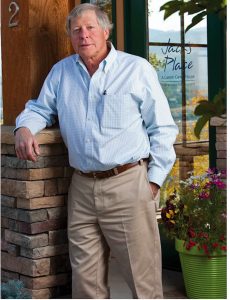
Pete Seibert Jr./Courtesy Photo
Editor’s note: This is the third installment in a series highlighting the Vail Public Library’s Vail Valley Voices Collection of oral histories featuring prominent local figures, particularly interviews conducted by the Vail Daily’s Tony Mauro and David O. Williams. Click on Kent Rose for the first installment, Dick Cleveland for the second installment and enjoy excerpts of this interview of Pete Seibert Jr. conducted by Walter Gallacher of Colorado Public Radio.
Pete Seibert Jr. recently spent four years on Vail Town Council, so he knows what it’s like to suffer the slings and arrows of public service. His post-COVID term on council — a tumultuous time for the town and the ski area — came to a close when he decided not to run again in 2025.
At age 70, Siebert Jr. still lives in the Chamonix neighborhood of West Vail and is a more than 30-year veteran of the local real estate industry as a broker associate for Slifer Smith & Frampton. In a sit-down interview for the Vail Public Library, Seibert Jr. talked about how his famous father founded Vail in the early 1960s but didn’t necessarily reap the benefits.
Discussing Pete Seibert’s death from esophageal cancer at the age of 77 in 2002, Seibert Jr. talked about his father’s mindset in his waning months.
“He’d get a little philosophical and he’d say, ‘If something ever happens to me … don’t worry about me. I had a great life.'” Seibert Jr. said. “The way I like to describe it … I think at the tail end, you might say, ‘Well, maybe he didn’t benefit … and neither did (fellow founder) Earl (Eaton). They were the pioneers. There are pioneers and settlers. And the pioneers sometimes get the arrows and the settlers get the land.”

Support Local Journalism

Seibert Jr. goes on to describe a unique way of memorializing Vail’s founder by cloud seeding with some of his ashes — a method of weather modification to ensure higher snowfall amounts.
“Well, the way things worked out, Joe Macy is the guy who’s in charge of cloud seeding for Vail. And he was one of my supervisors on the ski patrol,” Seibert Jr. said. “He took some of my dad’s ashes and sent them off. They mixed them with the silver iodide and they put it in flares and they put the flares on bamboo poles to get them up in the air and spaced them along the ridge on the western hill side of Beaver Creek …. And then the wind will catch it and blow it across and get some in Beaver Creek and some in Vail. Who knows?”
Seibert Jr. remembers it wound up working out.
“So, it’s got this sort of voodoo feel to it. We’ve got the kids up there. My youngest, Lizzy, was 10 and she looks at it and she goes, ‘Has anybody ever done this before?'” Seibert Jr. said. “Joe Macy says, ‘Darling, your Grandpa did a lot of things nobody ever did and this is the last one.’ We had a foot of snow, took the kids out of school and skied to Grandpa’s Storm the next day.”
Seibert Jr. talks about a time when he was young and not sure what he was going to do in life — thinking he wanted to do something outside of the ski world. His dad was no longer running the Vail Associates in the wake of the 1976 gondola crash, but Seibert was back in town working construction.
“I went to work with Gerald Gallegos and he started his masonry company,” Seibert Jr. said. “I think that’s the best success story in the valley. He started with a mud pan and a pickup truck. He didn’t have a mixer. There were only about dozen of us at the time. I was 21, I guess. Gerald didn’t pay overtime. If he showed up with a case of beer on Friday, you knew he wanted you to work on the weekend, Saturday.”
Seibert Jr. remembers running into former Vail Ski Patrol director (later COO) Paul Testwuide in Safeway and telling him he was working for Gallegos.
“He said, ‘You ought to think about doing something with your skiing.’ A couple of days later, I went and asked him for a job on the ski patrol. That changed my life … completely. I hadn’t had as much time with my dad later on … between college and that sort of thing,” Seibert Jr. said. “I feel fortunate to have been reintroduced to it by the ski patrol. I had the chance to be out on the mountain and see it from a different side. I spent the rest of my life around ski areas.”
Seibert Jr. still marvels at the imagination of his dad, whom he prefers to call Pete, and others like Eaton.
“There’s a lot of stuff that can still happen here. Earl Eaton came to see me with a map before he passed away … he had some lifts on there that I’d love to see go in … This shows you how those guys thought,” Seibert Jr. said, describing a meadow on the west side of Vail Pass along old Highway 6 where there’s enough room for surface parking and the base area for a tram up to Benchmark and the top of Mongolia Bowl.
Talking about the popularity of Vail now and the much larger crowd compared to when he was growing up here in the 60s and 70s, Seibert Jr. said that’s fine as long as you keep adding terrain.
“Most people look at it and I think it’s fine to add more capacity, but you have to sometimes add terrain with the capacity,” Seibert Jr. said. “It’d be nice to see us get into East Vail … get some of that. Tony (Seibert) was skiing there because the Vail Mountain is basically flat and if you’re going to be a big mountain skier and you want more expert terrain, you had to go there.”
To read more, go the Vail Library’s online oral history collection.