Gaps in food assistance are leaving some Western Slope residents behind. Rural food pantries have a plan.
An analysis of regional food providers shows plans for expanding mobile pantries, delivery services

Mountain Coalition for Food and Nutrition Security/Courtesy
Food pantries and meal service nonprofits across the Western Slope are looking toward local expansions to fill growing food insecurity gaps.
A 2025 analysis of regional food services across Eagle, Garfield and Pitkin counties found that, although the tri-county region has a strong network of food partners, significant gaps remain in geographic coverage, older adult nutrition and emergency food access.
Remote and rural communities have been particularly impacted. Of the approximately 134,340 residents living across all three counties, 18% to 31% live below the income needed to cover basic necessities, according to the analysis.
A report published by Feeding America in July found that 1 in 8 residents on the Western Slope experienced food insecurity in 2024, an increase of 3% compared to the previous year and the highest number in 10 years. More than half of individuals experiencing food insecurity across several Western Slope counties had incomes that were too high to qualify for federal nutrition assistance, largely stemming from the high cost of living and goods in mountain resort areas.
Existing food insecurity challenges have only been exacerbated by changes to the Supplemental Nutrition Assistance Program enacted by the One Big Beautiful Bill — several of which are scheduled to take effect in 2027.

Support Local Journalism
The combination of changing SNAP rules, increasing food insecurity and a growing population of food-insecure individuals that don’t meet salary requirements for federal assistance point to escalating reliance on food pantries during a time when nonprofits are already stretching dollars just to meet base level needs.
“With increased costs in fuel, food, freight, all of us are experiencing more costs just to maintain the service level that we’re already having,” said Amber Henning, director of development and community relations for Food Bank of the Rockies. “No matter what happens with (SNAP) changes, we’re all looking for ways to stretch dollars further, to really find ways to make the food go further and still reach that need.”
Western Slope food partners face mounting challenges
The six-month analysis, conducted by the Mountain Coalition for Food and Nutrition Security, looked at emergency and supplemental food access programs across the tri-county region, from fixed pantries and mobile markets to home-delivered meals and federal nutrition programs.
What it found was a growing need for support and expansion across programs to meet the increasing demands for food services experienced in 2026.
According to Henning, Food Bank of the Rockies has distributed roughly 1 million more pounds of food to 13 Western Slope counties compared to 2025, a clear sign that “the need has been increasing.”
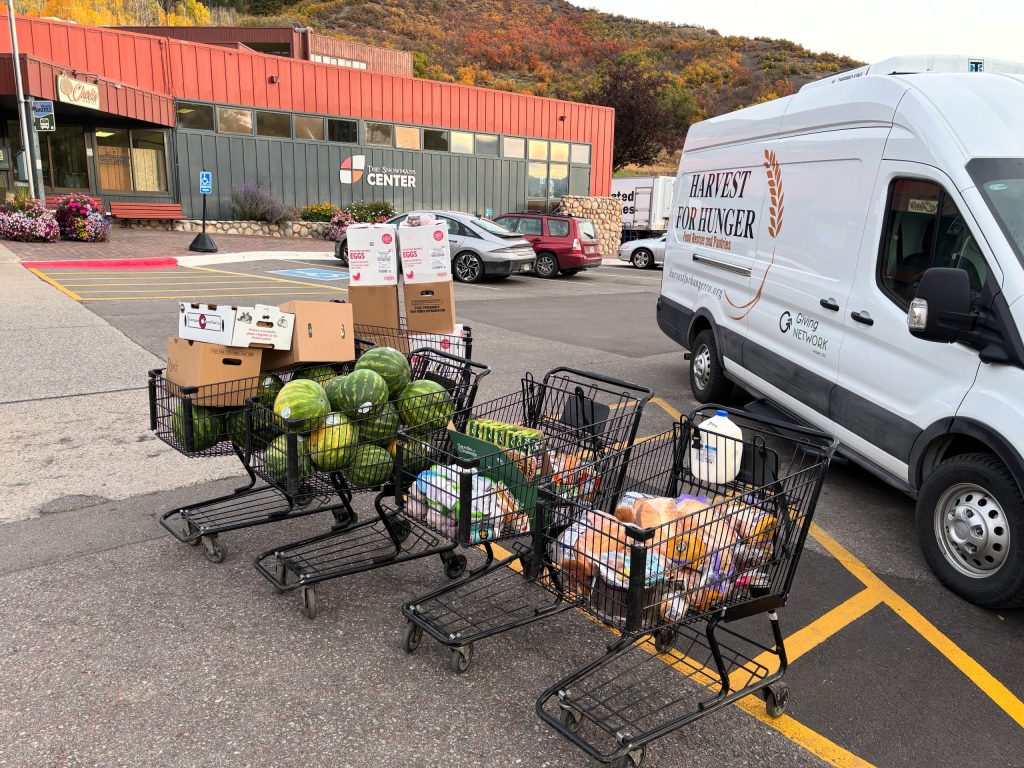
Harvest for Hunger, which runs self-service pantries in Pitkin County, has also seen a slight increase in visitation since last year, with roughly 24,000 total visits so far into 2026. More notably, food pantry guests have taken more food. Harvest for Hunger distributed nearly 170,000 pounds of food in 2025. The pantries are already at more than 133,000 pounds with four months still to go in 2026.
Harvest for Hunger Executive Director Gray Warr said the nonprofit is facing higher costs to keep the pantries stocked, driven largely by higher food prices and rising demand for services. Warr said the nonprofit’s stigma-free, no-questions-asked model has made it more accessible to community members, though now the focus is finding enough space to accommodate the food — and keeping up with a higher budget to ensure shelves stay stocked.
“Our doors open automatically at 8 a.m. and then close automatically at 5 p.m. … People that visit our pantries don’t have to worry about interacting with anybody, don’t have to worry about anyone looking over their shoulder,” Warr said.
While increased visits to food pantries could be partially tied to stricter work and age requirements for SNAP assistance enacted in the One Big Beautiful Bill, Garfield County Human Services Director Sharon Longhurst-Pritt said the county hasn’t seen a decline in SNAP applications or participants as of this month. Instead, the growing reliance on food pantries likely stems from adjustments to SNAP allotments not keeping up with the rising cost of living.
“There’s a lot of frustration from our SNAP applicants. Their SNAP benefits just don’t go as far as they used to because of the economy; it costs more,” said Darell Diedrich, co-chair of the Mountain Coalition for Food and Nutrition Security.
Barriers to food accessibility in the mountains
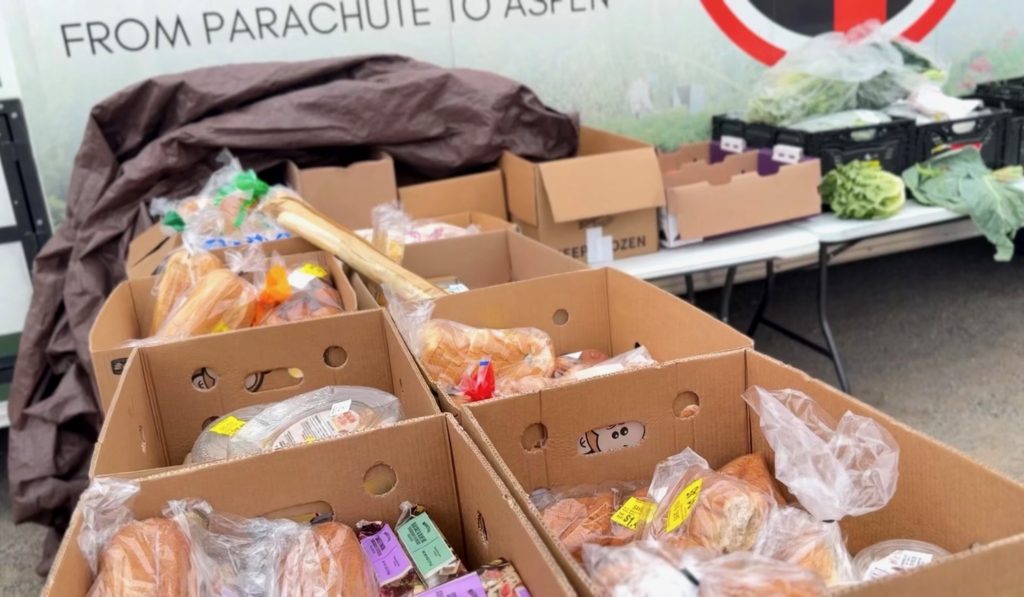
In survey data collected by Colorado State University, residents living along the mountain corridor from Parachute to Aspen said some of the biggest barriers impacting their access to food resources were sacrificing the quality of their food (61%) and having to travel to multiple food sources (56%).
Food sources have only become more scarce on some parts of the Western Slope. Parachute’s only grocery store offering fresh produce, Clark’s Market, is scheduled to close on Sept. 12.
“(The closure) will leave that community without a pharmacy and any place that sells fresh food,” said Christine Singleton Dolan, a nutrition program manager with Garfield County.
With food security services in the region being predominantly available during weekdays, and weekend access being significantly limited, residents’ own jobs can make it difficult to access services like food pantries. Meanwhile, home-delivered meal programs serving older adults face growing waitlists with inconsistent access across counties based on eligibility, funding and delivery routes.
In terms of federal nutrition programs, the absence of two programs from the tri-county region — the Summer Food Service Program and the Child and Adult Care Food Program, both catered toward children experiencing food insecurity — mark significant gaps for children and families.
Henning said not offering the programs “isn’t for lack of wanting,” but rather from geographical challenges that keep the region from qualifying for the programs.
“Even if qualification is on the table, it’s also a challenge for organizations to come in and handle that when people are already strapped with bandwidth and capacity,” she said.
One of the most overlooked barriers to accessing food assistance is the negative stigma surrounding food pantries and local programs — a sentiment Samantha Freese, executive director for LIFT-UP, said she has been trying to work against in the nonprofit’s messaging.
“At LIFT-UP, there’s no income verification, anyone who has a need can come in. But there’s still a lot of shame in accessing food security services,” Freese said about the food bank serving Garfield, Pitkin and Eagle counties. “As a society, we put a lot of pressure on, ‘Well, if you’re working, you should be able to afford everything,’ and that’s just not true. … There is no shame in asking for help.”
Food partners look toward expansion
Based on the analysis, the Mountain Coalition for Food and Nutrition Security identified three priorities for immediate action. The first is to expand the Food Tote program to serve up to 24 clinics, hospitals and library partners. Initiated in 2021 as a small pilot and organized by LIFT-UP, the Food Tote program provides bags with a 72-hour supply of food to anyone in need, no questions asked.
Freese said LIFT-UP has given out just under 600 food totes since the beginning of the year, which offer options for individuals, families and specific cultural needs. The report estimates that expanding the program would cost up to $225,000 annually.
The second priority is to support and expand local mobile pantries through improving the capacity for dedicated staff, which could cost approximately $200,000. Expansion efforts will also include new mobile stops in communities without fixed pantries, and some sites may pilot health and benefits services — like SNAP application assistance — to maximize impact.
The expansion efforts come as mobile food pantries on the Western Slope face ongoing constraints related to vehicles, volunteer availability and site approvals, according to the report.
“Gas is extremely expensive, our vehicles are in constant rotation of repair,” Freese said. “It’s not just the cost of food or getting the donations — it’s everything that goes into the logistics of getting the food to where it needs to go.”
The third step of the action plan is to increase capacity for home-delivered meals to older adults by 20%, with a focus on expanding routes in hard-to-reach communities with chronic waitlists. Current home delivery services operate below the regional need for food, with home-delivered meals meeting 80% of target levels, the report states.
LIFT-UP, which delivers food boxes to seniors, has seen a 6% increase in need across Eagle, Garfield and Pitkin counties over the past year, which Freese said only continues to grow.
To achieve 100% capacity, the Mountain Coalition for Food and Nutrition Security said it will target investments in volunteer recruitment and retention, including mileage reimbursement and route bundling to reduce driving times — efforts that would cost Western Slope food partners up to $730,000.