The Australian Pink Floyd Show comes to The Amp
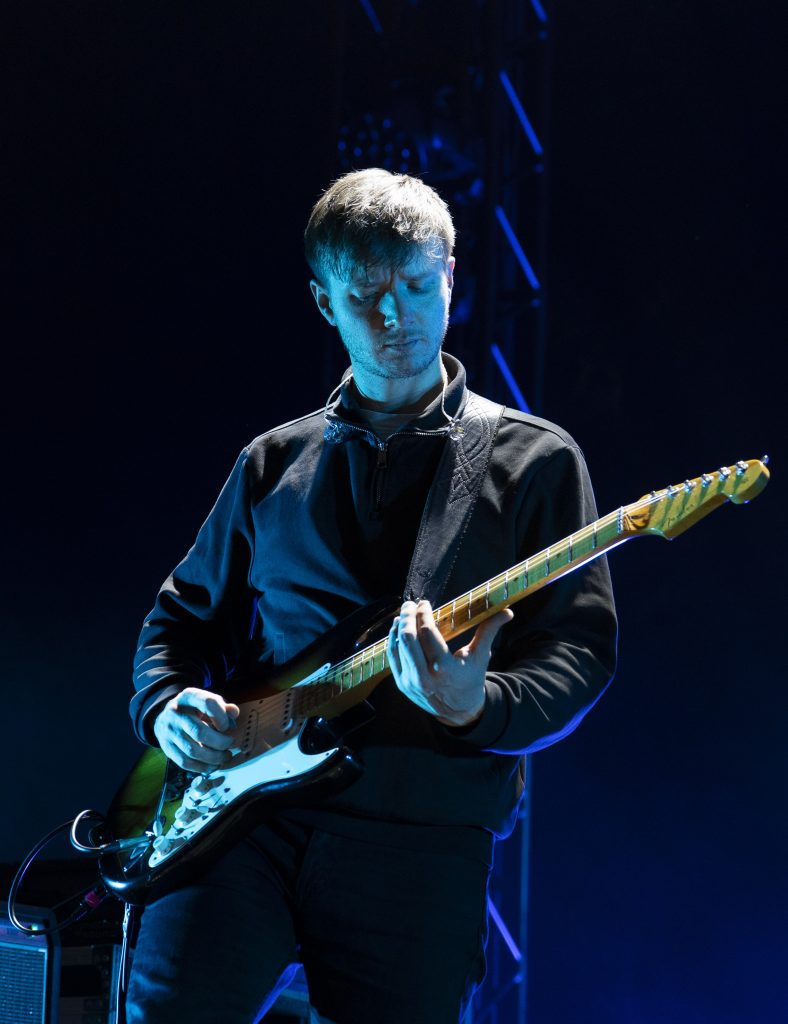
Gibson Digital/Courtesy photo
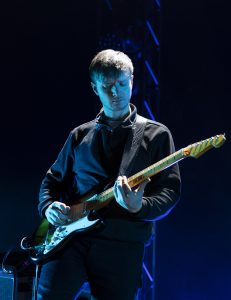
Pink Floyd’s greatest hits come to The Amp Aug. 18 through The Australian Pink Floyd Show: The Happiest Days of Our Lives Greatest Hits 26.
So what sets the Aussie’s version apart from the rest? First of all, the band has been touring since 1988, and, let’s face it: You can’t sell over 5 million tickets to concerts throughout 35 countries for that long without solid talent and authenticity. Plus, the band famously played for David Gilmore at his 50th birthday party, and that speaks volumes. Not to mention that everyone in the band is a huge Pink Floyd fan, bordering on nerd/geek levels, said vocalist Chris Barnes.
“Everybody’s absolutely obsessed with their job and what they do and what they bring to the table as a musician — or as a singer in my case,” he said. “We’re very passionate about our knowledge. We’re like professors in a laboratory in how we approach it. It’s not just a bar band.”
While the group did start as a bar band playing Floyd covers in South Australia, they reformed a few years later and moved to the United Kingdom, starting from scratch.
“By the time that they played at Gilmore’s 50th birthday in 1996, the band was playing in most towns in the UK,” he said, adding that they eventually expanded throughout Europe and did their first major tour in North America in 2004.

Support Local Journalism
In addition to musically welcoming Gilmore into his 50s, Pink Floyd drummer Nick Mason has been “nothing but kind about us whenever he’s mentioned the band in interviews,” Barnes said.
Anyone who’s a Floyd fan knows that the music stands out as its own category, and, although the band formed in 1965, their work is timeless, continually attracting a vast age range.
“As I look out to the crowd, there are people there my age, and people my kids’ age, and people my dad’s age watching the show,” Barnes said. “The lyrics that Roger (Waters) wrote for those famous albums still resonate today — the feelings of loss and things from the ‘Wish You Were Here’ (album). There’s discussions around war and oppression and the things that drive us insane, the pressures of modern life that still apply, even though it was written in the early ’70s. It hasn’t aged terribly like some stuff has.”
He also points to how Pink Floyd’s show did the talking, as opposed to a front man running around on stage. (Cue: “Oh by the way, which one’s Pink?”)
“They were kind of these anonymous guys, while the films were playing on the circle screen or the big light show was going on. There was always something happening. And certainly, that’s what Aussie Floyd is doing — it’s not about us, the band members. It’s about the show,” he said.
Still, all of the members of Aussie Floyd have great stories of how they got into Pink Floyd — or into Aussie Floyd. Barnes first heard Pink Floyd around age 5, when his brother played “Relics.” He said he was “absolutely terrified of ‘Interstellar Overdrive.'”
But he got over it, becoming such a big Floyd fan that he took his now-wife to Aussie Floyd for their first official date.
“It was that kind of hippie vibe thing going on, and I just thought, ‘This is cool. These guys are playing Pink Floyd music, and they’re really taking it seriously.’ There was a real passion on stage,” Barnes said.
Tribute bands weren’t very popular back then, and Aussie Floyd was one of the first out of the gate, garnering a vast reputation as it went on.
“I saw the band as a fan many times and just saw them get bigger and bigger and bigger and bigger. And by the time that I was on their radar, they were touring the world, as they still do. I’ve been in the band 10 years now, so it’s a mad journey — a mad story,” he said.
The band masters Pink Floyd’s complex sounds one by one, beginning with Gilmore’s guitar work.
“Steve Mac, who’s one of our founding members, is an absolute genius at the recreation of the sounds,” Barnes said, adding that some equipment is a modern replication of Pink Floyd’s, made by companies that solely exist to replicate old sounds because original equipment can’t quite hold up to 120 worldwide shows a year. “So we kind of straddle the modern versus original equipment.”
Effects pedals tend to include a mixture of original and new technology. For example, it’s unrealistic to tour with Floyd’s Binson Echorec, an Italian magnetic drum delay unit from the 1950s and 1960s that characterized the original band’s psychedelic soundscapes, he said. But, Aussie Floyd’s musicians test and tweak everything they use as a substitute.
“It’s this never-ending journey of trying to replicate what Pink Floyd are known for,” he said, adding that “across the vintage and the modern, you’ve got a reliable way of replicating the albums night after night after night, because that has always been the blueprint for Aussie Floyd. … Those kind of subtleties only come through doing it over and over and over — 100-plus times a year. If we’re working on a new song to go into the set maybe next year, we’re rehearsing it now. Even when you’re not on stage, you’re thinking about it, you’re working on it, you’re listening to things, you’re having email conversations with people, WhatsApp groups to go back and forth over things: ‘What about this? Have you heard this version?’ It’s a full-time job.”
This year’s dedicated to the greatest hits, starting from the beginning and extending into the latter years, when Gilmore ran the band after Waters left.
“We always play a Sid Barrett song each gig and make sure that he’s remembered, as they used to do themselves,” Barnes said, adding that, with this tour, “You’re going to know every song.”
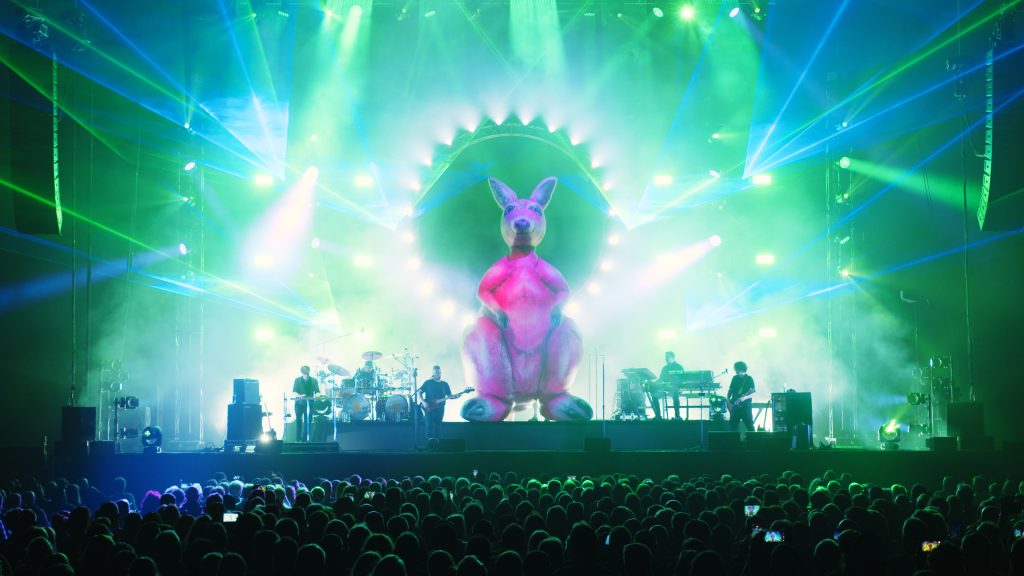
The band also debuts new visuals on its LED circle screen this year to enhance the set list, along with its mascot: a 26-foot inflatable kangaroo.