Avon’s new waste reduction strategy is already proving fruitful
Plan for construction, demo projects has diverted 488 tons from landfill since last August and saved money for contractors

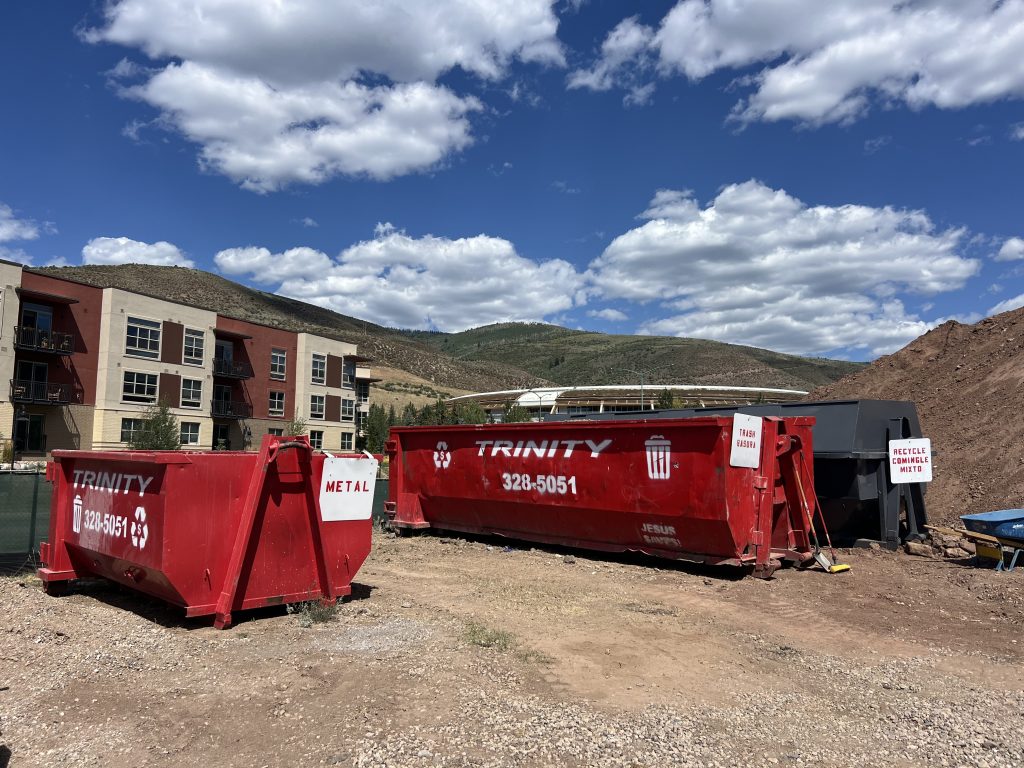
Zoe Goldstein/Vail Daily
Avon’s new project to address its climate impact has already been a resounding success.
Last August, Building Official Derek Place began asking contractors engaged in construction and demolition projects in town to try recycling their waste.
The request resulted in 488 tons of waste diverted from the Eagle County landfill, from just three projects, over the last year.
The process of recycling construction and demolition waste, Place said, is “easy.”
“This is all just via request,” Place said. “I’m not mandating or requiring any of this.”

Support Local Journalism
‘You will recycle anything you can’
The Climate Action Collaborative has identified diverting 100% of all recoverable construction and demolition waste from the landfill by 2030 as a strategy to reach Eagle County’s goal of reducing greenhouse gases by 50% from 2014 levels by 2030.
Avon is not the only municipality to work on diverting construction and demolition waste from the landfill. The 2024 Eagle County Waste Division report recorded that over 12,000 tons of construction and demolition waste materials were diverted last year countywide, a nearly 50% increase from 2023.
In addition, the Eagle County landfill is starting to fill up. In April 2022, it was estimated that the landfill has another 100 years of space at the current rate of use.
“My part is, let’s not put what we can recycle, divert, into the landfill,” Place said.
Construction and demolition projects can recycle clean wood, clean concrete, clean steel and mixed-use recyclables, along with composting organic waste. But many Eagle County projects do not.
“I sat in meeting after meeting after meeting, and nobody did anything. I got tired of waiting for somebody to do something,” Place said.
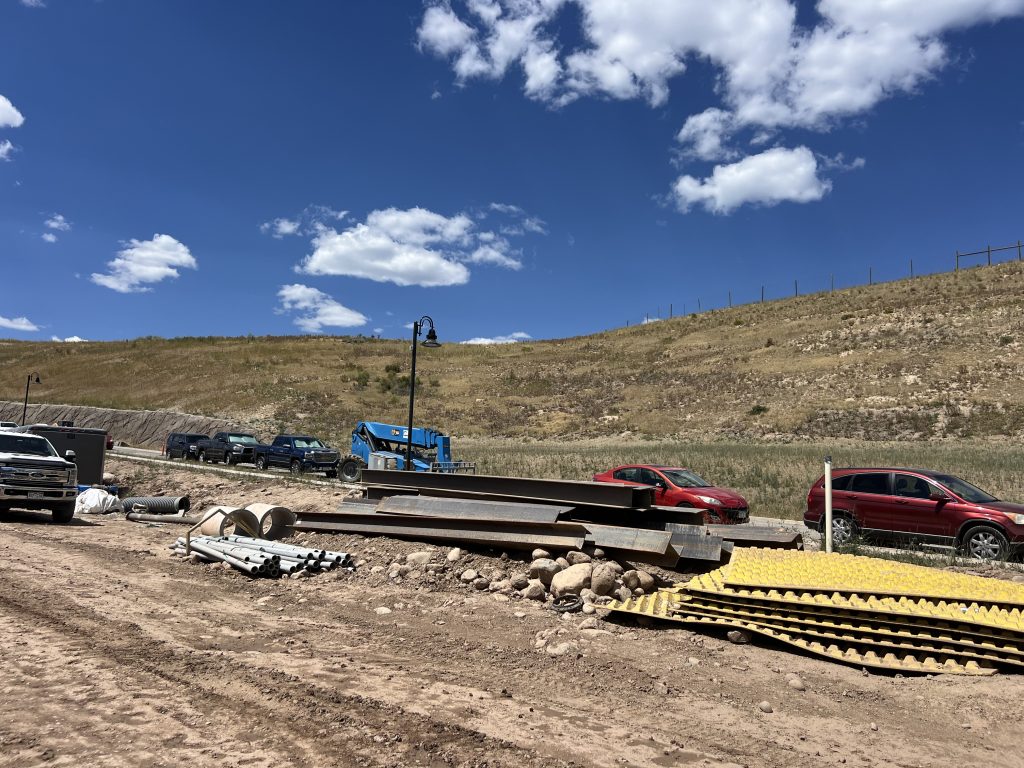
3 projects, 488 tons of diverted materials
Place started with a town project: the demolition of Avon’s old public works garage (a new, all-electric garage is currently under construction).
“I said, ‘You will recycle anything you can out of that building,'” Place said.
The project wound up diverting 22,000 pounds of steel and nearly 50 pounds of concrete. But the vast majority of the demolition’s waste — 355,000 pounds — still went to the landfill.
When the Salvation Army’s former home was demolished in May, Place once again asked that the waste be recycled, resulting in 13,000 pounds of steel diverted from the landfill. (It is unclear how much total waste the project generated.)
Place’s most successful ask to-date — by far — has been the Bosk Apartments project under Shaw Construction. The 240-unit apartment complex’s construction project has logged a diversion rate of over 90% since June, with just 63,000 pounds of over 1 million tons of total waste going to the landfill.
“This is something they should be proud of and get recognition for,” Place said.
Avon’s municipal code does not currently mandate that construction and demolition sites divert waste from the landfill, but several contractors have chosen to do so anyway.
“I try to get more things done without forcing them,” Place said.
Place’s take is that it is easy to divert waste on construction and demolition sites.
“You’ve got to pick it up and put it in the dumpster anyway. Why don’t you put it in one that’s just for steel?” Place said.
His theory is that an effective diversionary setup will also save contractors money. This is because it costs $48 per ton to drop off a load of trash at the landfill, while it can cost $15 per ton to recycle the same material.
“It makes more sense to do this,” Place said. “It’s cheaper to separate it … than to mix it.”
Walking Mountains has assembled a toolkit on construction and demolition recycling in Eagle County to make the process even simpler.
While the town might eventually mandate diversion for construction and demolition projects in its municipal code, Place is treating it as a last resort.
“I’m trying to do it voluntarily now, and I’m going to get to the point where it’s either going to work or it’s not going to work, and if it doesn’t work, then we’ll have to incentivize,” Place said.
RA Nelson project sets a new standard
RA Nelson, the contractor for the early childhood educational center that Avon and the Vail Valley Foundation are building in partnership, has embraced diversion at the job site.
The early child care center site will have five separate dumpsters for disposing of extra project materials: Wood, metal, general recyclables, concrete and trash. The goal is to divert as much recyclable material as possible.
“It’s the green program,” said Tim Ganley, construction superintendent with RA Nelson. “We keep track of everything that leaves the site, we keep track of which container it’s in and where it’s gone and how much has been taken away,”
Trinity Recycling, which provides dumpsters for construction and demolition trash and recycling, provides monthly diversion data totals as long as the contractor separates materials.
This is the first RA Nelson project to embrace recycling, but likely not the last.
“It helps everybody here,” Ganley said.
Ganley said he does not expect the active diversion project to add to the length of the project, and it will have a “tiny” impact on manpower to have someone go through the recycling bins each week to ensure each is strictly filled with its assigned material.
But even if it did cost slightly more and take slightly longer, it would be worth it for the environmental savings, Ganley said.
“I think it’s a win-win for everybody,” Place said. “If nothing else, it’s got to feel good. And that’s what it’s all about — doing the right thing, being responsible, (being) good stewards of the planet. We’ve all got to survive on this one planet. If we sit there and continue to contaminate it and destroy it, we’re all going to suffer. I’m not going to live forever. I’m doing it for the next generation.”
“This isn’t for me,” Ganley said. “This is for my kids and my grandchildren.”
“It’s for the future,” Place said. “You’ve got to look forward. We can’t just continue to do what our parents did.”