What CDOT officials want drivers to know as monsoonal rain brings flash flood warnings to the mountains
Interstate 70 westbound remained closed near New Castle after rain caused a mudslide this week — and more moisture is expected

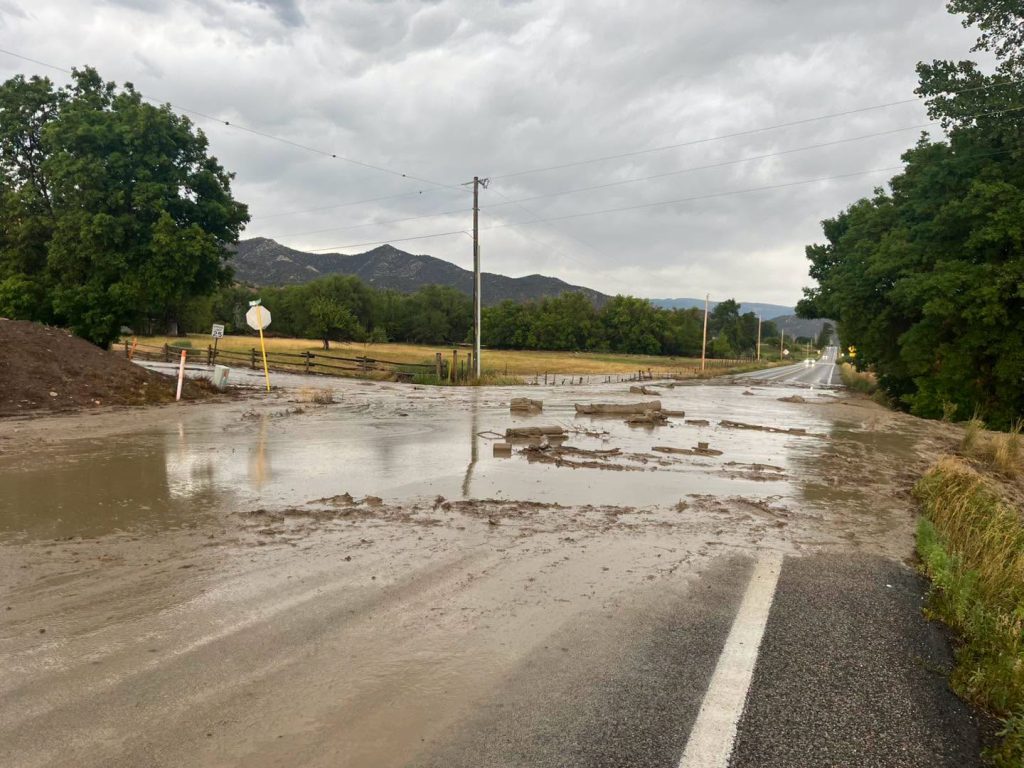
Garfield County Sheriff’s Office/Courtesy photo
The Colorado Department of Transportation is asking drivers statewide to prepare for a shift in weather as the monsoon season ramps up.
Forecasters are predicting an active pattern of storms this week that could bring sudden flash flooding, the risk of mudslides and other travel hazards, according to a news release from the transportation department.
The National Weather Service has flash flood watches in place for Eagle, Pitkin, Routt, Garfield, Rio Blanco and Moffat counties as well as counties in southwestern Colorado through Thursday afternoon.
“Excessive runoff may result in flooding of rivers, creeks, streams and other low-lying and flood-prone locations,” the advisory states. “Flooding may occur in poor drainage and urban areas. Recent burn scars will be especially susceptible to flash flooding and debris flows.”
State highways of particular concern include those new burn scars from the Ferris Fire in Dolores County and Gold Mountain Fire near Ouray, according to CDOT. Crews are reportedly monitoring these roads closely and are prepared to close them on short notice if conditions become unsafe.

Support Local Journalism
On Monday, mudslides pushed water and debris across Interstate 70, resulting in closures between Exit 97, near Silt, and Exit 105 near New Castle that have lasted for days. A detour remained in place Wednesday morning for westbound drivers.
Drivers should monitor National Weather Service flash flood watches and warnings along their route, check cotrip.org for real-time conditions and closures before leaving and prepare an emergency vehicle kit with extra food, water, flashlights and other necessities in case of extended highway closures, delays or detours, according to transportation officials.
Here’s what CDOT wants drivers to know about flash flood safety:
- Never attempt to drive through flooded roadways or standing water. Just a foot of rushing water can carry away a small car, and the road surface beneath may be completely washed away.
- Beware of burn scars and canyon roads. Rain falling miles away can trigger rapid mudslides or rockfalls downhill without warning. Drivers who see mud, rocks or water flowing on the roadway should stop or safely pull over before reaching the flow.
- Reduce speed and turn on headlines. Maintain extra stopping distance between vehicles. Hydroplaning can occur at speeds as low as 35 mph on wet pavement.
- Avoid using cruise control. Using cruise control on wet or slick pavement can make it harder to react to a sudden loss of traction.
- Avoid stopping under overpasses or unstable slopes. If trapped by rising water or a debris slide, stay inside your vehicle if it is safe to do so, or move immediately to higher ground if the water begins to enter the vehicle.
- Watch for lightning at higher elevations. Pull over if visibility is poor during a storm.