CDOT says dry winter and Broncos’ winning streak may have contributed to 3% drop in traffic at I-70 tunnels
This past July recorded the lowest number of vehicles passing through the Eisenhower-Johnson Memorial Tunnels in a decade

Andrew Maciejewski/Summit Daily News
Editor’s Note: This article has been updated to correct a date.
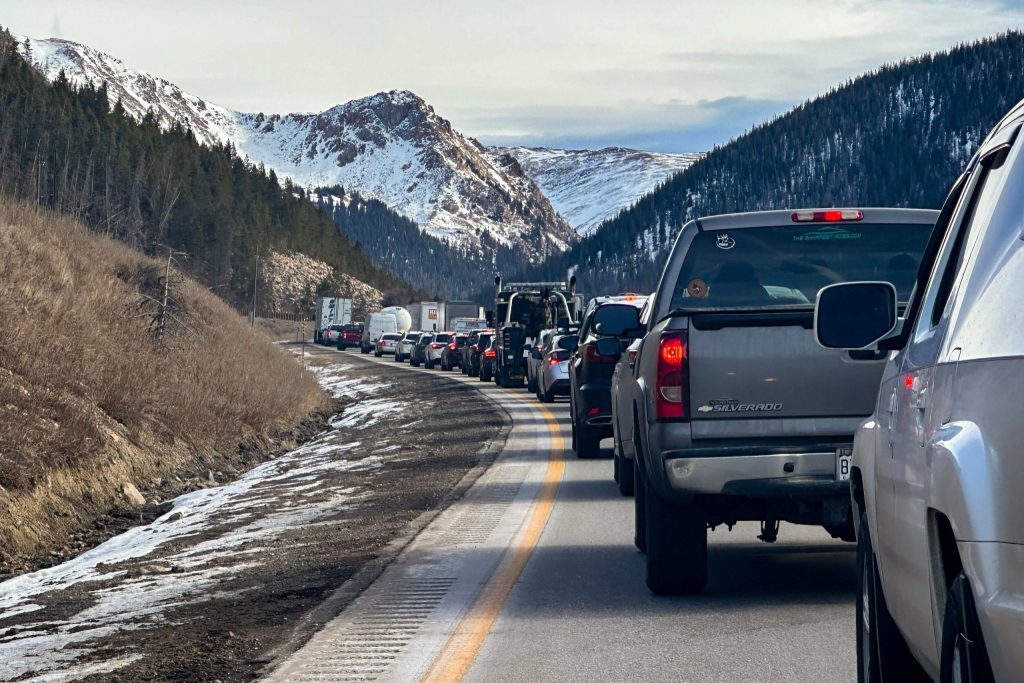
Traffic on the Interstate 70 mountain corridor dropped nearly 3% in 2025 compared to 2024, according to Colorado Department of Transportation data.
Traffic counts show just less than 12.6 million vehicles drove through the Eisenhower-Johnson Memorial Tunnels in 2025, one of the lowest totals since 2020, when the COVID-19 pandemic interrupted traffic patterns nationwide.
“Year-over-year I-70 traffic volumes fluctuate based on several variables, such as holiday timing and road conditions,” CDOT communications manager Austyn Dineen said in an email. “Consquently, these comparisons are not always apples-to-apples.”
Compared to 2024, the number of drivers on I-70 was down nearly every month last year, except for November. In November 2025, a total of about 862,750 passed through the tunnels, compared to less than 838,500 in November 2024, a nearly 3% increase year-over-year. That is despite November 2024 being exceptionally snowy, with Copper Mountain reporting 100 inches by the end of the month, and November 2025 being particularly dry.

Support Local Journalism
Still, Dineen said that “anecdotally,” the slight dip in traffic year-over-year could be due to the dry start to the winter season in 2025. She noted that in December 2024 more than 1.1 million vehicles traveled through the tunnels, compared to less than 1.01 million in December 2025, a nearly 10% year-over-year decrease. December 2025 saw record-low snowpacks and record-high temperatures in the mountains.
Dineen also suggested another reason that I-70 may have seen a slight decline year-over-year: Sunday night football.
“Additionally, the Denver Broncos’ current success may be a factor, as we often observe a correlation between winning seasons and reduced Sunday tunnel traffic,” she said.
Like most other years, last July was the busiest month on the I-70 mountain corridor, with about 1.24 million vehicles passing through the tunnels. That’s a more than 5% decline from the 1.31 million vehicles that passed through the tunnels in July 2025 and the lowest number of drivers on the I-70 corridor during the month of July in a decade. Notably, some mountain towns like Breckenridge reported a drop in tourism over the summer, including for the Fourth of July holiday.
Despite the slight drop in traffic, there were busy periods on the I-70 corridor in 2025, Dineen said. On Saturday, Sept. 27, for example, the tunnels recorded its third-highest hourly traffic volume on record with 5,720 vehicles passing through, which she attributed to “leaf peeping” in the Colorado high country.
There were also several notable incidents on the I-70 mountain corridor in 2025. In February, a major winter storm over the Presidents’ Day Weekend snarled traffic in Summit County and led to a 6-hour closure of the interstate, perhaps contributing to the 7% decline in traffic passing through the tunnels that month.
There were also two major road construction projects underway on the corridor: The Vail Pass Auxiliary Lane Project and the Floyd Hill Project, both of which required occasional traffic holds or road closures that impacted traffic. A bridge joint replacement project in the Glenwood Canyon also began in 2025.
In spring 2025, the Colorado State Patrol began proactively enforcing the state’s must-carry commercial vehicle chain law with regular chain-check operations along I-70. Then, in the fall, troopers began enforcing a new law restricting commercial vehicles from the left lane on parts of the interstate.
In 2026, CDOT plans to continue work at Vail Pass, Floyd Hill and Glenwood Canyon. The transportation department also plans to begin a multi-year project on I-70 at Exit 203 to Frisco next year.