Climate change is already costing Colorado. A new report estimates how much the costs will rise through 2050.
rough 2050. DEK: Climate trends like deepening drought and extreme heat could wind up costing Colorado up to $37 billon, a Colorado Fiscal Institute Report estimates

Austin Colbert/The Aspen Times
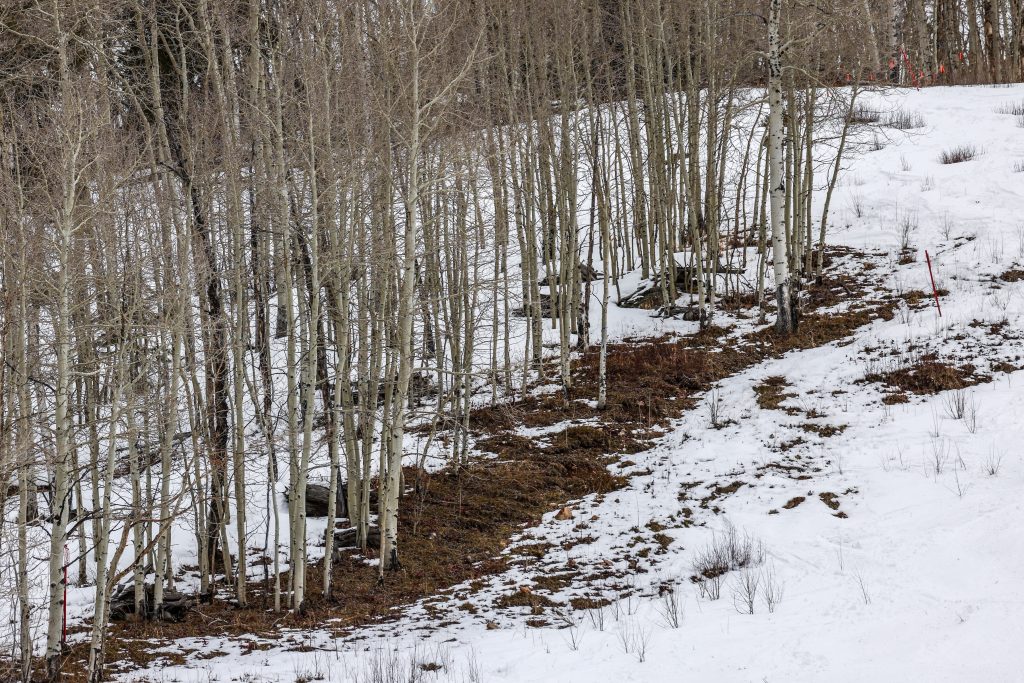
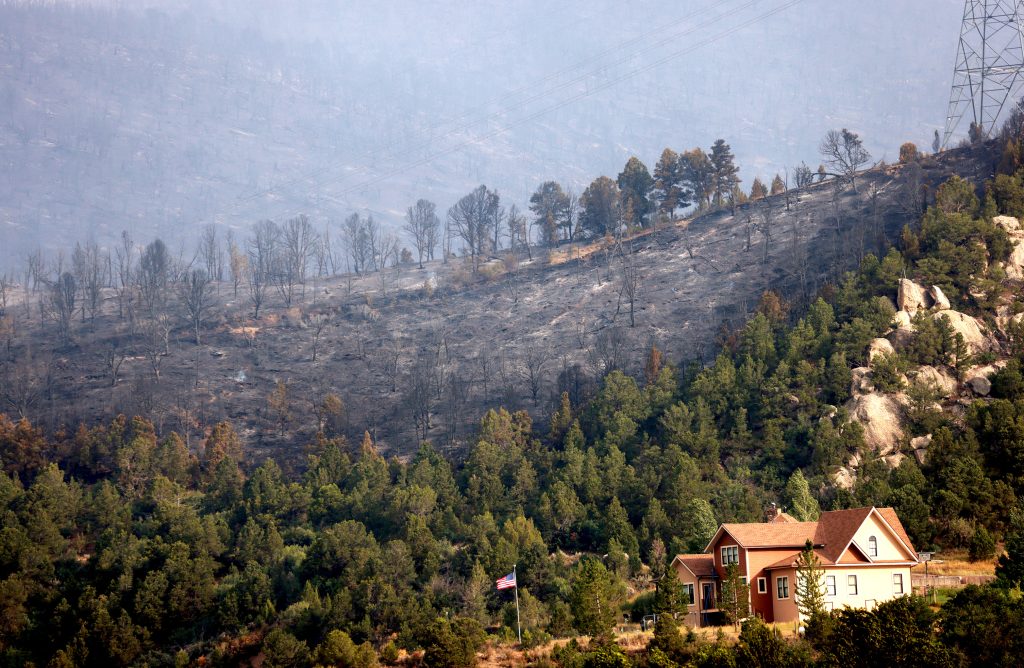
Shorter ski seasons, hotter summers, longer wildfire seasons, increasingly burdened infrastructure and other climate-related impacts could cost Colorado up to $37 billion by 2050.
This is according to an estimate from a new Colorado Fiscal Institute report, which aimed to evaluate how climate effects like drought and extreme heat will impact Colorado. Colorado Fiscal Institute is a left-leaning research and policy nonprofit centered on economic and fiscal policies.
Pegah Jalali, an analyst at the nonprofit and the report’s author, said the goal was to help “move the climate conversation from ‘we know it’s bad’ to a defensible, Colorado-specific accounting of what these impacts have cost and what they are likely to cost going forward.”
“Colorado, like other states, is actively debating how to pay for resilience and recovery,” Jalali said. “The report is meant to supply the ‘how big are the costs?’ backbone that these funding debates require.”
The report uses two global emissions pathways to model different scenarios for how much greenhouse gas will be emitted over the next 25 years. This includes a “medium-high” pathway, which assumes limited emissions cuts that slow but do not stop warming, and a “high-end,” or worst-case, pathway where emissions continue to rise significantly.

Support Local Journalism
Using these two scenarios, it estimates the costs associated with heat- and smoke-related deaths, property loss from wildfires, maintaining critical infrastructure like roads, buildings, stormwater and bridges, storm and flood-related damages, shorter ski seasons and more. It takes into account both the historic and observed costs in Colorado as well as projects the costs forward under these pathways.
“Between 2025 and 2050, our analysis finds that climate change could impose roughly $33-$37 billion in additional costs and resilience needs across Colorado’s health, infrastructure, wildfire, flooding and winter recreation impacts,” Jalali said.
These numbers are considered conservative by Jalali, who notes the report doesn’t analyze all climate-related impacts. It does not look at rising insurance rates and housing market impacts, non-fatal health impacts, agricultural yield and biodiversity loss, she listed as an example.
According to Jalali, the biggest driver behind many of the costs is extreme heat, with Colorado already seeing warming trends. The Colorado Climate Center reports that statewide annual temperatures rose by 2.3 degrees from 1980 to 2022 and are expected to continue rising into the future, coming with more severe heat waves.
One example given by the report is how this warming could further shrink Colorado’s ski season, which is a primary economic driver in many Western Slope communities.
“Aspen has lost over 30 days of winter since 1980,” said Chris Miller, senior vice president of sustainability and advocacy at Aspen One, the parent company to Aspen Skiing Company, which operates the four mountains in Aspen and Snowmass, in a statement provided with the report.
“That loss hits the mountain economy first — from lift crews and restaurant workers to hotels, retailers and local tax bases,” Miller added. “Protecting winter isn’t optional for us; it’s the business model.”
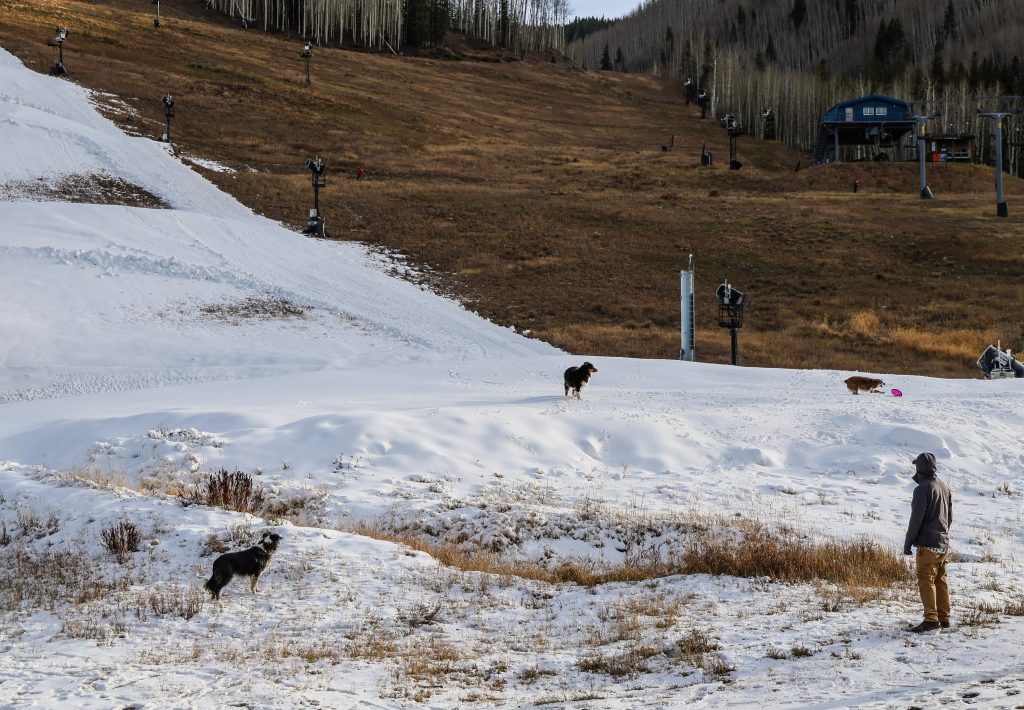
The report indicates that the natural season length — which it counts as the number of days from November to April that meet the minimum base-snow condition using climate-driven snowfall and melt alone — averaged 93.8 days from 2015 to 2024 and could fall by an average of 10.3 to 10.7 days per season through 2050, depending on the emissions model used. The natural season was reported at approximately 119 days statewide in 1981.
Using snowmaking, season lengths have been closer to around 137.7 days from 2015 to 2024, according to the report. Under the two emissions models, this could drop from between 125.1 days to 124.9 days in the next 25 years. The number of snowmaking days could increase from an average of 12.4 days a season from 2015 to 2024 to between 15.1 and 16.4 days seasonally from 2025 to 2050, depending on the model.
Snowmaking is “an adaptation cost that can partially offset warming-driven losses,” Jalali said.
With an increase in snowmaking, however, comes an increase in water use, which could result in an additional $98.2 million to $121.1 million in costs over the next 25 years, the report estimates.
“The broader impact is that warming can shorten the natural season and change reliability, which can reduce demand and visits,” Jalali said.
While the report does not directly look at the cost of prevention efforts versus the cost of impacts without intervention, Jalali claims that the numbers emphasize how efforts like planning and investment can save lives and avoid much higher costs later.
“We generally do not claim a single statewide benefit-cost ratio for prevention versus impacts, because that requires strong assumptions about which prevention measures are adopted, their effectiveness, timing and who pays,” Jalali said. “What we can say defensibly is: many damages scale rapidly with hazard intensity, so reducing exposure and vulnerability early can avoid compounding losses, especially for tail-risk events.”
Some segments of the report evaluate what Jalali calls “adaptive and resilience costs,” including the cost of increased snowmaking and the cost of home hardening and defensible space work to reduce wildfire risk for properties.
Lawmakers, advocacy groups and community members impacted came together at a press conference releasing the report in late January at the Colorado State Capitol to push for action..
“This study provides a conservative but frightening initial glimpse and estimate of a portion of the costs we can expect to incur in the years to come, and we know that these costs will be far greater,” said Micah Parkin, executive director of environmental nonprofit 350 Colorado, at the press conference.
Action includes conversations about how to “make polluters pay” for climate resiliency, which would put climate damage and preparedness costs onto major emitters of greenhouse gas. Sens. Lisa Cutter, D-Littleton, and Mike Weisemann, D-Aurora, and Rep. Elizabeth Velasco, D-Glenwood Springs, are planning to introduce a bill that would bolster protections for workers facing extreme heat.
For some, taking local action has become more pressing in light of the Environmental Protection Agency killing the “endangerment finding,” a scientific determination finalized in 2009 under the Obama administration that required the agency to regulate greenhouse gases from vehicles, power plants and industrial sources because they endanger human health.
“This report was released at the Colorado Capitol to show that the situation isn’t hopeless,” said Margaret Kran-Annexstein, the Colorado director of the Sierra Club, a national environmental policy nonprofit. “Local leaders must step up against the Trump administration and pursue even more ambitious efforts to reduce emissions, including pollution from power plants, vehicles and oil and gas infrastructure.”
While the Trump administration says killing the finding is a deregulatory action taken on behalf of American consumers and taxpayers, advocates say it is part of a broader initiative from Trump to roll back climate regulations and deny the severity of climate change impacts and damages.
“The report gives just some data points about climate threats to Colorado, including tens of billions in added taxpayer costs and the loss of human life from extreme heat,” Kran-Annexstein said. “Even if we take greenhouse gases out of the equation, rolling back climate rules is a massive handout to polluters who are working to deregulate other pollutant standards.”