Colorado’s Bustang bus service is facing a $25 million annual deficit as state pilot program ends, federal funds dry up
Bustang, which offers bus lines on Interstates 70 and 25, saw annual ridership increase 21% last year, according to the Colorado Department of Transportation

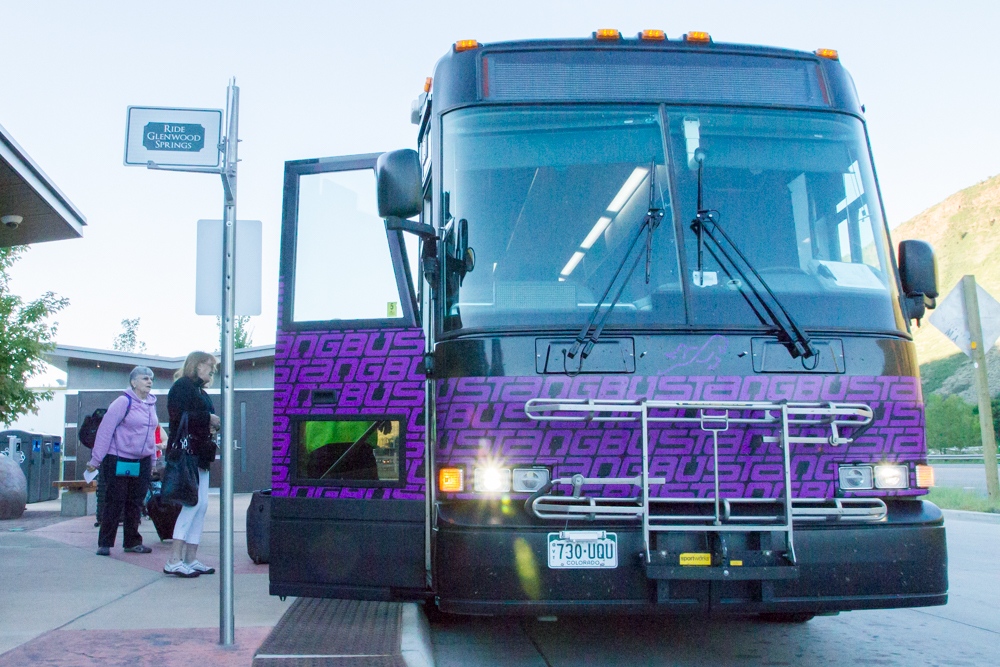
Aspen Times File photo
The Colorado Department of Transportation’s popular Bustang bus service is running on empty.
Ridership on the Bustang has doubled in the past three years to more than 350,000 bus trips annually, according to state transportation department statistics. But officials say the $65 million in state and federal funding that allowed for the expansion of the bus system is running out.
“The punchline here, obviously, is that that level of service results in a funding gap,” CDOT Chief Financial Officer Jeff Sudmeier told the Colorado Transportation Commission during a work session last week.
Bustang offers three main lines on interstates 70 and 25. It also includes the Outrider service that connects rural areas to the larger bus system, Snowstang, which brings skiers from Denver to four mountains and Pegasus, a faster shuttle-van option on I-70.
All told, Bustang costs about $50 million annually, with fares covering about $4.4 million of that, or less than 10%, according to CDOT. With the program’s biggest funding sources running out at the end of this fiscal year, Sudmeier said he expects Bustang to have a deficit of at least $25 million annually without additional funding.

Support Local Journalism
At current service levels, CDOT Division of Transit and Rail Director Paul DesRocher said that the Bustang mainline services offer buses about every 45 minutes to an hour. Bustang fares range from about $5 to $45 for a one-way ticket, depending on the distance, according to the service’s website.
In 2022, two major sources of funding allowed Colorado to expand the bus service. The state Legislature passed a bill dedicating $30 million to run a three-year pilot project to extend state transit services and the U.S. Congress passed the American Rescue Plan Act, which provided $35 million in temporary funding for Bustang, DesRocher said.
Those funds allowed Bustang to more than double the number of daily trips it offered between Denver and Colorado Springs and quintuple the number of daily trips it offered between Denver and Grand Junction, according to the transportation department.
With both funding pools drying up, DesRocher said Bustang will have to find additional funds to continue its existing levels of service. But he noted that the bus service has proved popular with Coloradans, so transportation officials are looking to expand it, rather than roll it back.
Bustang ridership has continued to grow every year since 2020 and is significantly above pre-pandemic levels. Last year, DesRocher said annual ridership increased 21%, compared to 2024.
CDOT Chief of Innovative Mobility Kay Kelly said with Bustang’s popularity, “We’ve demonstrated that this pilot program really has met a need for travelers in the state.”
Now, Kelly said the question is, “How we’re going to enable Bustang to keep providing the level of service that our traveling public has come to enjoy and expect and actually demand more of.”
Sudmeier said that in the short-term, the transportation department is proposing to reallocate about $19 million from other state programs to cover the Bustang program through the end of fiscal year 2027, which begins June 1. That will allow the transportation department to squeak through the fiscal year, he said.
After that, Sudmeier said the transportation department doesn’t have a lot of good options for the long-term funding of Bustang. He suggested one option could involve working with the Colorado Transportation Investment Office to leverage toll revenue and congestion-impact fee revenue to help fund the bus service.
The Colorado Transportation Investment Office is an independent, government-owned business within the transportation department with a legal responsibility to seek out means for financing transportation infrastructure projects in the state, according to the CDOT website.
“Unfortunately, there are not a lot of good solutions,” Sudmeier said. “I think we’ve kind of put on the table the short-term solutions we have, and we don’t have a lot of long-term solutions.”
Transportation Commissioner Juan Marcano, who represents Douglas and Arapahoe counties, noted that the vast majority of transportation systems don’t make money but instead provide a “public service” that is important to people’s lives.
Marcano noted that Bustang can provide an alternative means of travel for those who can’t drive or don’t have a car, so when considering the program’s deficit, transportation officials should also consider “the return on investment communities see across the state.”
Commissioner Hannah Parsons, who represents El Paso, Fremont, Park and Teller counties, said it is “pretty alarming” that the Bustang program “used one-time funding to expand to service levels we can’t afford to maintain.”
“I’m wondering whether there is ever a conversation around whether we can afford to maintain this level of service versus, ‘Do we just have to cut it back?'” Parsons asked. “Or is it the number one priority?”
But Commissioner Terry Hart, who represents Baca, Bent, Crowley, Custer, Huerfano, Kiowa, Las Animas, Otero, Prowers and Pueblo counties, said he believes that funding the bus system is “the right thing to do.”
“I really see the future of transportation, not only in Colorado but throughout the United States, as really trying to find a way to utilize multimodal transportation, particularly transit, as much as we possibly can,” he said.