Colorado Democrats, Republicans are headed for another fight over TABOR
A bill brought by Democrats would refer a ballot question to voters that could raise billions in K-12 funding by tapping into TABOR refunds. Republicans say that strategy has already proven unpopular with voters.

Robert Tann Follow
Robert Tann/Vail Daily
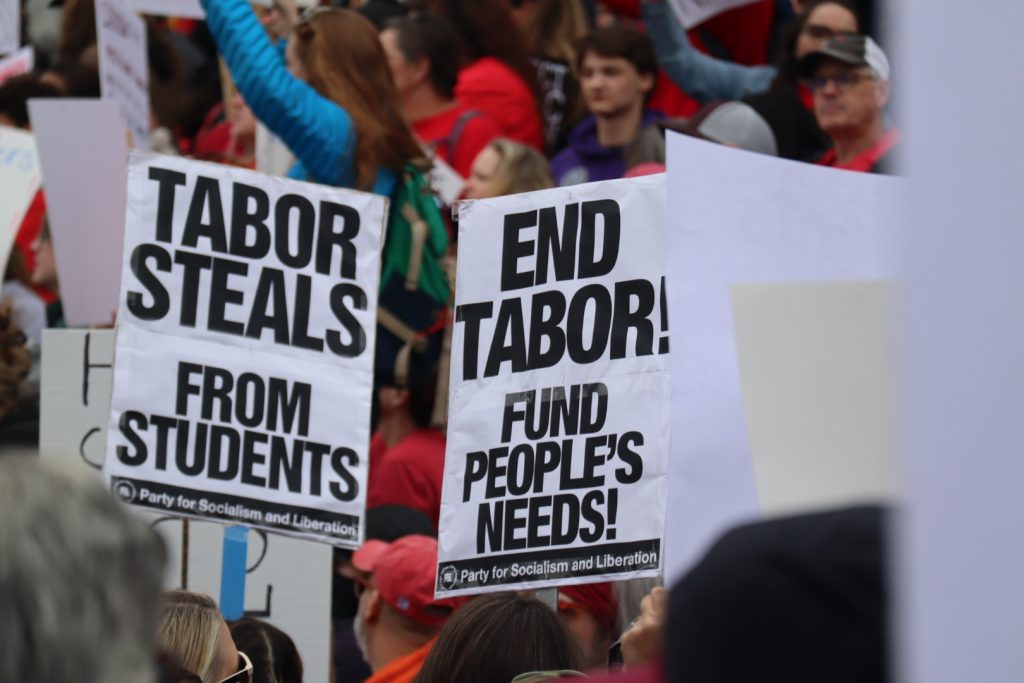
Rallying alongside a crowd of educators at the Colorado Capitol last week, Democratic lawmakers unveiled a new plan to raise the state’s decades-old revenue cap and unleash billions of dollars in new spending for K-12 education.
Their measure, Senate Bill 135, would refer a ballot question to voters this November that, if approved, would allow the state to retain tax revenue that would otherwise be refunded under the Taxpayer’s Bill of Rights, or TABOR.
TABOR is an amendment to the state constitution approved by voters in 1992 that limits state revenue growth to the rate of population growth plus inflation. Democratic lawmakers have tried, and failed, in recent years to change the cap, which they say limits the state’s ability to adequately fund education, health care and other critical needs.
“We make choices no one should have to make between classrooms and health care, not because Colorado is failing, (but) because the rules we operate under haven’t kept up with reality,” said Sen. Jeff Bridges, a Greenwood Village Democrat who is the prime sponsor of SB 135 alongside Sen. Cathy Kipp of Fort Collins, Rep. Meghan Lukens of Steamboat Springs and Rep. Jennifer Bacon of Denver.
Conservatives, who championed TABOR’s passage, have vowed to defend it. They hail it as a check on government spending that puts money back into taxpayers’ pockets. They also believe public opinion is on their side, often pointing to the results of past elections, like in 2023, when over 70% of voters rejected an effort to redirect TABOR refunds.

Support Local Journalism
“Ask yourself: Who doesn’t want a tax refund?” said Rep. Anthony Hartsook, a Douglas County Republican and chair of the House Minority Caucus. “Everybody. It doesn’t matter where you are on the (political) spectrum.”
Now, lawmakers are gearing up for another fight in the long-running battle over TABOR’s future.
The last time voters approved a major change to the TABOR cap was in 2005, when then-Governor Bill Owens, a Republican, led a push to suspend the cap for five years to help the state weather a dire budget environment. Owens himself was an original proponent of TABOR when it was passed in 1992, but he said a time-out on the spending cap was needed to avoid steep budget cuts.
More recent efforts by Democrats to skirt the TABOR cap, however, have been rejected at the ballot box. In 2019, voters defeated Proposition CC, which would have permanently ended the cap by eliminating TABOR refunds. Voters later rejected Proposition HH in 2023, which would have temporarily raised the cap and chipped away at refunds to offset proposed cuts to property tax revenue.
Democrats are projecting optimism that this year will be different because the ballot measure being proposed would take a more tailored approach to TABOR compared to past efforts. Republicans say voters will see it as yet another attempt to take away refunds, a proposal they believe is doomed to fail.
What raising the TABOR cap would mean for schools, taxpayers
Democrats believe voters may be willing to forgo their TABOR refund to support what has long been a priority for both parties: K-12 education.
They point to twin studies commissioned by the legislature and released last year that show Colorado would need to increase annual school spending anywhere from $3.5 billion to $4 billion to be sufficiently funded. A 2025 analysis by the National Education Association ranks Colorado 46th in the nation for starting teacher salaries.
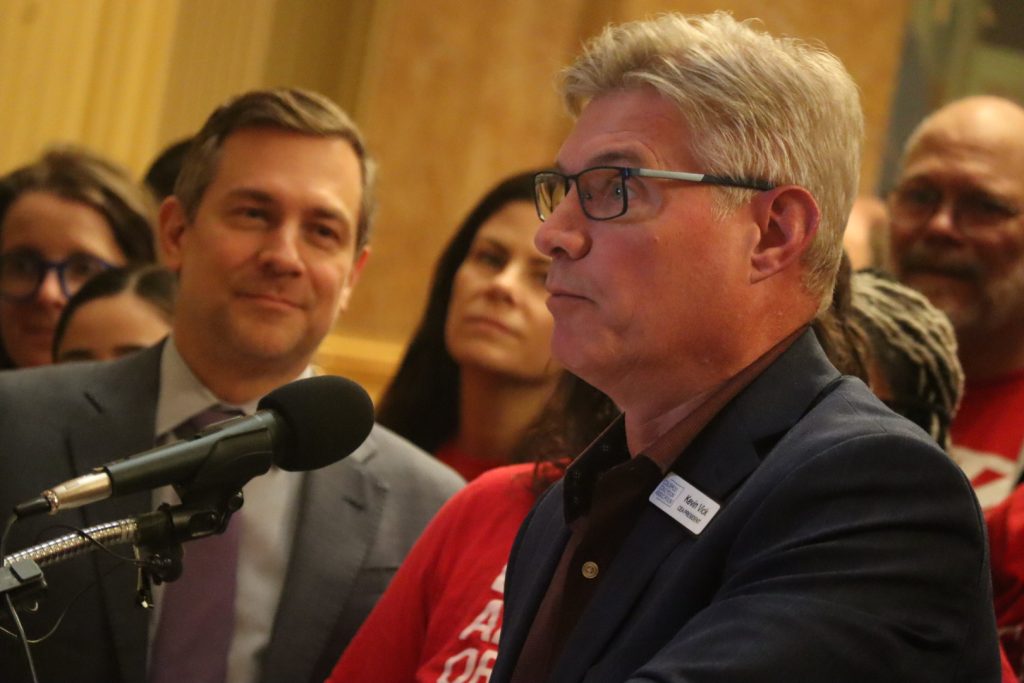
“Students are learning in overcrowded classrooms with fewer counselors, fewer special education supports, fewer resources,” said Kevin Vick, president of the Colorado Education Association, the state’s largest teachers’ union, during last week’s rally. “Our educators are leaving the profession in droves because salaries haven’t kept up with housing, health care and cost of living.”
SB 135 would raise the TABOR cap for 10 years by the amount of money the state spends on K-12 schools through its general fund, which is currently about $4.5 billion. That doesn’t mean Colorado would have $4.5 billion more per year to invest, since the TABOR surplus is based on how well the economy performs and can vary widely.
Surpluses reached historic highs in tax years 2022 and 2023, when the state collected $3.7 billion and $3.5 billion over the TABOR cap, respectively, but have since shrunk to $1.3 billion in 2024 and around $300 million in 2025. For this current tax year, Colorado is expected to fall under the TABOR cap due to slowing economic growth and a decrease in corporate tax revenue triggered by federal tax cuts in the One Big Beautiful Bill Act.
TABOR surpluses are expected to return in future years, and lawmakers believe by raising the spending cap, they could generate up to $2 billion more for K-12 schools over the next decade.
Vick said doing so would also help with funding for the state’s other priorities.
“This measure helps the entire state budget, not just schools,” Vick said during last week’s rally. “K-12 education is one of the largest portions of the state budget. When we untie education funding from this outdated cap, we reduce pressure on the general fund to support other priorities like Medicaid, behavioral health services, infrastructure, roads and public safety.”
Proponents have pitched the ballot measure as a way to help the state’s fiscal woes without raising taxes.
Sen. Barbara Kirkmeyer, a Brighton Republican who is running for Colorado governor, said she sees that as false advertising since the proposal would strip taxpayers of their TABOR refunds.
“Everyone in this state — it’s not just school teachers — it’s everyone in this state, for the most part, is having an issue with trying to figure out how to afford to live here,” Kirkmeyer said. “The answer isn’t: Take more taxes from them.”
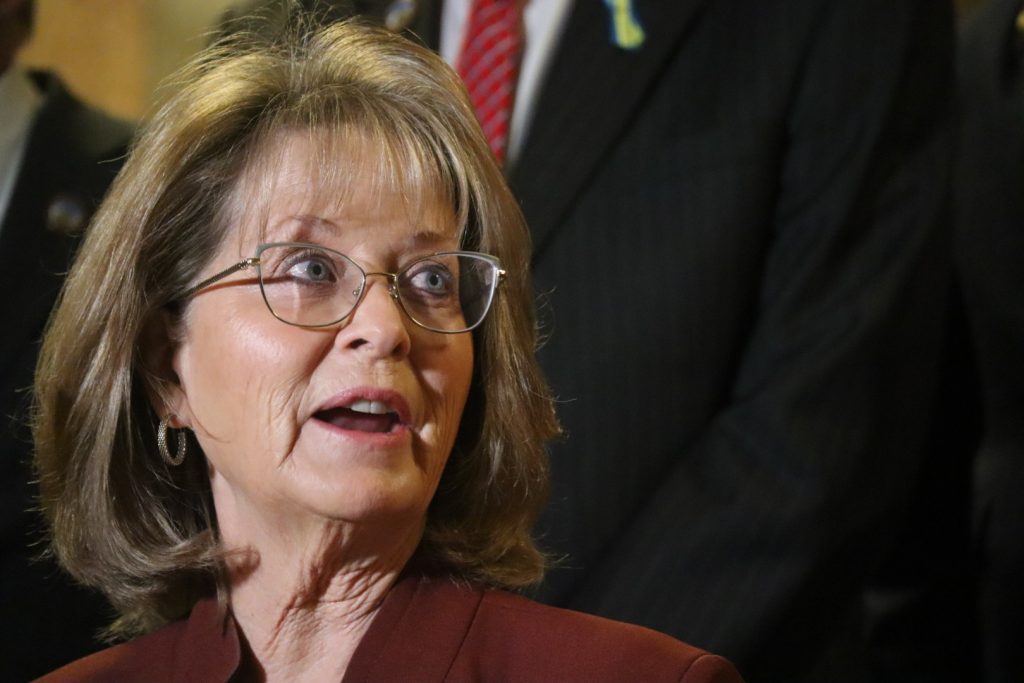
Kirkmeyer, who has been a leading Republican on bolstering K-12 funding, said the state has already made significant investments in public schools in recent years, including through measures she worked on with Democrats.
That included eliminating what was known as the budget stabilization factor, a Great Recession-era funding mechanism that allowed Colorado to fund K-12 education below what’s required in the state constitution, and passing a new school finance formula that is set to deliver $500 million in new funding over the next seven years.
Kirkemyer also sponsored an amendment to last year’s school funding bill that secured about $230 million in new funding for the 2026-27 school year for the state education fund, which serves as a dedicated revenue source for K-12 schools that is separate from the general fund.
Asked if she thinks current school funding levels are sufficient, Kirkmeyer said, “I think it’s where we’re at. If (Democrats) want to put more money in, then we should be cutting spending.”
The fight ahead
SB 135 has strong support within the Democratic caucus, with 38 regular sponsors, including progressives and moderates, in the House and Senate. That’s in addition to the four prime sponsors leading the bill.
The measure only needs to win a simple majority vote in both chambers, where Democrats hold large majorities, to make it onto voters’ ballots. While ballot measures that change the Colorado Constitution require support from two-thirds of lawmakers in the Legislature, increasing the TABOR cap can be done without a constitutional amendment.
Ballot measures can also be referred to voters without the governor’s signature.
Should the proposal make it to voters this November, Democrats and education groups signaled their campaign will be focused on improving schools, rather than upending TABOR.
“It simply asks Coloradans a question: Do we want schools funded near the bottom of the country, or do we want schools that lead the nation?” said Bridges, one of the measure’s prime sponsors.
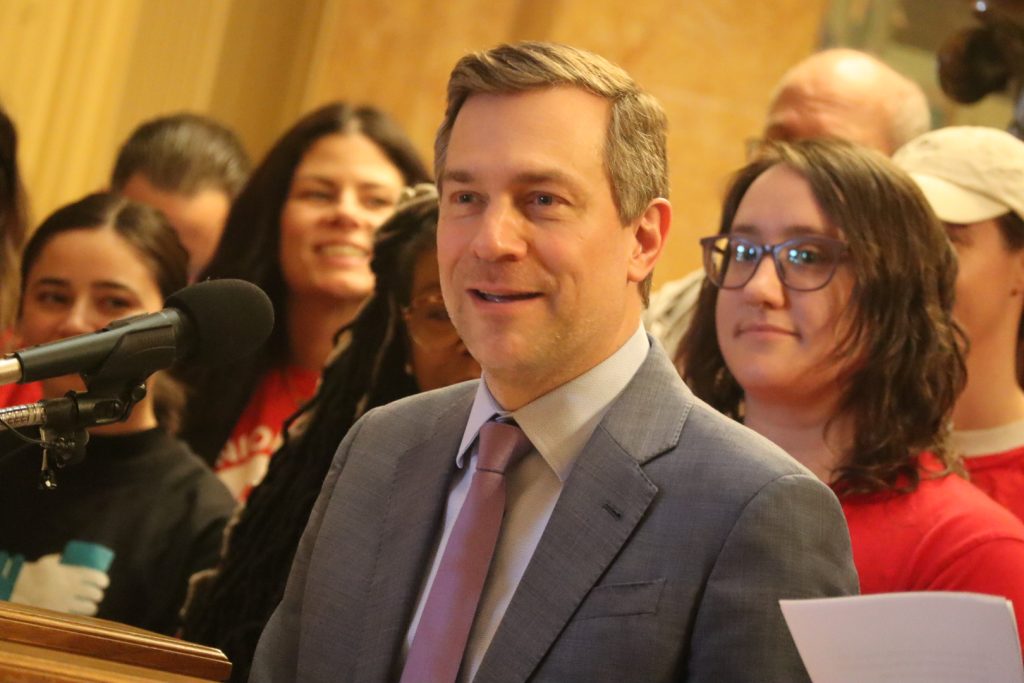
He added that the proposal has accountability measures in place to ensure voters know where the extra money is going. The ballot proposal would require an annual audit on how much money the state redirected to schools that would otherwise be refunded, and how that money was spent.
Republicans said that even with the more narrow focus on education, they don’t believe voters will support an increase to the TABOR cap.
“It’s insulting to voters that they keep bringing an issue back,” said Rep. Dan Woog, a Frederick Republican. “Yes, they’re getting more defined on it, but the reality is it keeps getting shut down over and over and they keep trying to push it through.”
SB 135 is scheduled for its first hearing before the Senate Finance Committee on Thursday.