Colorado Democrats remain frustrated with TABOR. Will they try again to change it?
House Speaker Julie McCluskie, a Dillon Democrat, says something must be done about the state’s ‘fiscal constraints,’ while Republicans remain fiercely protective of TABOR and its cap on government revenue

Robert Tann/The Aspen Times
Colorado lawmakers returned to the Capitol for their annual legislative session under the cloud of another major budget deficit.
State economic analysts estimate the legislature has an $850 million budget gap that lawmakers must close in the spring when they pass the state’s 2026-27 fiscal year spending plan. The Colorado Constitution requires that lawmakers pass a deficit-free budget, and lawmakers say cuts to programs and services are likely inevitable.
It’s a situation that’s becoming more familiar for legislators who last year had to contend with a $1.2 billion deficit during their regular session, as well as a nearly $800 million deficit over the summer due to federal tax cuts. Future budget deficits are also projected for the next several years.
For some lawmakers, the circumstance warrants a renewed look at whether to change the state’s revenue and spending cap imposed by the Taxpayer’s Bill of Rights, which they see as the driver of budget pressures.
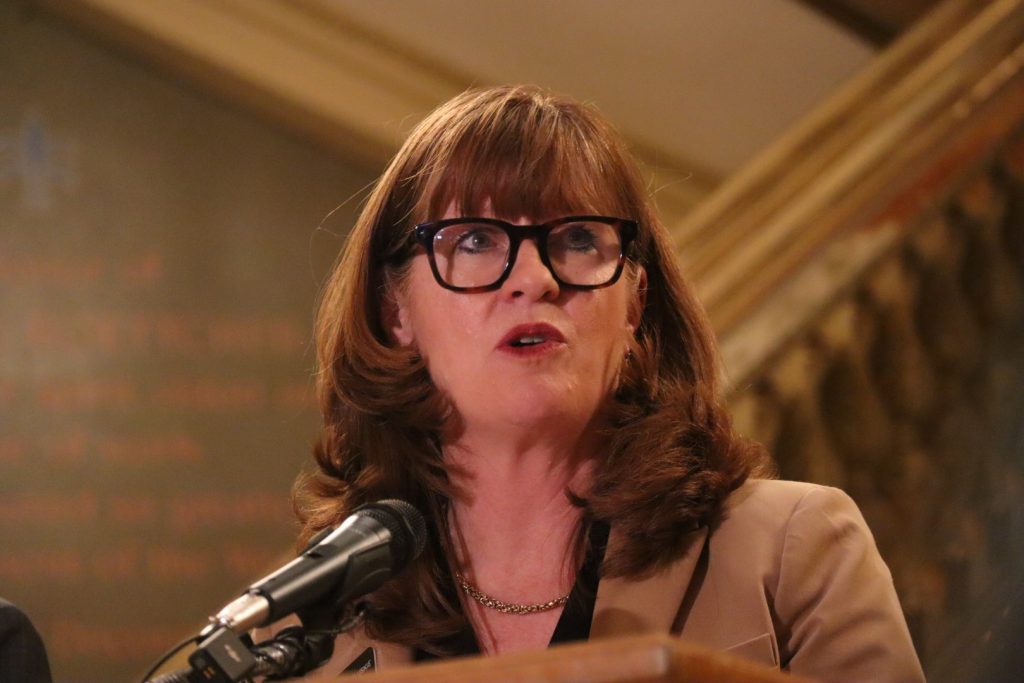
“It’s time that Colorado engage in a very real conversation about our fiscal constraints — what TABOR does well and what TABOR does not do well,” said Colorado House Speaker Julie McCluskie, D-Dillon, during a press conference at the Capitol on Tuesday. “We have got to find a way to provide for all of the services and programs that people in this state demand and hope for.”

Support Local Journalism
TABOR is a 1992 voter-approved amendment to the state constitution that, among other things, caps annual state tax revenue to the rate of population growth plus inflation. Any excess revenue the state collects must be returned to taxpayers, colloquially known as TABOR refunds.
Democrats have grown increasingly frustrated with the TABOR cap, which they say does not keep pace with the state’s needs, especially when it comes to essential services, like health care.
Medicaid, for example, has become the single-largest budget item in the state’s general fund, with its costs driven by factors like an aging population that needs more long-term care, and medical inflation that persists above the state’s overall inflation rate. Lawmakers have also expanded Medicaid services in recent years, which has increased costs. As the spending on the program increases, it’s boxing out other budget priorities, and has now become a prime target for cuts.
Changing TABOR would mean a battle at the ballot box because TABOR requires measures that increase taxes to be approved by voters.
McCluskie, flanked by Democratic House and Senate leaders on Tuesday, didn’t say whether Democrats would consider referring a ballot measure to voters to change TABOR, which they could do for the upcoming November 2026 election.
McCluskie said that she hopes that conversations around changing TABOR are “led by people” inside the Capitol, as well as “partners outside.”
“Everything that we do right now about modernizing our fiscal structure is critically important given the challenges that we’re facing with our budget,” McCluskie said. “We can’t ignore it.”
State Republicans remain fiercely protective of TABOR and have vowed to defend any attempts to overhaul it. They have characterized the state’s fiscal woes as an issue of budget mismanagement and have called on Democrats to prioritize state spending differently.
“We need to learn to live within our means, just like every Coloradan and every working family in this state,” said Sen. Barbara Kirkmeyer, R-Brighton, during a Senate Republican press conference on Wednesday.
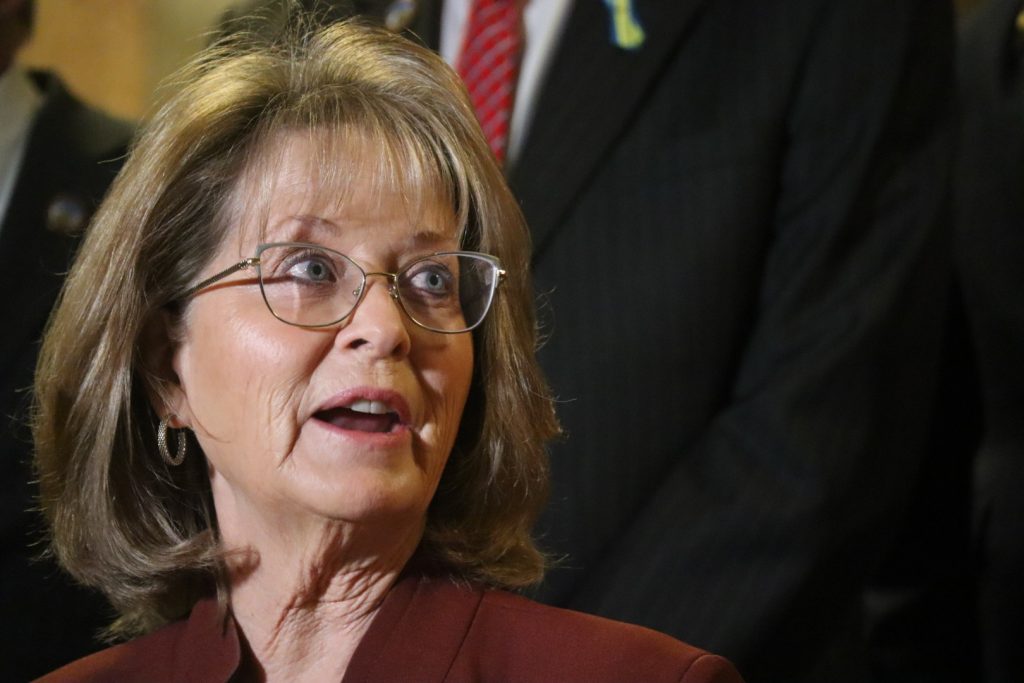
Kirkmeyer said after the press conference that she has heard that Democrats may try to refer a ballot measure to voters to increase the TABOR cap.
A ballot measure that changes the constitution requires two-thirds of lawmakers in both the Senate and the House to vote in favor for it to be referred to voters. Increasing the TABOR cap, however, can be done without a constitutional amendment, meaning Democrats could issue the ballot measure with a simple majority vote in favor.
Democrats control all branches of state government, with a 43-22 majority in the House and a 23-12 majority in the Senate. Even if a measure makes it to the ballot, however, convincing voters could be an even greater challenge.
Colorado’s electorate last approved a moratorium on the TABOR cap in 2005, passing the measure by a 4-percentage-point margin. More recently, however, voters have resoundingly rejected recent efforts to change the cap. In 2019, voters defeated Proposition CC, which would have permanently ended the TABOR cap by eliminating refunds, by a 7-percentage-point margin. Voters later rejected Proposition HH in 2023, which would have temporarily increased the cap and chipped away at refunds to offset property tax cuts, by a nearly 19-percentage-point margin.
Kirkmeyer said most Coloradans are “still pretty strongly in support of TABOR,” and expected that if an initiative to change the cap makes it onto this year’s ballot, it would fail.
“Any time you raise the (TABOR) cap, you’re increasing the amount of taxes that come in,” Kirkmeyer said. “Maybe we should quit calling it revenue and just call it what it is, it’s taxes that are coming into our coffers, and that means increasing taxes on all of us.”
Outside the legislature, a coalition of liberal groups is pushing to get an income tax measure on the ballot this year to change the state’s constitution in a way that raises taxes on higher earners.
TABOR requires a flat income tax, but under the ballot initiative being pushed by liberal groups, that would change to a graduated tax that is higher for wealthier households and lower for poorer ones. Supporters of the measure say it could raise more than $2 billion each year for public services.
That measure is facing setbacks after being twice rejected by the Colorado Title Board, which approves which initiatives can make it onto voters’ ballots. Supporters have vowed to rewrite their proposal to fit within the board’s constraints.
Beyond a referred ballot measure, Democrats have limited options for dealing with TABOR. Some Democratic lawmakers tried last year to circumvent the ballot box by proposing a lawsuit against TABOR on behalf of the legislature, arguing that TABOR deprives them of essential governing powers.
The lawsuit was never filed, however, because it would have required approval by both the House and the Senate. While the measure passed an initial House committee, it languished in the final days of the 2025 legislative session and never made it to a House floor vote.
McCluskie on Tuesday did not say whether a similar measure could be expected this session, calling legislative action on TABOR “unpredictable.”
“I want to be really clear: I think Colorado voters appreciate that they can vote ‘yes’ or ‘no’ on any sort of proposed tax increase,” McCluskie said.
“There are things about TABOR that voters love,” McCluskie continued. “But I think voters also want a top-notch early education system. They want to make sure that college is affordable for the young people that are coming into our workforce. They want to see adequate roads and bridges, and see those maintained in our communities. And, our safety net — critical to making sure that older Coloradans are taken care of in the hardest of times.”
The 2026 legislative session began on Wednesday, Jan. 14, and will last through May 13.