Colorado’s Joe Neguse tours facility in Avon to discuss impacts of federal funding cuts on rural health care providers
Impacts of stricter Medicaid funding, potential loss of premium tax credits may be 'really disastrous for rural health care'

Chloe Nicklas/Courtesy photo
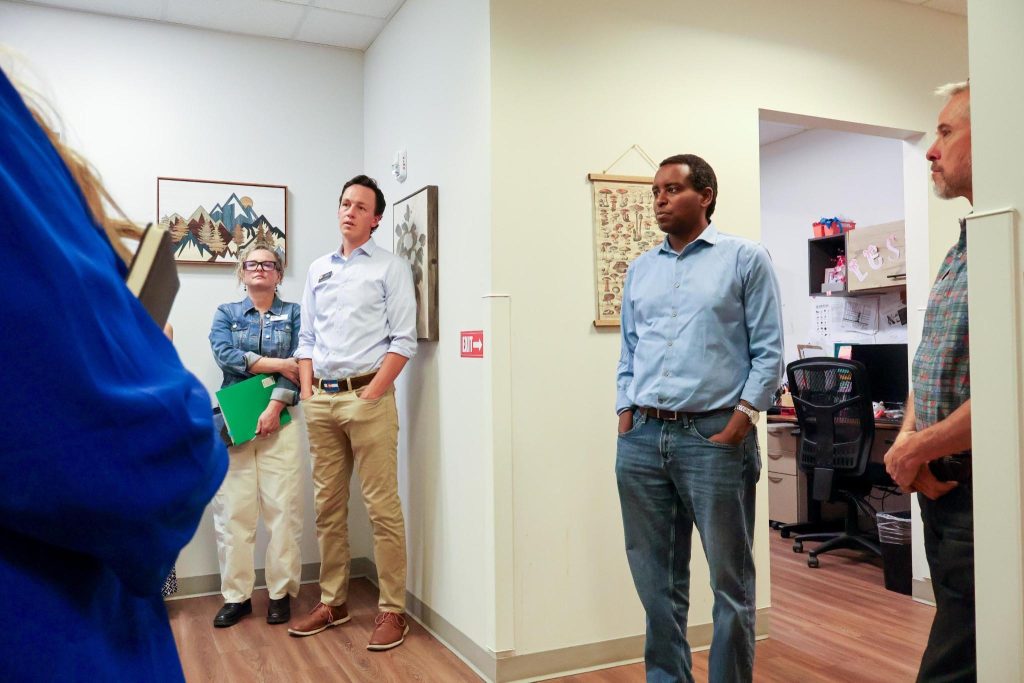
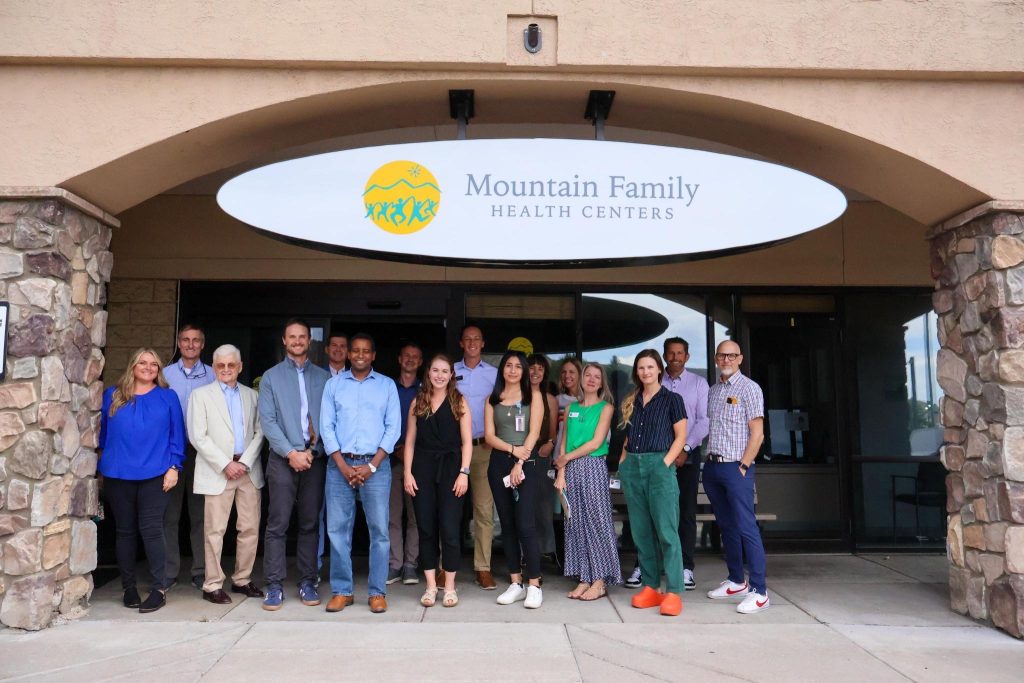
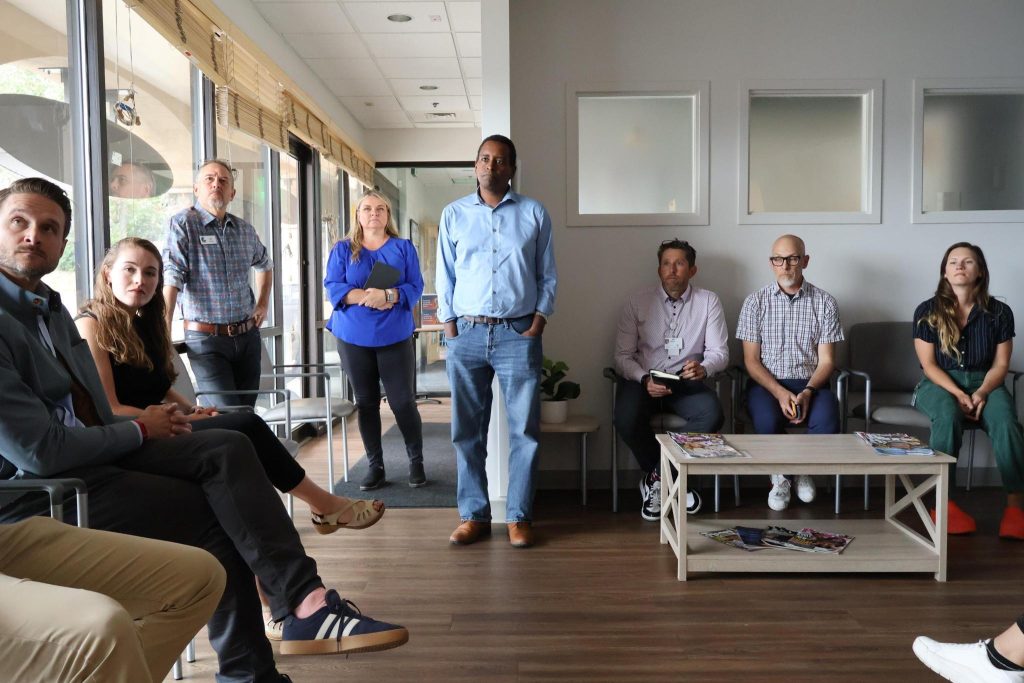
Rep. Joe Neguse visited Avon’s Mountain Family Health Centers clinic on Wednesday for a tour and a conversation about Medicaid and the state of federal funding for health services.
“I think the confluence of negative consequences that are going to flow from the budget reconciliation bill are really disastrous for rural health care access in particular,” Neguse said.
Mountain Family Health Centers provides affordable, comprehensive health care, including primary care, dental care and behavioral health care to a combined 20,000 patients, regardless of their ability to pay. The nonprofit has clinics in Avon, Gypsum, Basalt, Glenwood Springs and Rifle, along with school-based clinics in Avon, Carbondale and Glenwood Springs.
Medicaid cuts will further strain rural health care
Mountain Family Health Centers is particularly vulnerable to the Medicaid cuts contained in the “one big, beautiful bill” passed by Congress and signed by President Donald Trump earlier this summer.
Among the cuts to Medicaid, spending was reduced across the board, an 80-hour per month work, education or volunteer requirement was implemented ,and eligibility checks will occur every six months.

Support Local Journalism
Mountain Family Health Centers’ Avon clinic sees a high ratio of uninsured patient visits due to the cost of living — 42% in 2024, according to CEO Dustin Moyer. The clinic saw 34% of patient visits covered by Medicaid, 19% of visits covered by commercial insurance and 5% covered by Medicare. In Gypsum, 52% of 2024 patient encounters were uninsured, 31% were on Medicaid, 15% were on private insurance and 2% were on Medicare.
“A sweet spot is if they are more like 30% uninsured, 40% Medicaid and everything else that follows, and it has been well beyond flipped,” said Vail Health CEO Will Cook.
Many of Mountain Family Health Centers’ uninsured patients work jobs in the service sector or construction that do not provide employer-sponsored insurance, Moyer said.
The upstream preventative care Mountain Family Health Centers provides to its patients keeps patients out of “the most expensive, least effective area of care, which is the emergency department,” Cook said.
“I think a lot of times, folks think of community health centers and they conflate that with free care, or a free clinic,” Moyer said. “We are able to demonstrate that we are cost savings to the Medicaid system because of the advantages of keeping people out of inpatient (care).”
“If any CHC (community health center) goes, it truly is a safety net, and that means we worry people won’t have access to primary care or the dental care or the mental health behavioral health that you’ve heard, and that means problems fester, they go unaddressed and then they show up in our emergency department,” Cook said. “They do great work, but it is the least effective place to manage things that could be managed in an outpatient setting.”
Vail Health, which has a much lower number of patients enrolled in Medicaid — around 5% to 6% of physical health outpatient visits, though the number is rising — will also be impacted by the cuts. About half the patients treated at Vail Health’s recently opened inpatient behavioral health treatment facility, the Precourt Healing Center, are on Medicaid.
Helping people through the updated Medicaid enrollment process is “going to be an important part of helping people maintain or get access to Medicaid,” Cook said.
Premium tax credit cuts will increase the uninsured population if not prevented
The premium tax credit program under the Affordable Care Act, which offers a refundable credit that helps eligible individuals cover the premiums for their health insurance purchased through the Health Insurance Marketplace, is set to expire at the end of the year.
The loss of premium tax credits will be particularly impactful in Eagle County, where insurance premiums are among the highest in the state, forcing many to go without insurance or leave the area.
“Eagle County, Summit County, Routt County already have some of the highest prices on the individual market of any counties in the country, and we’ve done a lot of work,” said state Sen. Dylan Roberts. “Without the tax credits, that all essentially goes away, at least, that’s how it will appear to everyday consumers. A family of four in Eagle County could be facing increased costs of tens of thousands of dollars in increased costs every year to buy insurance, which, in practicality, we all know means they will either not buy insurance, or they will leave, they can’t live here anymore.”
The Colorado State Legislature is set to meet in special session later this month, with health care coverage topping the list of topics to be addressed.
“We are going to do what we can at the state level to try to save the reinsurance program in this upcoming special session, or hopefully a longer-term fix in the regular session in January, but if there is anything Congress can do before Sept. 30, that would save a lot of money and a lot of lives, to be honest, since there are a lot of people that are going to go uninsured if those tax credits don’t get extended,” Roberts said.
Congress can renew the premium tax credits by Sept. 30. Neguse said protecting the premium tax credits will be “at the very top of the list, with respect to priorities that me and many of my colleagues in the House Democratic Caucus are fighting for as part of the conversations around government funding.”
“We’re going to fight tooth and nail over the next four months, essentially, but if those tax credits don’t get renewed, I think the individual marketplace in areas like Eagle effectively collapses,” Neguse said. “I don’t know that people are ultimately going to buy insurance at the rates that have been proposed by the carriers for the state.”
If the number of uninsured patients climbs, that may spell disaster for rural hospitals.
“If you look around at Colorado, 70% of Colorado hospitals are running unsustainable margins right now. It’s probably closer to 85% in rural areas,” said Nico Brown, Vail Health’s chief strategy officer. “We keep investing in our community, in our mission, but the same thing that people complain about, of this consolidation of health care and the conglomeration, is what is going to happen when independent hospitals are no longer able to function, because you cannot run unsustainable margins in perpetuity.”
Immigration status-related cuts
The federal bill also introduced restrictions to Medicaid for some immigrant communities, and the Department of Health and Human Services doubled down by banning “illegal aliens” from accessing several public benefit programs, including certified community behavioral health clinics.
“That’s something that we’re monitoring really closely and trying to find our angle to ensure that we’re able to still be there for our community,” Moyer said.
‘Lean in and lock arms’
On the local level, Eagle County Commissioner Matt Scherr said the county plans to lead storytelling efforts to convince federal and state politicians to support measures that protect health care coverage.
“We will be able to tell the stories. We’ll understand what the added administrative costs are for local governments, with the result of fewer people served by Medicaid,” Scherr said.
Vail Health and Mountain Family Health Centers plan to lean into partnerships and creative utilization of funding.
“We’re only as strong as all of our nonprofit organizations in the valley,” Cook said. “I think we’re all just going to have to lean in and lock arms and figure out how do we help one another get through this, sharing the resources.”
Neguse said he will fight for the preservation of the existing health care system to serve current patients and work to envision a better system that more effectively provides care to future patients.
“The system was not working particularly well for the last several years, and individuals in this community, Eagle County, notwithstanding all of the herculean efforts around the insurance and the rest, and I think we’re going to have to also articulate a vision for what comes next,” Neguse said.