Colorado law requiring social media companies to quickly respond to warrants takes effect
Law is a bipartisan breakthrough for lawmakers after governor vetoed a similar measure last year

Robert Tann Follow
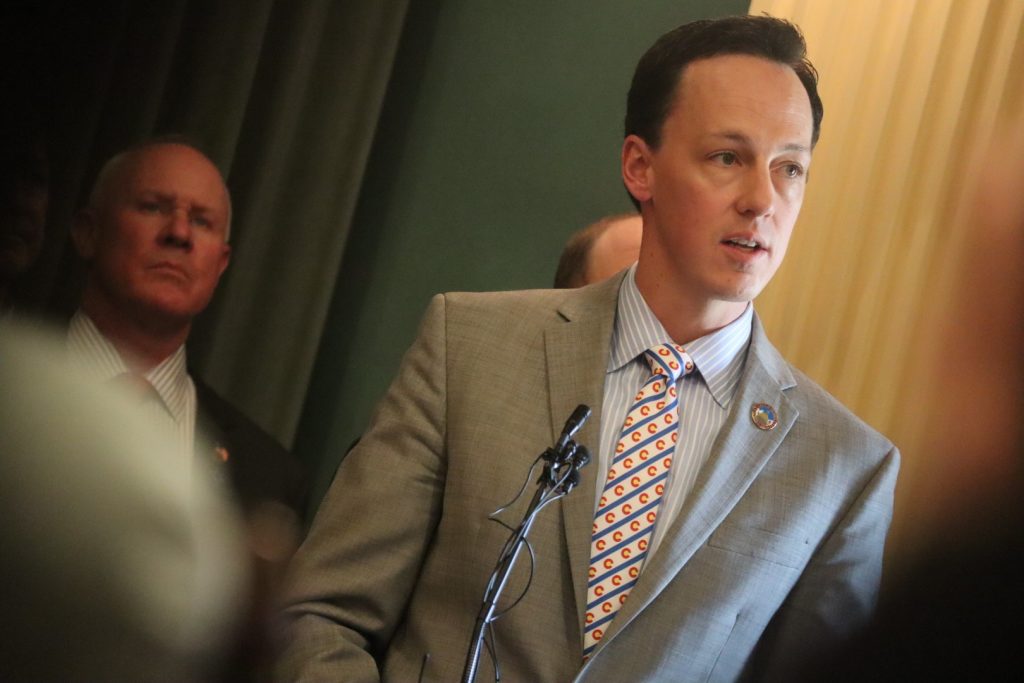
Robert Tann/The Aspen Times
A Colorado law aimed at forcing social media companies to quickly respond to search warrants took effect Aug. 12, marking a bipartisan breakthrough for state lawmakers who’ve sought to regulate online platforms.
Senate Bill 11 gives social media companies that operate in Colorado up to eight hours to acknowledge a search warrant from law enforcement and up to three days to comply with a warrant, though the timeline can be extended by a court. Companies are also required to be available to law enforcement at all times, including by providing a staffed hotline and contact information, and face up to $5,000 in penalties for failing to comply.
Lawmakers hope the measure will speed up investigations into criminal online activity, particularly as it relates to children, such as illegal sales of drugs and weapons. Law enforcement officials who testified during bill hearings earlier this year, as well as family members who’ve lost children to drug use, said in some cases, social media companies took weeks or even months to comply with investigations, which they said cost lives.
“As a former deputy district attorney, I saw firsthand how critical digital evidence can be in serious criminal investigations,” bill sponsor Sen. Dylan Roberts, D-Frisco, said in a statement.
Other bill sponsors were Sen. Lisa Frizell, R-Castle Rock, and Reps. Andrew Boesenecker, D-Fort Collins, and Jarvis Caldwell, R-Colorado Springs.

Support Local Journalism
The law is modeled after more far-reaching legislation last year that would have required social media companies to publicly release internal policies and data on how minors use their platforms, among other requirements. While the measure passed the legislature with bipartisan support, it was vetoed by Polis, who said the provisions around data disclosures could infringe on social media users’ privacy.
But Polis said he supported efforts to tighten timelines for warrants for social media companies, and in March signed SB 11 into law, saying at the time that the law will assist law enforcement with “helping to track down stolen bikes and cars to helping protect the lives of Coloradans from dangerous drugs.”
Polis did, however, veto another similar measure this year that would have imposed even stricter timelines for social media companies.
House Bill 1255 would have given companies up to 24 hours in some cases to respond to warrants. It also would have required companies to notify law enforcement about flagged content and would have given the attorney general’s office the power to levy penalties worth up to $250,000.
It was supported only by Democrats and came in response to last year’s shooting at Evergreen High School, which was carried out by a student whose social media posts had been under investigation by the FBI before the attack.
Polis said he vetoed the bill because he had concerns that its provision on flagged content would infringe on First Amendment rights.