After strong fall bookings, Colorado mountain resorts brace for what could be a slower winter
Consumer confidence is at its lowest point since 2014, adding uncertainty to an industry still recovering from a poor snow year

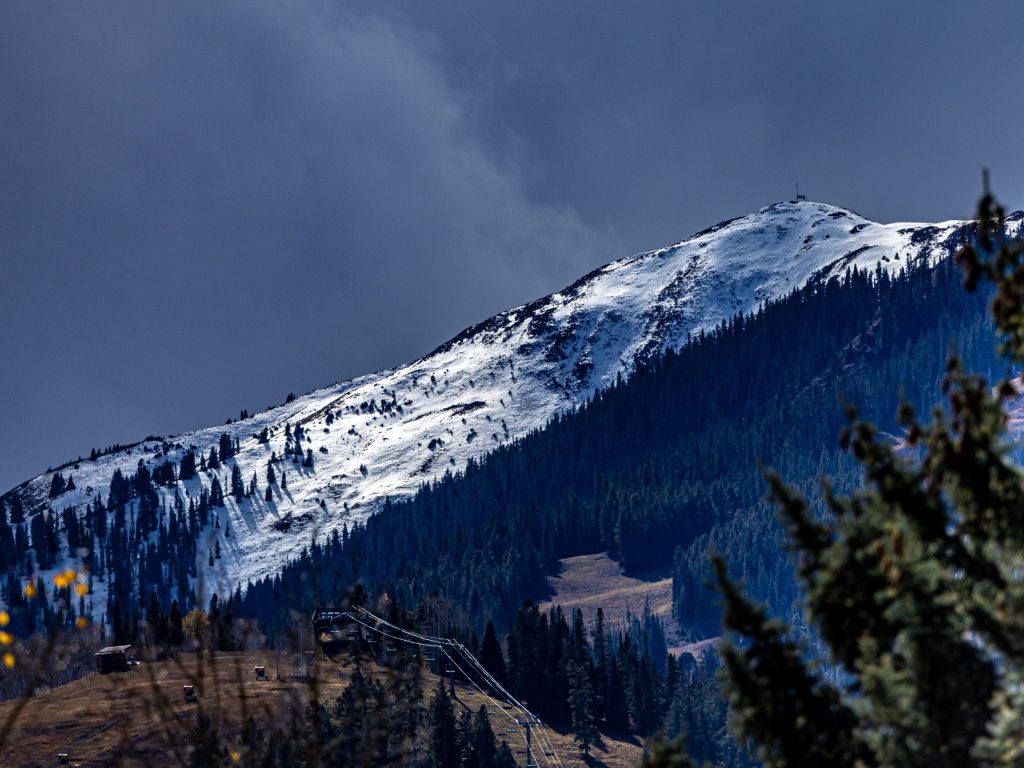
Austin Colbert/The Aspen Times
Colorado’s skies are barely starting to look like winter, but already mountain lodging properties are seeing a slowdown in winter bookings as economic uncertainty and memories of poor snow weigh on travelers.
Some travelers, instead of looking ahead to the winter season, have been more focused on hunting for fall bargains.
Colorado’s mountain lodging properties saw strong bookings and rates during the fall months, setting up a strong finish to the state’s summer tourism season. Tom Foley, director of business intelligence for Inntopia, said bargain-hunting visitors were likely drawn in by lower prices and longer stays during the cooler months of September and October, after months of rising price sensitivity among consumers.
Gas prices across most Western Slope counties are sitting above $4.70 as of Oct. 23, while surging jet fuel costs have driven airfares up by more than 22% nationwide compared to last year, according to the U.S. Bureau of Labor Statistics. Average 30-year mortgage rates also rose above 7% in September, increasing monthly bills by hundreds of dollars for homeowners.
Combined with job creation slowing in September and the national unemployment rate nudging up to 4.2% for the month, consumers are extra weary headed into the 2026-27 winter season.

Support Local Journalism
“All those things have conspired to actually pop consumer confidence down to a level that we’ve not seen since 2014, and that is telling,” Foley said. “Getting a one- or two-year low is one thing. Getting a 12-year low, going back to the tail-end of the Great Recession, considering what we’ve gone through since then, is surprising.”
Delaying summer trips to the less-expensive autumn months wasn’t the only way that consumers cut back on travel costs. he said summer patterns showed visitors would sometimes opt for shorter or midweek stays during peak months when daily rates were high.
For the traditionally more affordable month of September, price sensitivity among consumers proved to be beneficial for bookings. Occupancy for the month of September was up 6.8% year over year for Colorado properties, with average daily rates sitting up a notable 7.7% compared to last September. Together, the two delivered a 15% gain in revenue for the month, according to a DestiMetrics monthly market briefing report from Inntopia.
“That represents a lot of people hunting for that value add,” Foley said. “People were booking for September because it was such a good deal. You could still get summer without paying for summer.”
When looking at the full summer season of May through October, occupancy was up 2.2% for Colorado properties as of Sept. 30, due largely to strong early- and late-season bookings. When paired with the roughly 4% increase in daily rates, Colorado’s mountain resorts are reporting an approximately 6% gain in revenues.
Winter bookings see sluggish start
That active end-of-summer streak, however, has tapered off heading into the winter months. A combination of economic pressures and memories of last season’s dismal snowfall are dampening occupancy and rates for the first five months of the upcoming winter, according to the report. Foley added there’s also been “unmistakable pushback from consumers for average nightly rates around $750.”
“The issues that are out there around the economy are not improving, and consumers are actually pulling back even a little further this time,” he said. “The combination of economic instability, married with concerns about snow and adding in the cost of the investment in winter travel, is having a few impacts on booking patterns.”
Having reached halfway into the state’s booking volume for the season, occupancy on-the-books for November through March is down 5.5% for Colorado lodging properties, according to data from Inntopia. Average daily rates are down 2%, leading to a combined 7.5% drop in revenues compared to early-winter figures from September 2025.
An Inntopia analysis of western states showed that, during winter seasons following the five worst snow years over the last 21 years, lodging properties saw a slight 0.5% gain in occupancy and a modest 2.5% gain in average daily rates as of September. Because resorts have historically seen positive growth following a bad snow year, September’s drops in occupancy, rate and revenue recorded for the upcoming winter months suggest the slower-than-usual bookings are a result of more than just a bad snow year.
“We’ve got a much gentler rate out there, a negative rate in a few months, and still consumers holding way back,” Foley said. “It’s just hard to tell what percentage of that is economic uncertainty and what percentage of it is snow uncertainty.”
While some resort markets have been in a “wait and see” state throughout the past few months as consumers have begun acting on the approaching winter season, he said the market has reached an “inflection point” where lodging properties have to “look for the carrot that is going to entice the traveler to book now” in order to achieve a successful season.
“We’ve got a situation where consumers are waiting to see what’s going on, and in some cases, suppliers are waiting to see what consumers do,” he said. “And those that are really looking to mitigate early-season declines are building packaging, doing add-ons, messing with rate as much as they can without messing too much with the bottom line and finding these ‘carrots’ that help overcome the reticence of the consumer — and that’s where the success is being found right now.”
Foley said travelers that have already booked their Colorado winter stays are likely “destination guests” that book earlier, stay longer and want a wider cancellation window on account of longer travel distances, which is why bookings and average daily rates for February are stronger than other winter months. Those resort destinations are now waiting on national and local travelers to make their dent in the booking numbers.
“(People booking in February) are looking deep enough into the season to sort of mitigate the concerns about snow. They’re thinking, ‘Well, by February, it ought to be looking pretty good.’ That is combining to help February have some pretty good rates,” he said.
Only time will tell whether Colorado properties are able to surpass bookings and revenues from the 2025-26 winter. Whether they manage to outpace bookings and revenues from a “normal” snow year in Colorado, however, is an entirely different challenge.
“It’ll be interesting to see how it ultimately plays out,” Foley said.
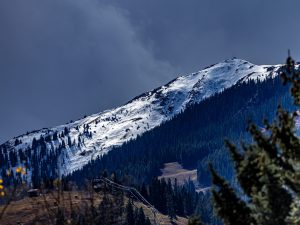
After strong fall bookings, Colorado mountain resorts brace for what could be a slower winter
Colorado’s skies are barely starting to look like winter, but already mountain lodging properties are seeing a slowdown in winter bookings as economic uncertainty and memories of poor snow weigh on travelers.