Lawmakers move to insulate Colorado nonprofits from federal political backlash
Legislators from both parties see reason to protect Colorado from politically-motivated federal actions that could revoke a nonprofit’s tax-exempt status

Robert Tann Follow
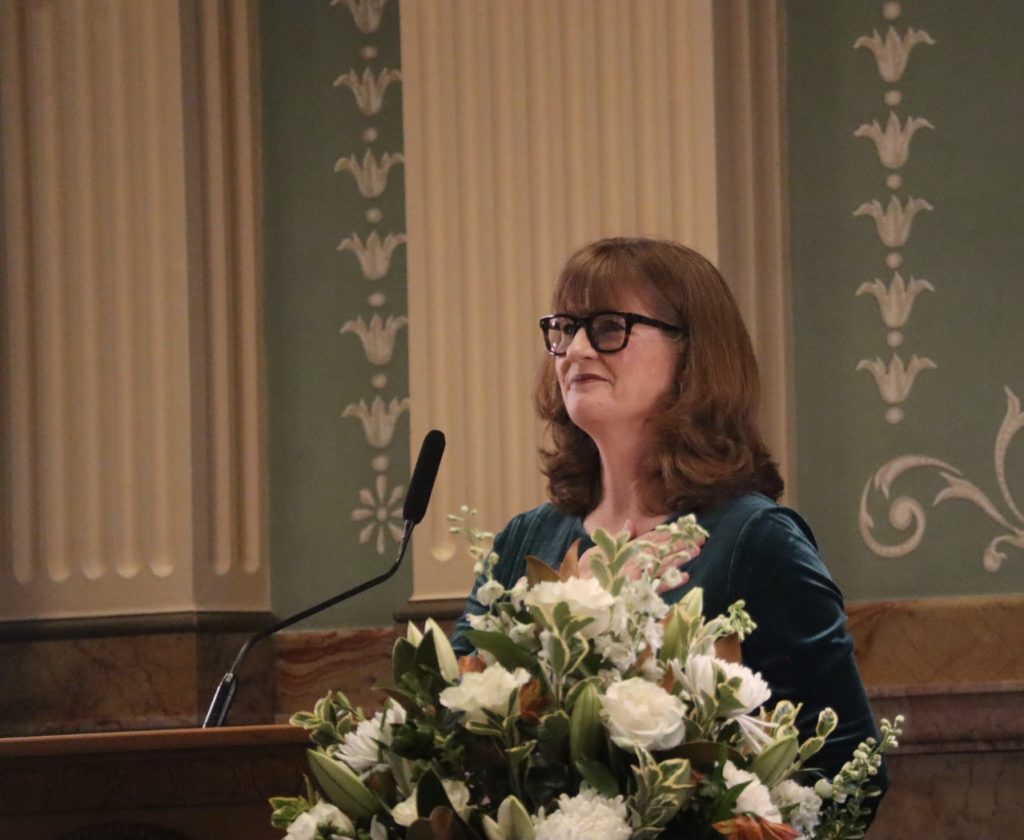
Robert Tann/Vail Daily
Colorado lawmakers are poised to pass legislation ensuring nonprofits can still reap state-level tax benefits if they lose their federal tax status due to political reasons.
The measure, Senate Bill 9, comes in response to what lawmakers say are continued threats by the Trump administration to strip nonprofits that don’t align with its policy goals of their tax-exempt status.
Colorado House Speaker Julie McCluskie, D-Dillon, a prime sponsor of the bill, said SB 9 will help protect “our family resource centers, our environmental organizations (and) the advocacy groups that work for our immigrants or education.”
“Think of any nonprofit in your community,” McCluskie said Tuesday as the bill was being debated on the House floor. “This bill ensures that they will continue to qualify for sales tax and use tax exemptions.”
Other sponsors of the bill are Rep. Rebekah Stewart, D-Lakewood, and Sens. Marc Snyder, D-Manitou Springs, and William Lindstedt, D-Broomfield.

Support Local Journalism
Colorado’s definition of a tax-exempt charitable organization currently mirrors the federal definition in section 501(c)(3) of the federal Internal Revenue Code. That means that if the federal government chooses to no longer recognize an organization’s 501(c)(3) status, that organization could be at risk of losing its tax-exempt status at the state level.
SB 9 would allow nonprofits in Colorado to continue receiving state tax benefits so long as they have a current or former letter from the Internal Revenue Service proving their 501(c)(3) status. The bill also directs the state not to assume that an organization is no longer qualified for state tax exemptions just because of a change in its federal status.
While the bill is sponsored by Democrats, it also garnered support from several Republicans, with many lawmakers viewing it as a means to safeguard nonprofits from potential political retribution under either party. Four Republicans voted for the bill in the Senate before the measure moved to the House.
Jack Murphy, government affairs director for the Colorado Nonprofit Association, which represents over 1,000 nonprofits across the state, said during committee testimony on the bill earlier this month that politically-motivated threats have come from both Republican and Democratic administrations.
“While mission areas deemed ‘left-leaning’ have come under fire more recently, mission areas that are deemed ‘right-leaning’ have been targeted under previous federal administrations like the Biden and Obama administrations, and could be targeted again in the future,” Murphy said.
Several House Republicans attempted to pass amendments to the bill during a procedural vote on Tuesday aimed at placing more guardrails on how and when the state reviews and determines tax exemptions for nonprofits.
“There are times when a 501(c)(3) status is abused, or a charitable organization status is abused; there could be fraud involved in it,” said Rep. Ken DeGraaf, R-Colorado Springs.
Proponents of SB 9 said the bill still allows the state to deny tax exemptions to nonprofits that have lost their federal status for legitimate reasons, like tax violations or fraud.
McCluskie said the Colorado Department of Revenue already has the ability to flag, review and deny “questionable” organizations and can work with the Internal Revenue Service to cross-check an organization’s practices.
Democrats rejected all but one of the amendments brought by Republicans. They accepted an amendment by Rep. Stephanie Luck, R-Penrose, to clarify that the bill does not prevent the Colorado Department of Revenue from reviewing whether an organization qualifies as a charitable organization.
SB 9 passed a preliminary voice vote in the House on Tuesday. It still needs to pass a recorded vote before it can clear the chamber and be sent back to the Senate, which will need to approve amendments before sending it to Gov. Jared Polis for his signature.