Colorado Snowsports Museum celebrates 50 years in 2026
Today, the museum carries the country’s largest collection of 10th Mountain Division artifacts and thousands of keepsakes detailing people, places and developments that built the Centennial State’s winter adventure scene
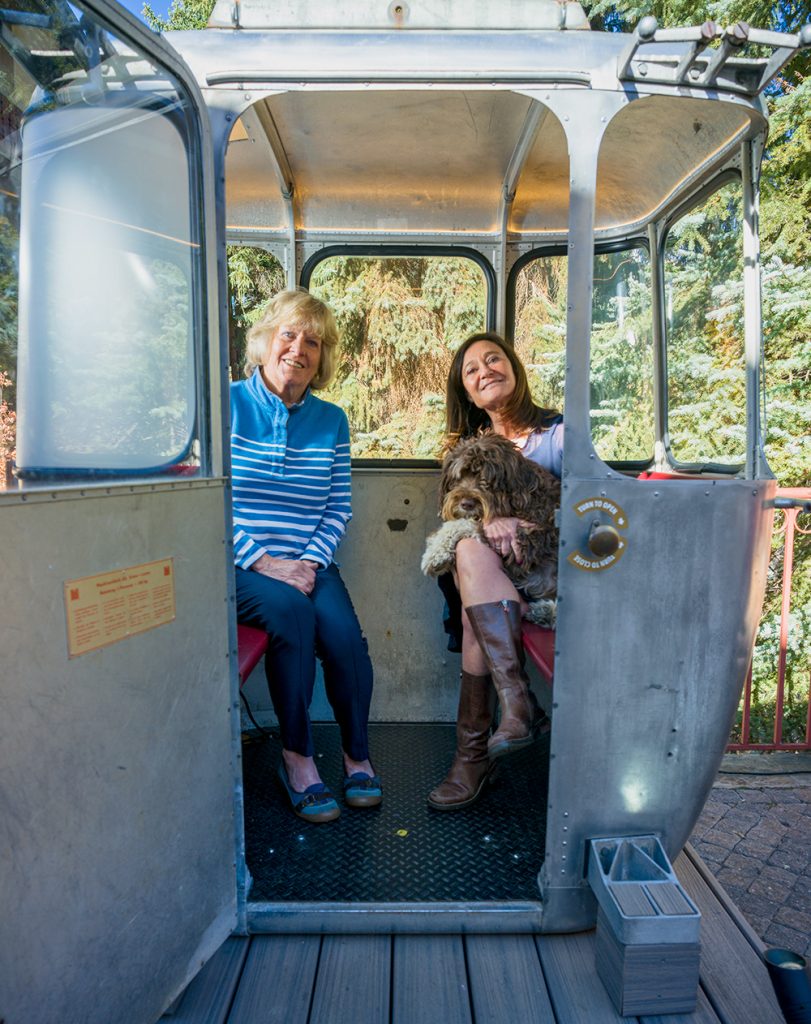
Brent Bingham/Vail Valley Magazine
 1880s wooden skis used by a livestock farmer from Fort Collins.[/caption]
[caption id="attachment_597903" align="alignnone" width="225"]
1880s wooden skis used by a livestock farmer from Fort Collins.[/caption]
[caption id="attachment_597903" align="alignnone" width="225"] Metal hand warmer, circa 1950s.[/caption]
[caption id="attachment_597902" align="alignnone" width="300"]
Metal hand warmer, circa 1950s.[/caption]
[caption id="attachment_597902" align="alignnone" width="300"] Warren Miller's Bell & Howell camera.[/caption]
When Cindy Clement started her first volunteer shift at the Colorado Ski Museum, it was a tiny circular building off Vail Road where Mayors’ Park now sits. The building had no heat, but featured a mishmash of ski-related artifacts, organized as well as the space would allow. It was 1976 and Colorado’s status as a mecca for winter sports was at its peak. Although Governor Richard Lamm had successfully led a campaign opposing the Centennial State’s bid to host the 1976 Winter Olympics, Vail had spent the previous 14 years building its reputation as one of the world’s greatest ski resorts. Plus, talk of another nearby upscale resort (Beaver Creek) was well underway.
People were stoked on skiing in Colorado. With the state’s history of training ski soldiers at Camp Hale for World War II’s 10th Mountain Division and more resorts popping up every decade, several movers and shakers in the industry, including 10th Mountain veteran Bob Parker, who helped open Vail Ski Resort in 1962 and named many of its runs, as well as Vail Town Manager Terry Minger, believed it was high time to document and celebrate skiing’s local history and evolution.
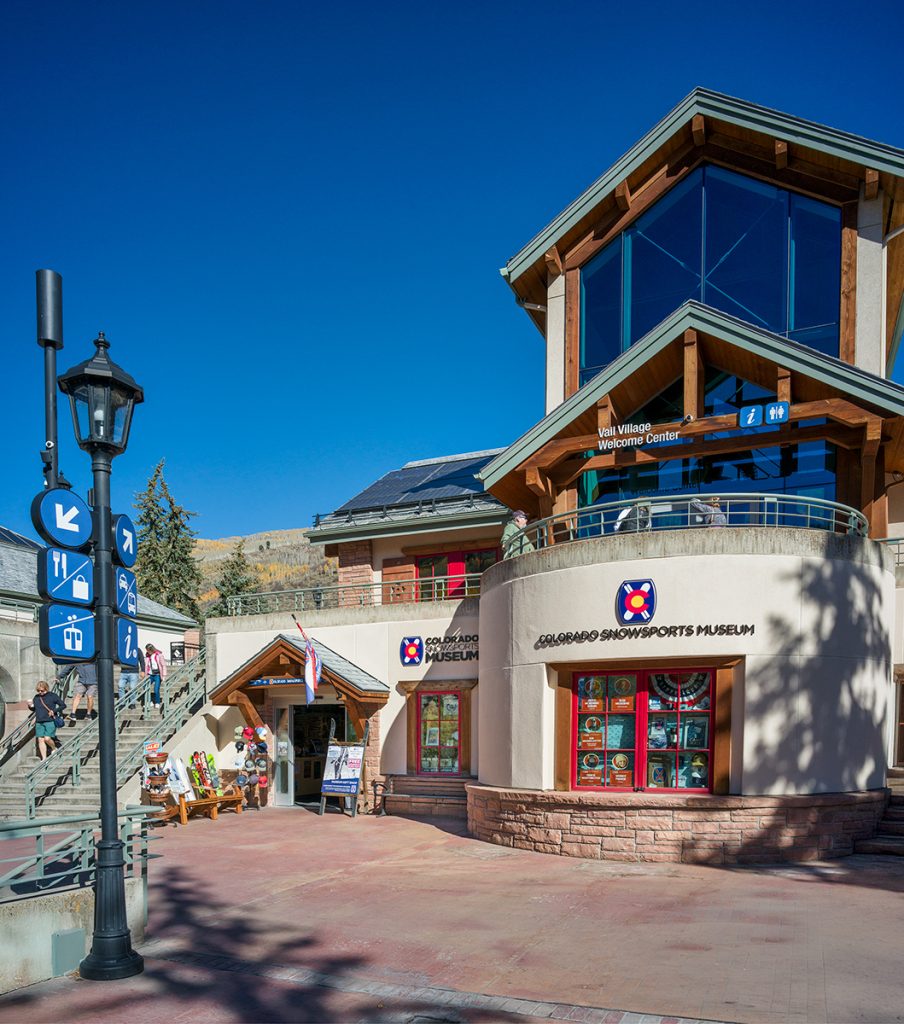
Opened in 1976
“My dad was in the 10th Mountain Division and I had an immediate feeling of, ‘OK, this is a chance to tell the story,'” Clement said.
The museum’s opening in 1976 also coincided with a few other Colorado benchmarks.
“It was a rabbit hole. I was like, ‘Oh my God, Spider Sabich’s medals are here? We have Ann Taylor’s furry boots?’ Every single artifact has a wonderful story.” — Museum Curator and Director of Collections Dana Mathios Zapfel
“When Colorado turned 100, they asked communities for something to celebrate their heritage,” said Colorado Snowsports Museum Executive Director Jennifer Mason. “Terry Minger, Bob Parker and a few other people said, ‘Let’s start a ski museum. There isn’t one in the state.’ It worked out perfectly, because Interstate 70 had just opened in 1974. The state was proud of that and excited about roadside attractions.”

Support Local Journalism
As Vail visitors and Interstate 70 travelers began hearing about the museum and stopping by, the volunteers who ran the place would sit by the door — the coldest area of the building, which was warmed by space heaters — welcoming visitors and showing them around.
“It was limited artifacts back then. We greeted people, told them what the museum was all about. It took two minutes to give them a tour. There was no charge. People were nice about giving us a dollar or two,” Clement said. “As time kept moving forward, the museum became more known, not just with Vail tourists, but all over the state. The support we got from Ski Country USA, which filtered into the different resorts — Aspen, Breckenridge, Monarch — was humongous. Everybody wanted to have their two cents in there, something that featured their history, their resort.”
As word spread, more people offered to donate artifacts to the museum. Its collection grew exponentially. Thanks to the snowballing community of snowsports enthusiasts, it continues to grow.
Mountains of artifacts
Today, the museum has more than 15,000 artifacts in its database and thousands more in its backlog.
In her 10 years as museum curator and director of collections, Dana Mathios Zapfel receives donation offers almost every week. Recently, someone sent her a pair of not-so-old snowshoes used in the first descent of St. Mary’s Glacier by a group of 60 and older snowboarders. She also received a DIY backpack from the 1970s carrying an 8-track and headphones.
“There is just so much stuff,” said Zapfel, who oversees and organizes the majority of the museum’s collection in a warehouse near Denver, which is about to move to a larger space as it is now bursting through the seams of its current location. “I’ve been working behind the scenes at getting our collection more accessible to the public. To get to know our collection, I had to pull stuff out. It was a rabbit hole. I was like, ‘Oh my God, Spider Sabich’s medals are here? We have Ann Taylor’s furry boots?’ Every single artifact has a wonderful story.”
Zapfel was never a snowsports practitioner until she became invested in the history of the sport through the museum collection. Now she is an avid snowboarder.
“It was important to me to personally understand and appreciate the sport,” she said. “The museum has stayed true to our mission. We’ve amassed a collection that speaks to all the important things we’ve done in the snowsports industry and the state as well as the people who built the industry. It’s neat to reflect back on how we got here, the snowmaking history, lifts, resort development, everything. It’s so inspiring.”
Museum evolution
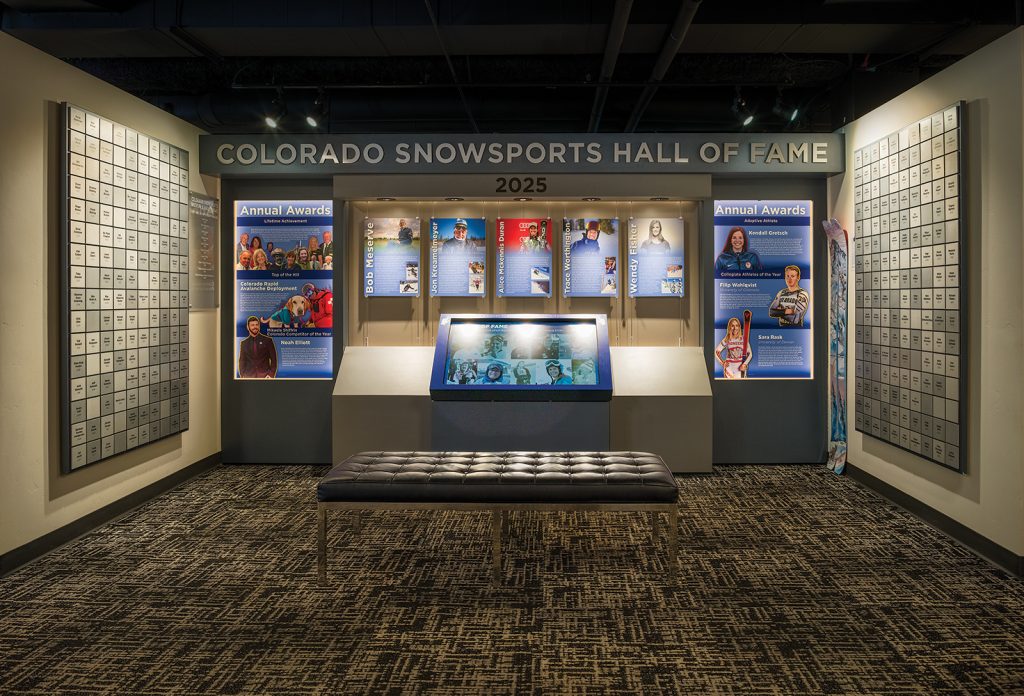
The most inspiring of the artifacts – the “fan favorites” – are, of course, housed in the museum, which has grown and evolved along with its collection. Since 1977, the museum has also spearheaded the Colorado Snowsports Hall of Fame, a ceremony honoring renowned and respected athletes, coaches and resort officials who have made a unique impact on the world of snowsports. In 1982, the museum moved to a larger space, its current location in the Vail Transportation Center. In the 2000s, the name was changed from Ski Museum to Snowsports Museum. In 2018, the space underwent a massive, $3.5 million renovation, becoming what it is today.
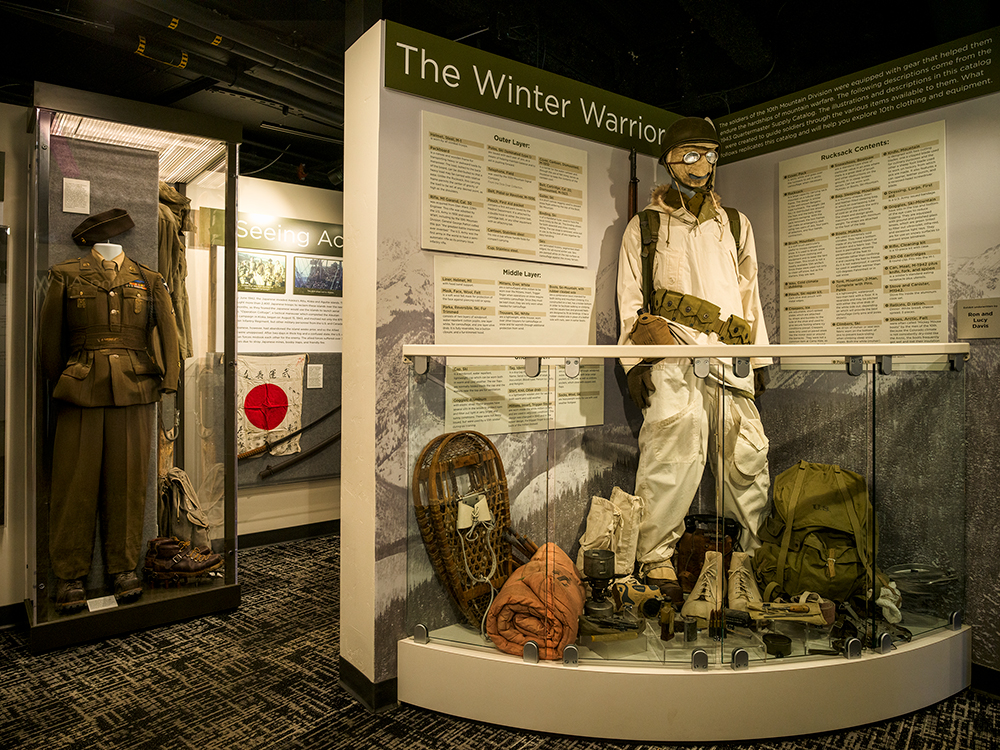
In addition to the fascinating display of equipment, photos and chronological timelines of industry developments, the museum’s 10th Mountain Division collection is the largest in the country and now includes an exhibit of “letters home” written by soldiers as well as an interactive database through which visitors can discover friends and family members involved in the unit.
The museum also features a detailed history of Colorado’s 38 ski resorts as well as fascinating information on its “lost” ski areas. This winter, the museum is launching a new Warren Miller exhibit. Entry is still free and exhibits and artifacts change often. The museum also features a retail corner offering what are arguably the most unique gifts in Colorado’s High Country.
“It’s such a cool museum, so much information in a small space,” Mason said. “It reminds me of those little eggs you used to get as kids. You’d open them up and there was an entire world inside. That’s what this museum is for snowsports. It’s a world of wonderment.”
Selecting a handful of standout artifacts among the museum’s thousands was not a simple task for curator Dana Mathios Zapfel. Each item among the throng has a fascinating, elaborate backstory. Here is a small selection. Come see a larger sample yourself at the Colorado Snowsports Museum in the Vail Transportation Center, open daily with free admission.
Warren Miller’s Bell & Howell camera – Featured in this winter’s Colorado Snowsports Museum exhibit, this 16 mm camera from the 1940s is believed to be donated by Miller himself. Zapfel says that Miller was skiing at Sun Valley with the Bell & Howell company president and colleagues researching his life. They were so appreciative of his enthusiasm that they loaned him the camera.
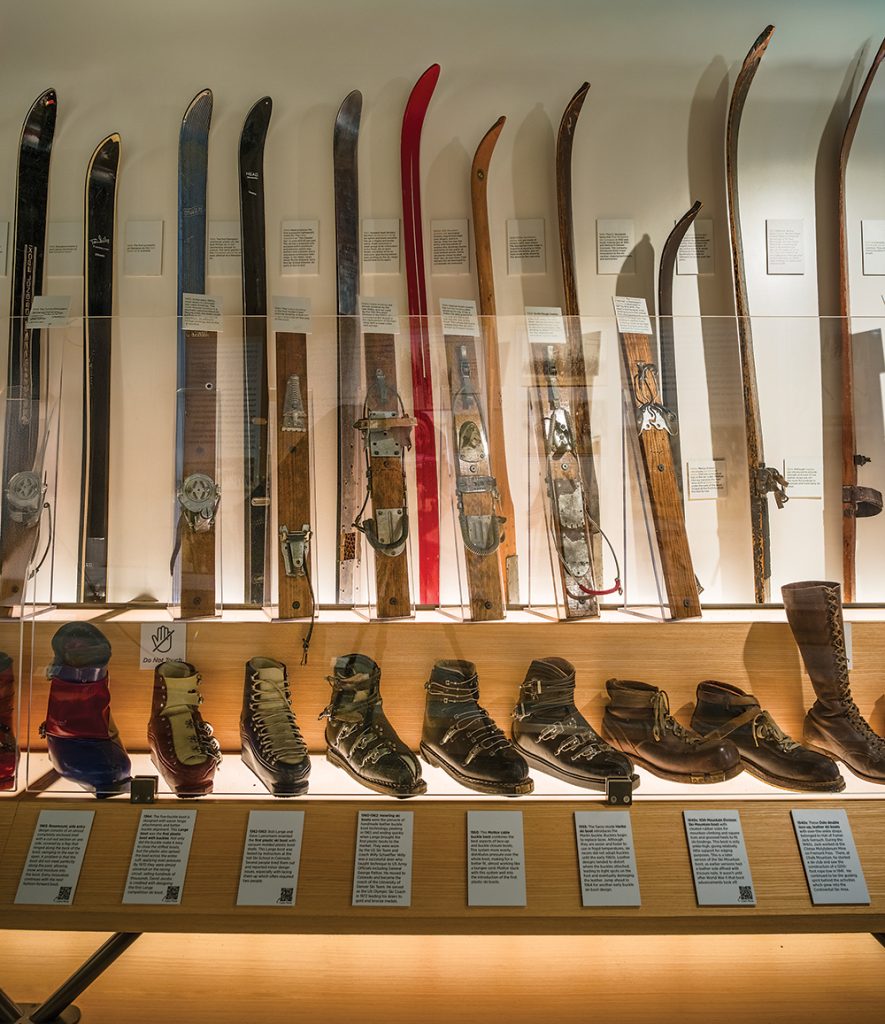
10th Mountain Division Groswold Ski Co. skis – Groswold, the pioneering Denver ski brand, is unofficially believed to have outfitted skis for the 10th Mountain Division. One of the first to implement metal edges and the “bear trap” binding, these skis were state-of-the-art in the 1930s and 40s. Groswold was also the official ski supplier for the US Ski Team in 1948.
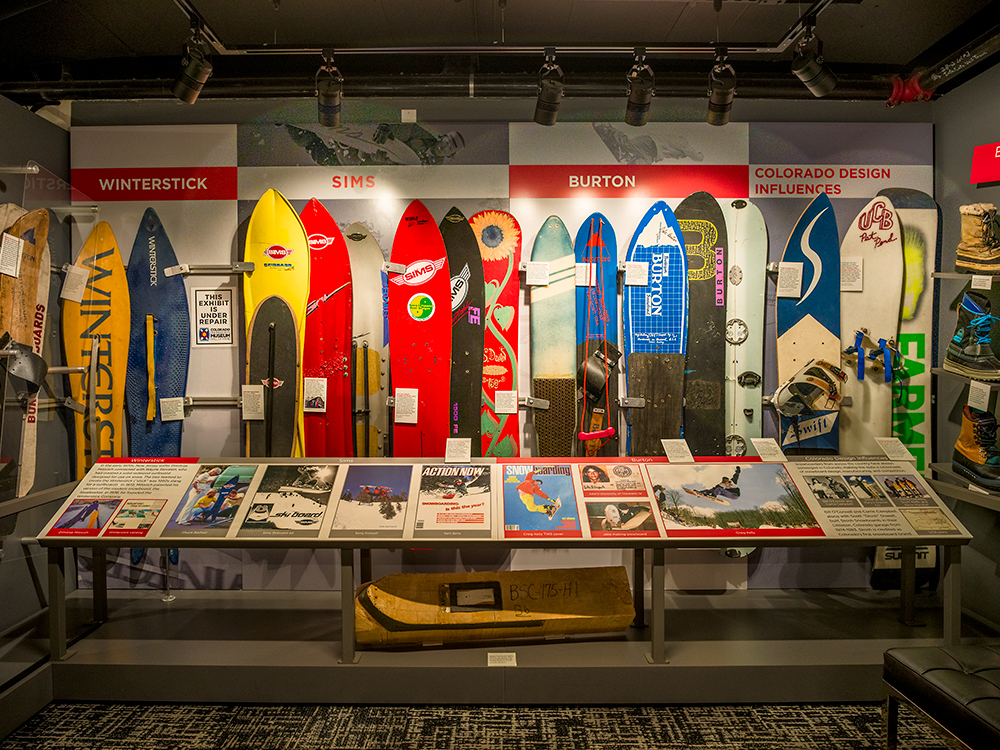
Swift snowboard – Later rebranding as Never Summer, Swift’s founders Tim and Tracey Canaday produced this board in 1983. It was specifically designed for deep, dry powder. The short fin shape has recently made a comeback in powder riding.
Women at Camp Hale photos by Mary Davis – About 270 women served at Camp Hale, where the 10th Mountain Division conducted rugged training for World War II. Mary Davis was one of them, a medical stenographer who met her husband in the cavalry. These photos, donated by her children, documented the scene in the 1940s.
Billy Kidd’s Olympic silver medal and Jimmie Heuga’s bronze medal – Both alumni of CU Boulder, Kidd and Heuga became the first Americans to win Olympic medals in Alpine skiing in the 1964 slalom in Innsbruck.
Metal hand warmer, circa 1950s – Before disposable warmers or heated mittens, Zapfel says these “bygone gizmos” were among “weird ski products that failed.” The inside of the device has a reserve for lighter fluid and a mesh wick. You’d light it to warm up the metal, then place it in a felt pouch.
1976 Winter Olympic bid down parka – Designed by Gerry, a Boulder-based outerwear company founded by a 10th Mountain Division veteran, this parka was worn by Colorado Gov. John Arthur Love. Donated by his daughter, Rebecca Love Kourlis, it represents how Colorado, awarded the honor to host the Winter Olympics in 1976, became the first state in history to reject the bid.
1880s wooden skis used by a livestock farmer from Fort Collins – If Zapfel had to choose a current favorite museum artifact, these are it. Speaking to skiing’s “everyday use” for some people in history, these simple but skillfully crafted DIY skis were used to get around during Colorado winters 150 years ago.
Shannon Dunn-Downing’s first women’s-specific snowboards – The Sims 150-centimeter snowboard from 1994 is the first women’s-specific snowboard model designed by 1998 Olympic bronze medalist Shannon Dunn-Downing, the first American woman to win a snowboarding medal in the Olympics’ first halfpipe event in Nagano, Japan.