How the Western Slope voted in Colorado’s primary elections for governor
Democratic and Republican candidates’ strengths were largely concentrated either along the Front Range or in more rural areas, preliminary results show

Robert Tann Follow
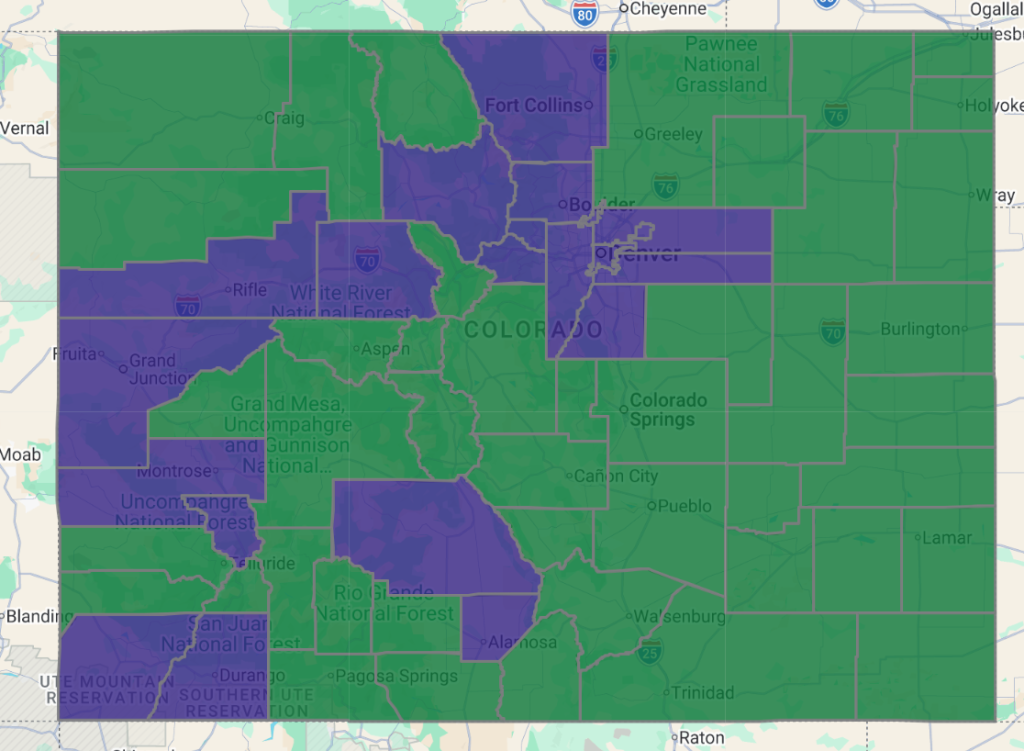
Colorado Secretary of State’s website/Courtesy image
Colorado’s urban-rural divide was on display in Tuesday’s primary elections for governor.
Amid a surge in voter turnout, the bulk of candidates’ votes were largely concentrated either along the populous Front Range corridor, or in smaller western and eastern communities.
On the Democratic side, Colorado Attorney General Phil Weiser beat his opponent, three-term U.S. Sen. Michael Bennet, by a nearly 12-percentage-point margin, largely thanks to a strong showing in Denver and surrounding suburban areas.
As of 2 p.m. on Wednesday, July 1, Weiser was beating Bennet in Denver County by a 32-percentage-point margin, securing 66% of the vote to Bennet’s 34%, according to preliminary results from the Colorado Secretary of State’s Office. Weiser was also leading Bennet in surrounding Adams, Arapahoe, Jefferson, Boulder, Broomfield and Douglas counties.
Bennet outperformed Weiser in Eastern Plains counties and across much of the Western Slope, including in Summit, Pitkin, Routt and Moffat counties, though his margin in some areas was tight. In Pitkin County, home to Aspen, Bennet was leading Weiser by just 73 votes, or less than two percentage points.

Support Local Journalism
Still, Weiser led Bennet in a handful of other western counties, including Grand, Eagle and Garfield.
It was a similar story for Republican primary candidates Barb Kirkmeyer and Victor Marx. Though the race was too close to call on Wednesday — Kirkmeyer leads Marx by fewer than 1,400 votes, or less than half a percentage point — the two candidates’ strengths were largely contained to either urban or rural counties.
Kirkmeyer, a state senator, outperformed Marx, a nonprofit ministry leader, along the Front Range corridor, securing 52% of the vote in Denver County to Marx’s 30%. The third Republican candidate, State Rep. Scott Bottoms, was trailing with 18% of the vote. Bottoms is trailing both Marx and Kirkmeyer statewide and was leading in just one county, Sedgwick, in northeast Colorado.
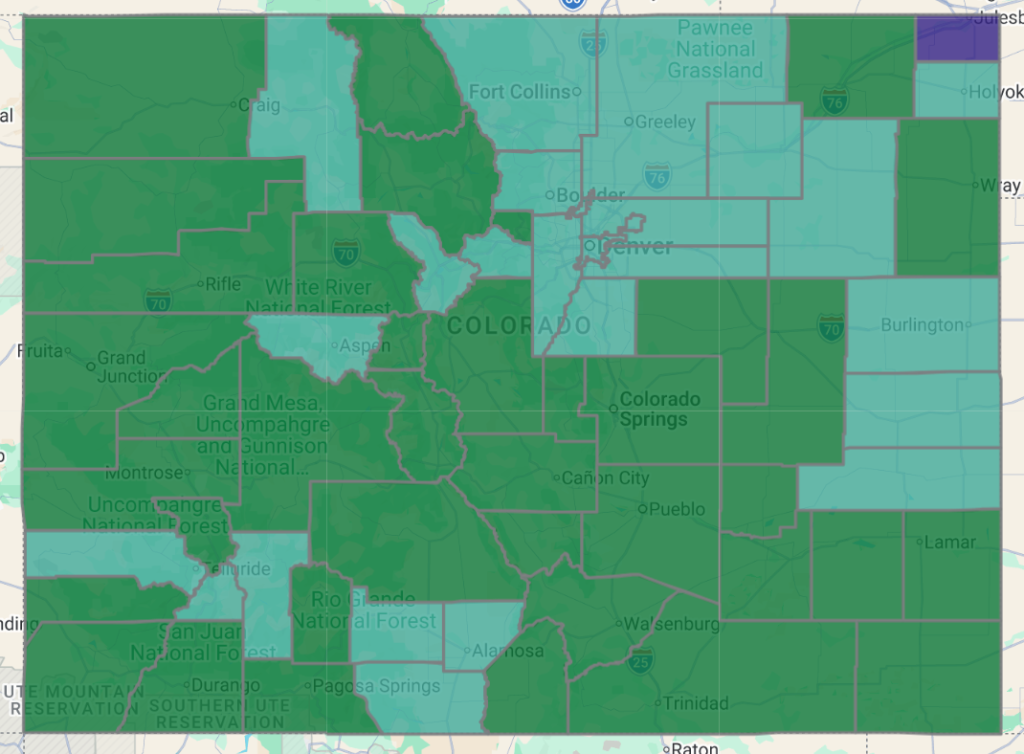
Kirkmeyer also held leads in Adams, Arapahoe, Jefferson, Boulder, Broomfield and Douglas counties.
Marx, however, outperformed in the state’s southeast corner and most of the Western Slope, though his lead in some counties was tight. In Eagle County, Marx was leading Kirkmeyer by just 31 votes, or just over one percentage point. In other counties, including Garfield, Grand and Moffat, Marx led by a wider margin.
Kirkmeyer was beating Marx in a handful of other Western Slope mountain-resort counties, including Summit, Pitkin and Routt.
More than 1.2 million votes had been cast statewide in June’s primary election as of 2 p.m. Wednesday. That represents nearly a third of the state’s active voters and is a more than 10% increase in turnout from the last primary in June 2024, when just over 20% of ballots from active voters were cast.
Just over half of all ballots cast were for the Democratic primary, while just under a third were for the Republican primary, while the rest were for minority parties’ primaries or were still being processed, according to data from the secretary of state as of 11:59 p.m. Tuesday.
Unaffiliated voters make up the largest share of Colorado’s electorate at over 51% but must choose to vote in one party’s primary. As of 11:59 p.m. Tuesday, 41% of unaffiliated voters returned a Democratic ballot compared to 17% who returned a Republican ballot. Forty-one percent of ballots from unaffiliated voters were still being processed.