A bill to fund Colorado wildlife crossings clears first hurdles
If passed, it would tag an optional $5 fee onto Coloradans’ vehicle registration

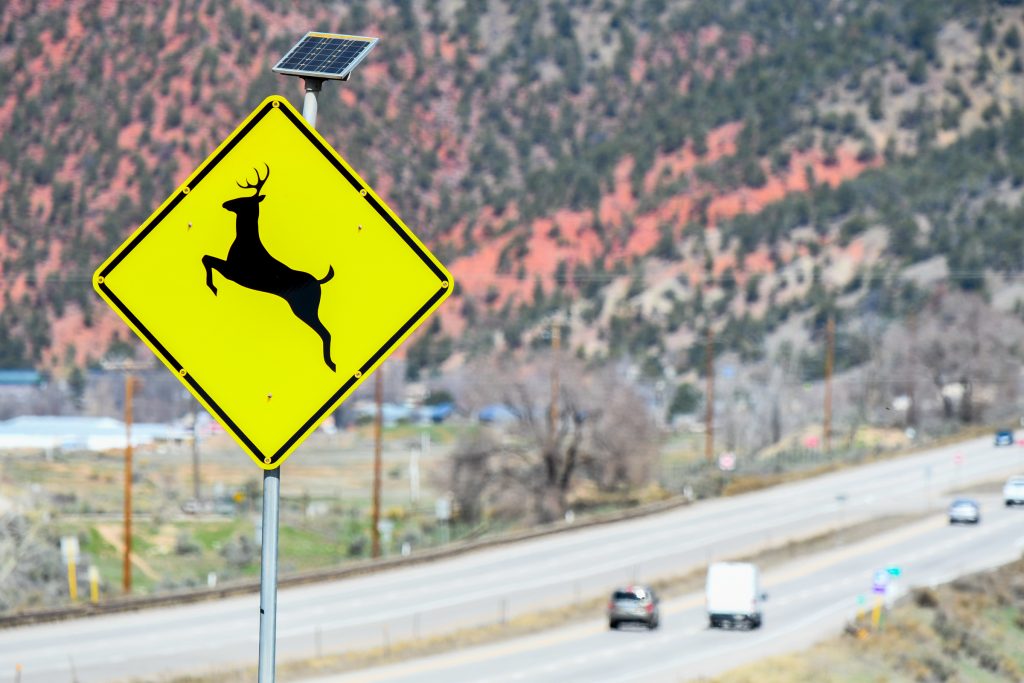
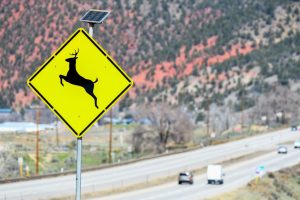
Chelsea Self/Post Independent archive
A bill that would see Colorado drivers help fund wildlife crossing infrastructure has passed through its initial committee hearings. It passed with minor changes to help county clerks through the burdens of implementation and encourage in-state contractors to be tapped for construction.
Senate Bill 141 would add an optional $5 fee to Coloradans’ annual vehicle registration. The money would go into a Collision Reduction Fund, overseen by the Colorado Department of Transportation and Colorado Parks and Wildlife, to fund wildlife crossing infrastructure such as overpasses, underpasses, and wildlife fencing in high-risk areas.
The bill’s fiscal note estimates it could raise around $1.96 million in its first six months and $3.9 million in the subsequent fiscal years.
It was introduced by a bipartisan coalition of Western Slope lawmakers, including Sen. Dylan Roberts, D-Frisco, Senate Minority Leader Cleave Simpson, R-Alamosa, House Speaker Julie McCluskie, D-Dillon, and Rep. Rick Taggart, R-Grand Junction.
In introducing the bill to the Senate Transportation and Energy Committee on March 25, Roberts called it a simple idea that will “have a real and big impact on people’s lives.”
Support Local Journalism
“Here in Colorado, we’ve proven that when you build wildlife crossings in the right places, and pair them with game fencing, they work — not just a little bit, but dramatically,” Roberts said. “So, the question isn’t whether this works, it’s how do we do more of it in our state? And that’s what this bill proposes to do.”
Colorado has become a proving ground for wildlife crossing infrastructure, especially following the 2016 construction of two wildlife overpasses, five wildlife underpasses, 29 wildlife guards, 61 escape ramps and wildlife fencing on a 10.5-mile stretch of Colorado Highway 9 outside of Kremmling. The project saw a 90% reduction in wildlife-vehicle collisions in its first five years.
Today, Colorado has over 100 structures, including the Greenland Wildlife Overpass on Interstate 25 south of Denver, which is now the largest of its kind in the world, and the Genesee Underpass built on the Interstate 70 mountain corridor.
Skyler McKinley, a public information officer for AAA Colorado, testified in both of the bill’s transportation and finance committee hearings, sharing his personal and professional experiences with the infrastructure.
“I’m also someone who drives State Highways 9, 134 and 131 almost every week to reach my business in the Yampa Valley,” McKinley said. “The difference between those drives is why this bill matters. On Highway 9, which we’ve talked about, I rarely see wildlife on the road. That’s not because the elk aren’t there. It’s because the crossings are there … On 134 and 131, it is a different experience entirely — I have a close call nearly every drive.”
McKinley reported that since 2019, collisions between wildlife and vehicles have killed 48 Coloradans and injured over 5,000. At the same time, he reported that the cost of vehicle repairs has risen sharply from an average repair cost of $5,000 for a wildlife collision to more than $10,000.
“AAA members who walk away from those crashes still face repair costs that run into the tens of thousands — a number that climbs every year as vehicles get more sensor-laden and expensive to fix,” he said. “Colorado drivers feel that in their premiums.”
Bill supporters applauded the bill as a creative funding solution for a significant problem in Colorado, amid repeated comments from individuals who have been involved in wildlife-vehicle collisions, responded as emergency medical professionals or have lost family members to the accidents.
Mary Rodriguez lost her father in a 2024 accident on U.S. Highway 85 south of Denver following a nighttime crash with a 700-pound elk. She has turned her grief into advocacy for these types of preventative infrastructure.
“Had there been wildlife mitigation systems in place, my dad may still be here today,” she said. “I am here today in support of Senate Bill 141, as I feel it is imperative that our state has the proper funding to create safe passage for wildlife and humans alike. It gives people the opportunity to make a contribution to such an important cause that will absolutely save lives.”
Despite being a proven solution, finding adequate funding for these projects — which can cost anywhere from up to $64,000 per mile for 8-foot tall wildlife fencing and up to $15 million for a single wildlife overpass — has remained the biggest challenge.
“Out here in the West Slope, where we live, this bill isn’t really theoretical. It’s something we deal with every day,” said Perry Will, a Garfield County commissioner. “This bill is government getting it right, in my opinion. It’s a rare project that actually solves problems.”
Roaring Fork Safe Passages is among the groups seeking to build crossing infrastructure in high-collision stretches of highway, including through a six-mile segment of Highway 82 where wildlife collisions accounted for 55% of all crashes in 10 years. Greg Poschman, a Pitkin County commissioner, spoke to the value this dedicated funding stream could provide to projects.
“We recognize that the cost of these crossings is a good value when compared to the accumulating cost of wildlife collisions in lives and dollars,” he said. “When our leaders commit to wildlife crossings, our communities have shown willingness to step up … In so many circumstances, this public-private support is simply waiting for a commitment and financial participation of our elected officials, including my own board. Legislation such as this will help provide funding certainty needed for long-term planning and construction of crossings.”
Easing administrative burdens, keeping construction local
In the committee hearings, lawmakers made a few changes to the bill text to address concerns brought forth by county clerks as well as a concern raised by a Front Range lawmaker around construction bids for projects funded by the new revenue source.
Molly Fitzpatrick, the Boulder County clerk and recorder, said the bill would increase clerks’ workload and expenses without providing the educational materials needed to explain the new opt-out fee.
“This is the second time in the last few years, alongside the Keep Colorado Wild Pass, that counties have been asked to absorb additional responsibilities without additional resources to implement those responsibilities,” she said. “It’s just not sustainable, and it puts a strain on our ability to deliver core services.”
Amendments passed aimed to address these concerns by clarifying the need for public education campaigns conducted with consultation from county clerks, ensuring funding is allocated for these resources and stating that educational materials will be sent to clerks before the fee’s rollout. The bill’s initial fiscal note budgets $482,500 toward outreach and education in the program’s first year.
Another amendment was introduced to address concerns raised by Sen. Kyle Mullica, D- Northglenn. As adopted, it would establish a preference for local bidders on the projects funded by the new wildlife crossing fee.
“Obviously, some of these projects potentially will be in the more rural areas, and I think that there’s a strong benefit to working with contractors in that area when possible,” Mullica said.
Following these changes, the bill will head to the Senate’s appropriations committee before facing a full floor vote.