Colorado’s dyslexia law is coming — rural communities aren’t waiting
Grassroots support for students with dyslexia grows in Colorado’s rural ski towns as districts prepare to implement new universal dyslexia screenings.

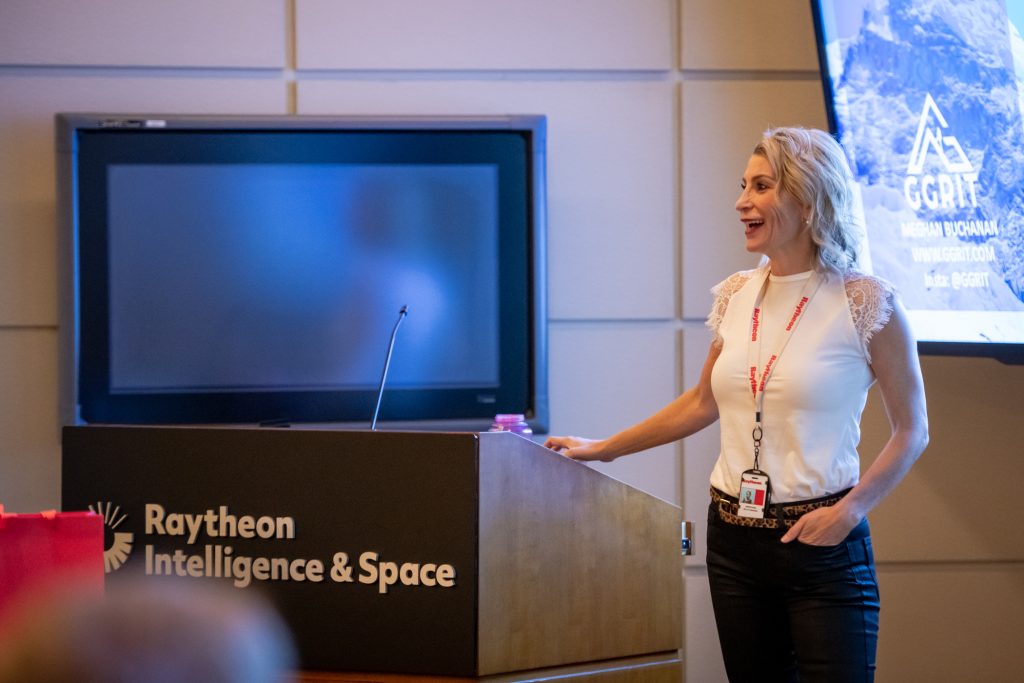
Meghan Buchanan/Courtesy photo
Editor’s note: This story has been updated to correct Meghan Buchanan’s state of birth.
When she was in second grade, Meghan Buchanan’s pediatrician told her parents that their daughter would not achieve much academically.
“Back then, it was like a death sentence,” Buchanan said about being diagnosed with dyslexia as a child. “My mom did not buy into that for one second.”
Born in Southern California and raised in Colorado, Buchanan came from what she described as a “very cerebral family” — her father was a Rhodes Scholar at MIT, and her siblings were academically accomplished. When it was discovered that Buchanan struggled with reading, the adults in her life took two separate approaches: Her mother helped her improve her spelling every day after school, while her teacher at the time verbally abused her in front of her class, she said.
“I stopped reading because of him,” Buchanan said. “I refused to read. I shut down. I was paralyzed.”

Support Local Journalism
Following the pediatrician’s dyslexia diagnosis — and, later, ADHD — it was her mother’s encouragement that reignited her passion for learning.
“She sat me down and said, ‘Sweetheart, you can be anything you want to be. You are just going to have to work harder than everybody else, and that starts today in this house,'” she said.
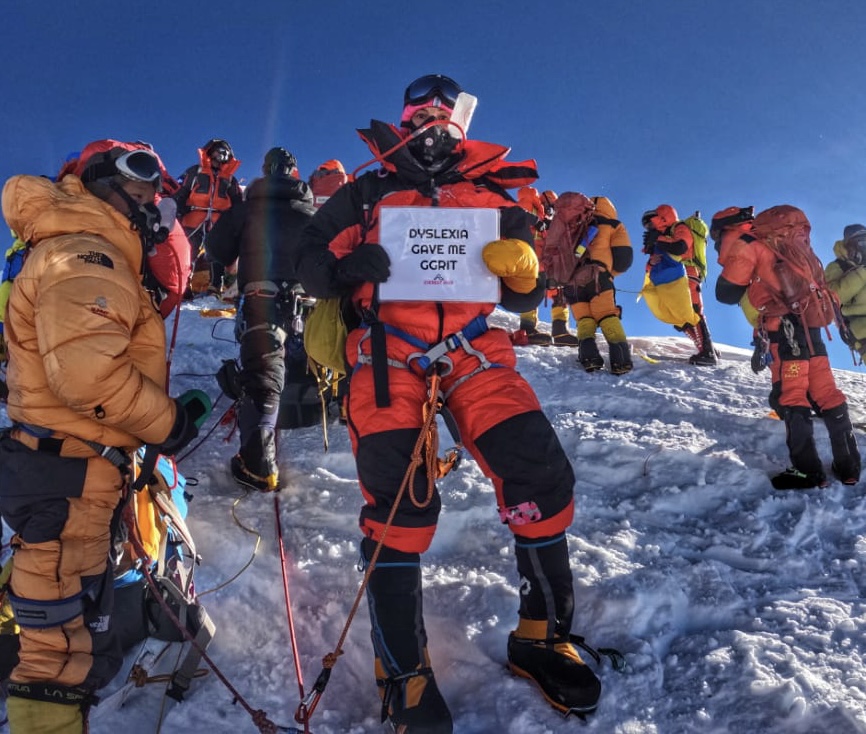
At 51, Buchanan is an aerospace engineer living in Edwards. Her outdoor expeditions have taken her to climbing the Seven Summits and overcoming a debilitating snowboarding accident on Vail Mountain — all while guesting as a keynote speaker for universities and tech companies, and doing advocacy work with groups like Learning Disabilities Association of America and the International Dyslexia Association.
Since her own experience being diagnosed as a child, the state of Colorado has introduced legislation to aid in the early detection of learning disabilities and specialized teaching opportunities, like Senate Bill 200, which will be implemented in 2026-27. Buchanan is one of the many advocates on the Western Slope working to fill the needs gap that still remains.
In between her expeditions, Buchanan is working to launch a 501(c)3 nonprofit, GGRIT (Gratitude, Growth, Resilience, Integrity, and Tenacity), in 2026. The nonprofit’s first mission will be to raise money to help children in Colorado get the services they need, like more local testing for learning disabilities.
“I knew the challenges when I was a kid. There were no resources,” Buchanan said, “but it’s still such a challenge now.”
Rural districts struggle with limited resources

While awareness and resources for dyslexia have increased substantially since Buchanan was a child, much of it still feels out of reach for students in rural towns. Opportunities for a quality diagnosis can require travel, and many rural districts may not have the time or available staff to train an interventionist or reading specialist.
Kristen Kenly, a learning specialist at Vail Mountain School, said the Eagle County School District has worked on getting more teachers trained to help students with dyslexia, but that current curriculum in parts of the state don’t align with the science of reading and structured literacy — terms that are often used loosely in education.
“A lot of curriculum sort of just throws everything and the kitchen sink into them so that they can say they have all these parts, but that leaves teachers struggling to know what to do,” Kenly said. “We have teachers who have incredible hearts and want to do right by kids, but they don’t always have the right training and resources to do that.”
Kenly said she still sends students to Denver for a dyslexia evaluation, which is a bigger commitment of time and resources the farther west they live.
“When I ask a family to spend somewhere between $2,000 and $6,000 to go get a diagnosis, I want it to be a good experience, so I’m still sending them to the Front Range,” Kenly said.
In addition to the existing geographic gaps for dyslexia support, Buchanan said that income gaps and language gaps can also make the difference between who gets a diagnosis, and who doesn’t.
“There are so many families here who, English might be their second language,” Buchanan said. “They’re battling that, then they have a learning difference on top of it. Those kids fall through the cracks.”
Rather than waiting for more resources, Western Slope residents and nonprofits have stepped up to fill the gaps.
In November, Buchanan was invited to speak at a community event on dyslexia awareness at Vail Mountain School. Kenly, who also serves on the board of the Rocky Mountain Branch of the International Dyslexia Association, partnered with Katie Haas, a mother to a fourth grader with dyslexia, with the idea to host a community event at Vail Mountain School where a panel of students, parents and teachers could share their experiences growing up with dyslexia in rural Colorado.
Although the event didn’t have a budget of any kind — operating in a free space with donations from nonprofits and parent organizations — roughly 80 people attended from across Eagle and Summit counties dressed in red, the color of circled corrections on school assignments, Kenly said. Many of the attendees were parents who had brought their children to hear Buchanan’s story.
Several parents took the time to share their own stories with Buchanan, where they detailed the challenges of never being diagnosed and having too few resources growing up — something they hoped their children wouldn’t experience.
“I remember a dad came up with his family, and there were tears in his eyes just talking about the shame he felt as a kid, and he just didn’t want that for his children,” Buchanan said.
Colorado schools prepare for new dyslexia screening requirements
Rachel Arnold, president of the Rocky Mountain branch of the International Dyslexia Association, said the number of individuals with dyslexia can range from anywhere between 15% to 20%, though a large portion of those individuals often go undiagnosed.
For students with dyslexia, early intervention is crucial to address the performance gap that typically appears between third and fourth grade, which becomes increasingly difficult to redirect as time goes on.
This intervention, which Senate Bill 200 aims to implement across Colorado public schools, also helps to eliminate the heaps of time and money that are usually required to address those challenges when students get older.
The Dyslexia Screening and READ Act, passed during the 2025 regular legislative session, directly amends the state’s READ Act to add universal dyslexia screening requirements for all kindergarten through third grade classrooms. Prior to these amendments, the Colorado READ Act already required screening for learning disabilities in younger students and mandated targeted interventions with the goal of helping children meet key reading milestones by third grade.
“(Districts) did well early on with the READ Act, and that put in great supports and started off in a great direction, but we knew from data that we were missing kids,” Arnold said.
Arnold said the Rocky Mountain branch provided feedback on the bill during the drafting process, in addition to partnering with legislators and providing testimony during bill hearings.
Even before the legislation was proposed, a number of school districts had already begun the process of implementing free dyslexia screeners in the kindergarten classrooms.
“We just wanted to see, if we had universal screening and screened all kindergarteners for dyslexia, would there be children that we would have missed if we had just relied on (existing benchmarks)?” Arnold said. “We found that was yes.”
When implementing the new universal screening requirements, districts have the choice between adopting an approved screener or creating a local screening process by the fall of 2027. The bill states all K-3 teachers must be trained for screening administration and result interpretation, while assessment personnel will handle any diagnostic follow-ups.
“We noticed that when we are able to go in with the screeners early and target those students with the exact instruction that’s needed, then we can close the gap going into third and fourth grade,” Arnold said. “And when it’s mandated, it’s universal, then we don’t have to depend on districts that maybe have more resources to do that versus districts that can’t afford it.”
If risk factors appear in a screening, the student must receive a diagnostic assessment within 60 days, after which the student will follow a READ learning plan with dyslexia considerations. If risk factors aren’t present in a screening, the student will continue regular instruction.
Arnold said schools are now waiting on the Colorado Department of Education for guidance on how to implement the new screenings.
“I have more questions than I have answers,” Arnold said. “Districts can only do so much until we get the final guidelines.”
Tammy Yetter, director of the Colorado Department of Education’s elementary literacy and school readiness office, said the department has been holding quarterly meetings with district leaders to discuss the bill and the resources they need as classrooms prepare to implement universal screenings.
The switch from the bill’s planning phase to the preparation phase won’t fully happen until the summer, Yetter said, when the Colorado State Board of Education meets to establish rules for the bill and approve assessment for the READ Act.
Because Senate Bill 200 does not include specific funding provisions, Arnold said districts should consult with the Colorado Department of Education regarding available resources and funding sources. Costs for school districts may include supplemental assessment tools, staff training, enhanced documentation and communication.
“There are some districts that we know of, anecdotally, that are already screening for dyslexia,” Yetter said. “(The resources they need) will really be dependent on what assessments districts go with, what other tools they might need to implement the assessments.”
Because Colorado districts already receive per pupil intervention money for students with reading deficiencies, Yetter said schools could choose to use part of those funds to support the newly required dyslexia screenings or curriculum adjustments.
As schools wait to implement dyslexia screenings, Buchanan hopes to reach learners with her new memoir, which she took on as a challenge between her expeditions. Despite climbing to the seven highest peaks of the seven continents, she described writing her memoir as the hardest thing she’s ever done.
“I would rather go climb Everest several times than do that again,” Buchanan laughed.
“GGRIT: Choose to Rise” will have its public release on Jan. 20, after which Buchanan will head to the North Pole to complete the Explorer’s Grand Slam.