Eagle to discuss future of electronic mountain bikes on town trails amid BLM review

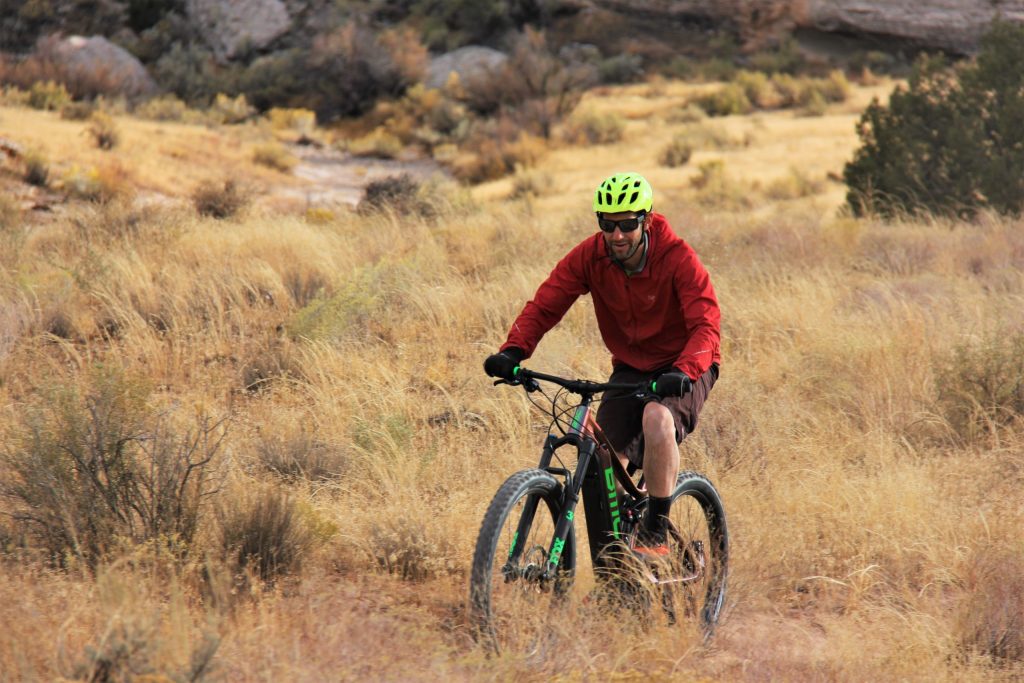
Bureau of Land Management/Courtesy photo
The future of electric bicycles on downvalley dirt trails is set to be discussed again in Eagle on Tuesday.
While the Eagle Town Council has made its rules clear regarding electronic mountain bike (eMTB) use on the soft-surface dirt trails that surround the town core (allowing them only on the Second Gulch Trail), the issue is likely to arise again as the Bureau of Land Management is currently reviewing eMTB use.
The BLM’s Colorado River Valley Field Office is seeking public input on a proposal to allow class 1 e-bikes on all mountain bike trails within the field office’s jurisdiction, which includes the Eagle area.
“We know more people are riding e-bikes on natural trails, and when it makes sense, we work to improve access so everyone can enjoy our great trail systems,” said BLM Colorado Outdoor Recreation Planner Alan Czepinski. “We encourage people to share their ideas, concerns or suggestions about this proposal.”
Because many of the trails that start in the town of Eagle directly connect to trails within the Colorado River Valley Field Office, town leaders are again asking if Eagle may consider, one day, allowing eMTB access on soft-surface trails if the BLM goes in that direction.

Support Local Journalism
In a memo published Friday, Eagle Open Space and Trails Manager Alex Smiley said the town was told by BLM that there was enough interest for the bureau to move forward with an environmental assessment to allow class 1 e-MTBs on its 220 miles of single-track mountain bike trails.
“Because the Town and BLM trail systems are interconnected, BLM staff approached the Town early in the process to discuss potential alignment before making any decisions that could affect shared trails,” Smiley said.
Smiley outlined a two-step approach for addressing the potential for pedal-assist e-bikes on soft-surface trails. His recommendation is to have council members first weigh in on how the town should participate in the upcoming e-bike environmental assessment from the Bureau of Land Management, and later decide whether local law should be updated depending on federal decisions.
What matters in your community, delivered daily.
Sign up for our morning newsletter at VailDaily.com/newsletter
The town of Eagle, in 2024, passed new laws regulating e-bike usage in town. An ordinance was passed after locals expressed concerns that kids were riding e-bikes with two people on one bike, not wearing helmets and using electronic devices while operating the vehicles.
Town residents appear to slightly favor the use of class 1 e-bikes on soft-surface trails. Class 1 is the least intrusive type of e-bike, with a motor that only works when the user is pedaling, and not working after the bike reaches 20 mph.
A 2025 town survey with 765 respondents found 58% support allowing class 1 e-bikes only, and 8% support allowing all e-bike classes. The same survey showed 31.5% opposed to allowing any e-bikes on soft surface trails.
A staff report to the town of Eagle cautioned that the increased range of e-bikes could “increase the spatial footprint of recreation if not managed, potentially spreading disturbance into previously low-use areas,” citing a 2023 study published in the scientific journal “Global Ecology and Conservation.”
“The increasing use of eMTBs will cause a larger frequency and spatial cover by bikers and therefore a rising number of trails,” the study predicted. “Wildlife will be more affected when off-trail riding increases or when the use of so far less frequented areas or times will intensify. Vegetation and soil will be more affected, when new trails are created. Both aspects are more likely with the switch to eMTBing as steep slopes are climbed faster and more frequently.”
Safety has also emerged as a contentious issue.
“Overall, research indicates that Class 1 e-bikes do not pose substantially different safety risks than traditional mountain bikes, though they can change the frequency of uphill passing and influence user perceptions of speed and etiquette,” Smiley noted in his report. “Many concerns identified in the town’s survey relate to behavior, crowding, and user expectations are issues common to all user types and best addressed through education, clear signage, and coordinated management rather than equipment-specific restrictions.”
The e-MTB discussion is the third business item on the Town Council’s agenda. The meeting starts at 6 p.m. and the council is expected to address business items starting at approximately 6:25 p.m.