Eagle County youth well-being headed in ‘favorable direction,’ according to survey

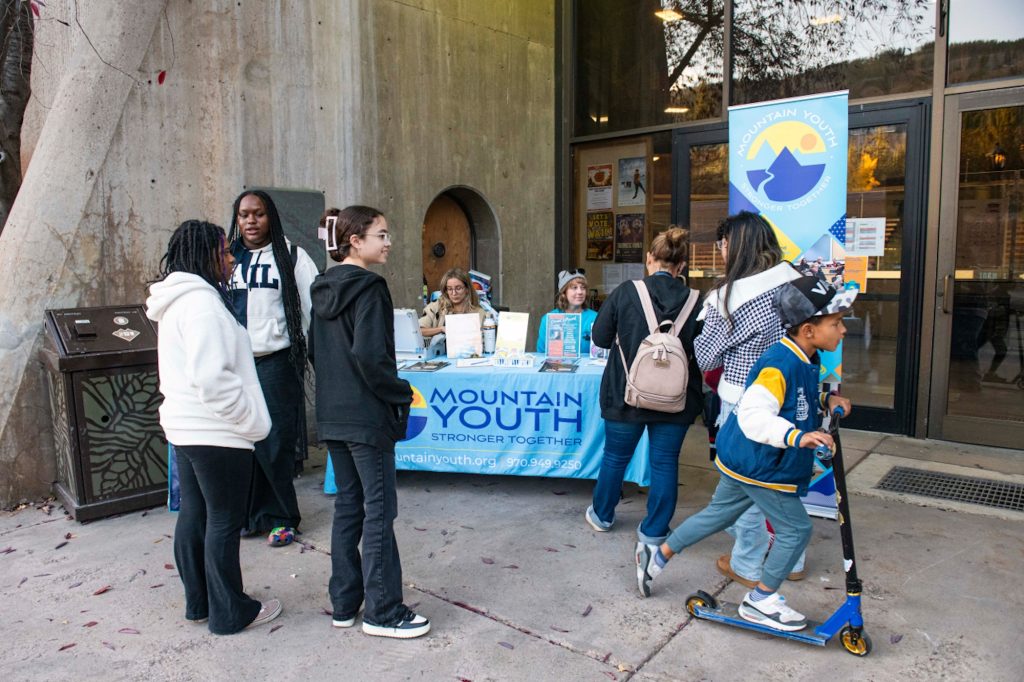
Kelsey Brunner/Special to The Denver Post
The nonprofit Mountain Youth finalized its 2025 biennial community survey results on issues Eagle County teens, young adults and parents/caregivers face.
Since 2007, Mountain Youth has acted as the local data collector for the Healthy Kids Colorado Survey, which reports on the health and well-being of youth statewide. In recent years, Mountain Youth conducts two surveys for parents/caregivers and young adults ages 18 to 30 to see where support can be developed locally. In total, they received input from 3,370 participants for the 2025 report.
Substances and stress
For Mountain Youth, substance use and mental health are two core focuses of the programming they offer, according to Executive Director Michelle Hartel. As part of their initiative to improve young lives, this data has shown them what needs the most attention. Hartel said both substance abuse and mental health are seeing improvement compared to past years, but there’s still work left to do.
According to the results, high schoolers reported lower levels of depression, from 38% in 2021 to 21% in 2025. Middle schoolers reporting this depression indicator also decreased, down from 27% in 2021 to 16% in 2025. In 2025, 13% of middle schoolers and 8% of high schoolers reported seriously considering suicide, which has been reduced by nearly half since 2021.
However, she said a population that got their attention was young adults, who have an attempted suicide rate that is three to four times higher than other age groups. On the parents/caregivers side, there is less suicide ideation, but their stress levels are becoming harder to overcome, according to the survey.

Support Local Journalism
Substance use is also declining but persists among all three age groups, according to Hartel. Since 2017, the use of alcohol, marijuana and vapes has been generally declining with a slight uptick in middle school alcohol consumption overall. For high schoolers, there was an increase in vape usage for 2025.
For nicotine use, the data show a general decline over the past nearly two decades since the survey began in 2007. The report said more young people are becoming aware of the health effects of vaping, and the products are becoming harder to get. For marijuana, local high school and middle school use went down slightly; meanwhile, young adults have maintained or decreased, and caregivers have increased their consumption.
While 10% more young adults believe alcohol to be an important part of social life in comparison to previous years, what’s alarming, the report stated, is that some middle school youth are beginning to drink at a young age of 11.
Preventing early substance use like this is where the data comes to play, Hartel said. By receiving the data, it allows groups like Mountain Youth, YouthPower and SpeakUp ReachOut to secure support for informative programs they offer, including a six lesson curriculum on the effects of vaping. Having this data has also helped them bring more attention to mental health issues in the area and build up therapy support in the community.
“All the data does directly relate to priorities we all identify, and then resources we go after to bring into the community,” she said.
Sleep and screens
From Hartel’s perspective, sleep and screen time go hand-in-hand, as research has shown how quality of sleep worsens when someone spends more time on a smartphone or similar device.
In the county, young people are reporting more sleep and less screen time than in prior years, reporting that 70% of middle schoolers and 46% of high schoolers are getting 8 hours or more of sleep in 2025.
Hartel said Mountain Youth has covered sleep during programs they’ve offered, informing parents and kids how to develop healthy sleep habits.
Screen time is a concern, with 46% of middle schoolers and 64% of high schoolers reporting spending three or more hours per day in front of a screen that isn’t for homework. For young adults, 81% reported three or more hours of screen time on average outside of school or work. Even parents and caregivers saw an increase in their 2025 screen time, spending three or more hours on a device.
“Altogether, parents and their kids are all learning about some of the dangers of cell phone use and getting a cell phone really young,” Hartel said. “Ultimately we believe it’s up to families and parents to make the decisions [that are] best for them, but we want to make sure they’re equipped with the education and information on what some of the consequences could be.”
Safety and support
Making good decisions isn’t always up to the parents. Young kids need to learn how to make the best decisions for themselves, including when they’re driving.
According to the report, texting and driving has taken over the roadways. Almost half of high schoolers shared that they do it, and that doesn’t seem to change with age as 82% of both young adults and parents/caregivers report texting and driving. For impaired driving, all the groups showed no change — in comparison to previous years — or decline in participation. In an effort to educate the county’s youth population, a local strategy Mountain Youth has begun to offer is the annual S.H.I.F.T. event, which offers a day for older middle school and younger high schoolers to learn about safe driving behaviors at no cost.
Support like this is needed for kids across the county, Hartel said. Even the data agrees, showing that from 2021 through 2025 there has been growth in young people feeling that their voices and opinions are heard and that adults have listened and respected them.
Hartel added that the data itself brings more opportunity for agencies to create those support and education programs like S.H.I.F.T., but also can initiate discussions throughout households. Mountain Youth and YouthPower will also be offering community presentations of the data in early October in order to get those conversations started.
“We’re bringing data out to really have this be a springboard for conversation. We hope that people are curious about what’s going on,” she said. “We hope that at the family level, they will bring some of this into conversations back at home.”
Editor’s Note: This article does not share all the data in the survey. Visit mountainyouth.com/survey for more info.