Eagle mayoral candidate Bryan Woods in his own words

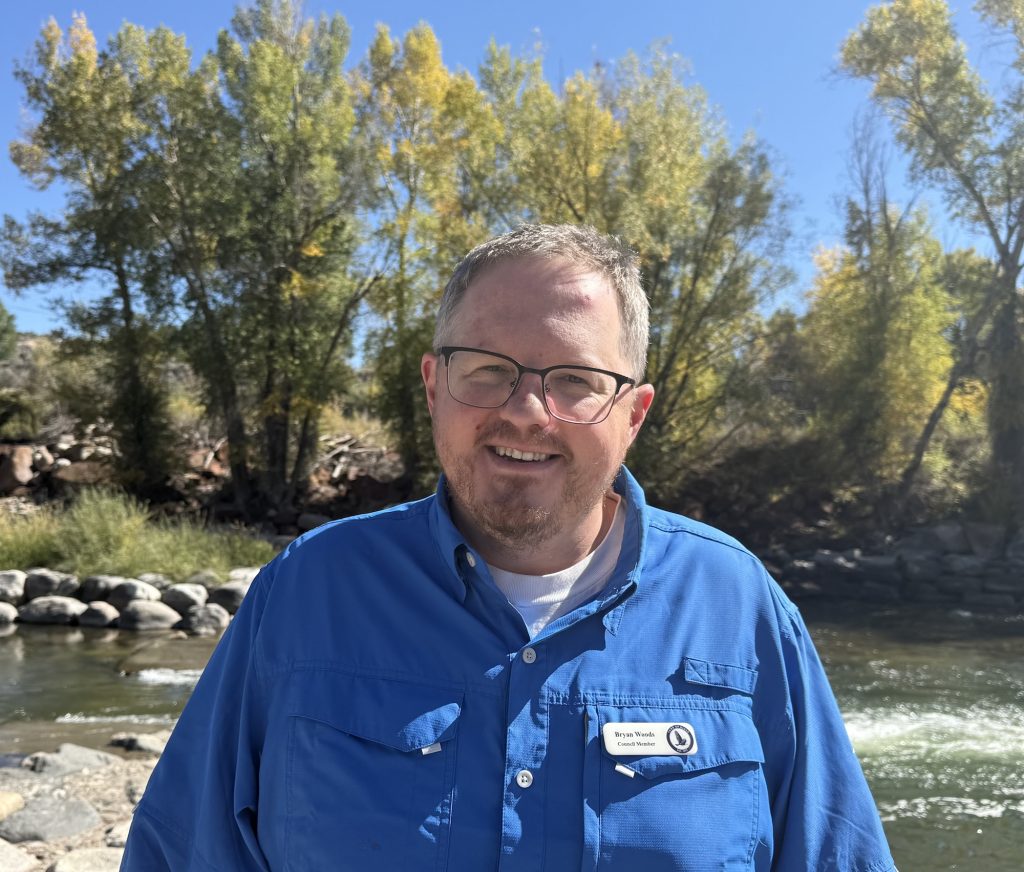
Courtesy photo
Why are you running for mayor?
With so many council members retiring, this election will bring significant change to Eagle’s leadership. While elected officials set the vision, town staff accomplish the work. Providing stability and experienced leadership during this transition is critical. I am the only mayoral candidate with government experience or currently serving on council. Mayor is not a position to learn on the job — it requires understanding how local government operates, how to work effectively with staff, and how to build regional partnerships. My two years on council, combined with my service on the Core Transit and Downtown Development Authority boards, have prepared me to lead Eagle through this pivotal moment.
What’s your plan for balancing continued growth and development in Eagle while preserving the town’s character and its scenic beauty?
This question rests on outdated assumptions. Eagle’s population actually peaked in 2020 and declined 2.6% by 2023 — the most recent data available from the state demographer. We should approach 10,000 at the completion of long-approved developments, provided they are used as primary residences. Future development should be reasonably sized infill that strengthens our existing community cores. To preserve a town’s character, you need characters — residents who are invested in the community. Our focus should be on creating vibrant neighborhoods where people want to live and gathering places that foster community connection.
How can Eagle support local businesses and workers?

Support Local Journalism
Results speak louder than promises. Over the past two years, the Downtown Development Authority invested $100,000 in local businesses through the Downtown Eagle Project Investment Program, funded by a state REDI grant. Downtown Eagle has shown a 21% year-over-year sales tax increase in the first half of this year, while other areas remained flat or declined. This investment has more than paid for itself. Building on this proven success, we’re expanding the program town-wide and more than doubling the budget to $120,000 for next year, ensuring businesses throughout Eagle — not just downtown — have access to resources that drive growth and create jobs.
Many Eagle residents work in the upper valley. How do you propose to improve transportation infrastructure and manage traffic congestion as the town expands?
As a Core Transit board member, I cast the vote that included Eagle in the fare-free zone — a benefit not originally promised to Eagle voters. We introduced the Valley Express route, bringing 30-minute service to Eagle for the first time. Starting in 2028, we’ll expand service deeper into town, including Eagle Ranch. To enable this, we’re rebuilding Capitol Street next summer to eliminate problematic dips. Engineering is underway for the Grand Avenue project, which will add roundabouts to ease left turns for residents returning home from the upper valley. These aren’t campaign promises — they’re projects already in motion.
What strategies would you implement to maintain affordable housing options for residents as rising property values continue to outpace area median incomes?
Housing costs and wages are driven by regional economic forces and require regional solutions. State law allows multi-jurisdictional housing authorities. We should create a valley-wide housing authority with boundaries and governance similar to Core Transit, dedicated specifically to addressing our housing challenges. To be effective, this would require enabling legislation at the state level and sustainable funding mechanisms. Asking Eagle’s workforce to fund housing solutions alone would be robbing Peter to pay Paul. This requires collaboration across jurisdictions and advocacy at the state level — exactly the kind of regional partnership building that I’ve demonstrated through my work with Core Transit.