How to handle the privileges and dangers of calving season in the Colorado mountains
Newborn moose, elk, deer don't need saving, Colorado Parks & Wildlife says

Chrissy Lundquist/Courtesy photo
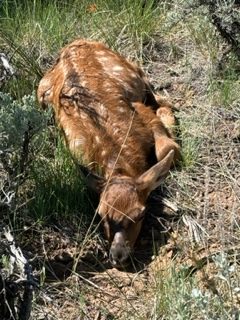
Tracy Feldman and Chrissy Lundquist were hiking Adam’s Way trail in Eagle with Chrissy’s two dogs on June 2 when they spotted something out of the ordinary tucked into the sage near the trail.
As they got closer, they realized it was a baby ungulate, a deer or an elk, curled up, motionless but awake and breathing, with no visible injuries.
“It was just lying there, and it wasn’t moving,” Feldman said.
Even as the women and leashed dogs approached and then passed the animal, it did not react to their presence in any way.
“It kind of just lay there, frozen,” Feldman said. “So we were really, really concerned.”

Support Local Journalism
Worried that the animal might be injured, the women placed a call to Layton Stutsman, one of Eagle County’s Colorado Parks & Wildlife district wildlife managers. Based on their description, he identified the animal as an elk calf and told them that the mother had likely left the calf temporarily and would return for it later. Under no circumstances, he said, should they attempt to move the calf.
“A lot of people’s first impression when they see a calf or a fawn laying down in the grass … their first thought is that that animal is either injured, or sick, or, particularly, people tend to think that animal is abandoned, and that’s just not necessarily the case,” Stutsman said. “It’s typically that the mother has just left to go and feed herself or to go bed down for the day.”
What to do if you see a baby deer
Calving season in Eagle County runs from mid-May through early June. During this time, mother elk, deer and moose give birth to calves and fawns that have very few defenses, and then must contend with the need to feed the newborns, the caloric challenges of nursing and the risk of predators.
“That period of time is critical” for calf and fawn survival, Stutsman said.
Calves and fawns are small and weak during the first few weeks of their lives. “Just like us when we’re born, we aren’t born to our full physical potential, so there’s a period of a couple weeks immediately when animals are born that they don’t have the strength, necessarily, to avoid predators by running or by a flight response,” Stutsman said.
The newborn animals lack the strength to run from predators or forage for food on their own, and so have a natural protection system: Camouflage. Calves and fawns are believed to be born scentless and with spots, which enables them to avoid being detected by predators.
During the first few weeks after birth, newborn calves and fawns usually stay as still as possible while they build the physical strength needed to evade predators and join the herd. The phase known as the “hiding period.”
“As their best defense mechanism, they tend to find tall grass or some kind of bush or shrub to lay under, somewhere that they feel is quiet and safe, and they’ll bed down there and try to hide and avoid any kind of movement until the mother can come back and nurse them,” Stutsman said.
By staying motionless even when approached by Feldman and Lundquist, the elk calf they encountered leaned into its natural camouflage defense.
“It wasn’t moving as a defense mechanism, and that’s where a lot of people will be mistaken — they’ll think it’s sick or something’s wrong with it on top of being abandoned, and so people will try to pick it up and take it to us or bring it to a rehab facility, and in reality what they’ve done is most likely separated the calf from its mother,” Stutsman said.
Why do the mothers leave?
Mother moose, elk and deer will leave the newborns to feed and rest for stretches, returning periodically to nurse.
“Over that couple week period of time, (calves and fawns are) gaining all the nutrients they need from the mother, and slowly building up the physical ability to eventually join the mother or join the herd,” Stutsman said.
Mother elk, deer and moose temporarily leave their newborn for its sake and their own. Mothers need to be taking in a significant number of calories to combat the calorie expenditure of nursing the fawn or calf.
“One of the most calorically demanding periods of the year, for a cow elk, is when she’s nursing, so she’s going through a lot of calories to try and raise that elk calf,” Stutsman said.
Staying near the defenseless newborn might do the baby more harm than good by attracting the attention of predators.
“Not only does the mother need to be able to nourish herself, but also part of the thought behind the mother staying away from the fawns, the calves, except for nursing, is to prevent any kind of predators from focusing in on that area, wherever that fawn or calf might be lying, so that they’re not drawing attention to them,” Stutsman said.
Once the calves and fawns are strong enough, they rejoin their mother, and the herd will begin to gather back up to continue with summer bedding and feeding habits.
Where can the calves and fawns be found?
In Eagle County, calves and fawns can be born anywhere, from trails to backyards, on private and public property.
“Generally speaking, animals will calve near some kind of water source or some kind of riparian area,” Stutsman said. “Especially with elk, they tend to calve in some kind of aspen conifer interface, somewhere that has plenty of forage, and also some kind of water nearby.”
In Eagle, elk also calve near the open space area on the valley floor. Though lower in elevation than typical elk calving range, “they have a water source and agricultural fields growing nearby that offer quality forage for them. Adam’s Way trail is right there,” Stutsman said.
Stutsman said that it is possible the elk calf Feldman and Lundquist found was born where they found it, or that it walked to the location overnight when there was minimal activity on the trail.
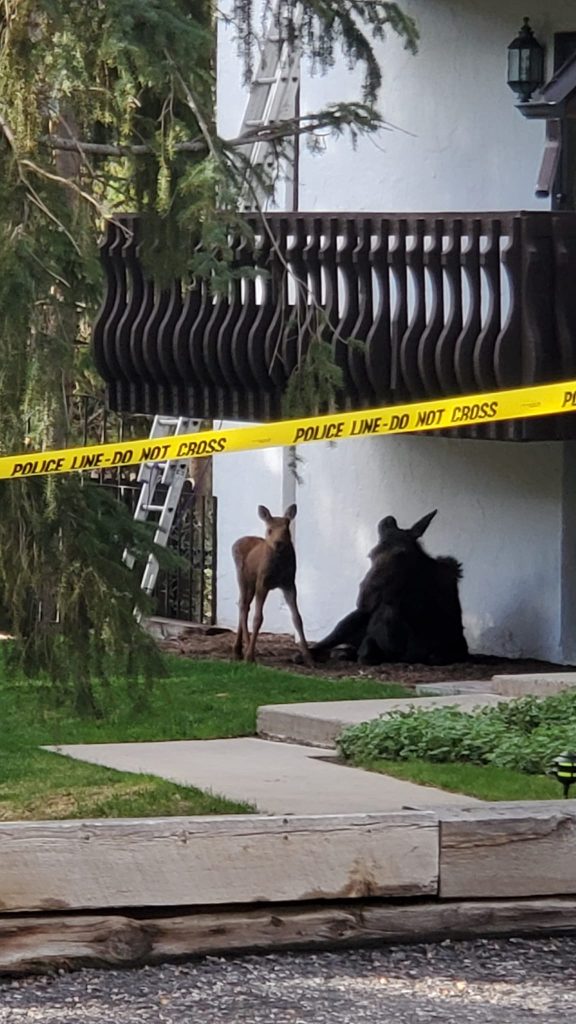
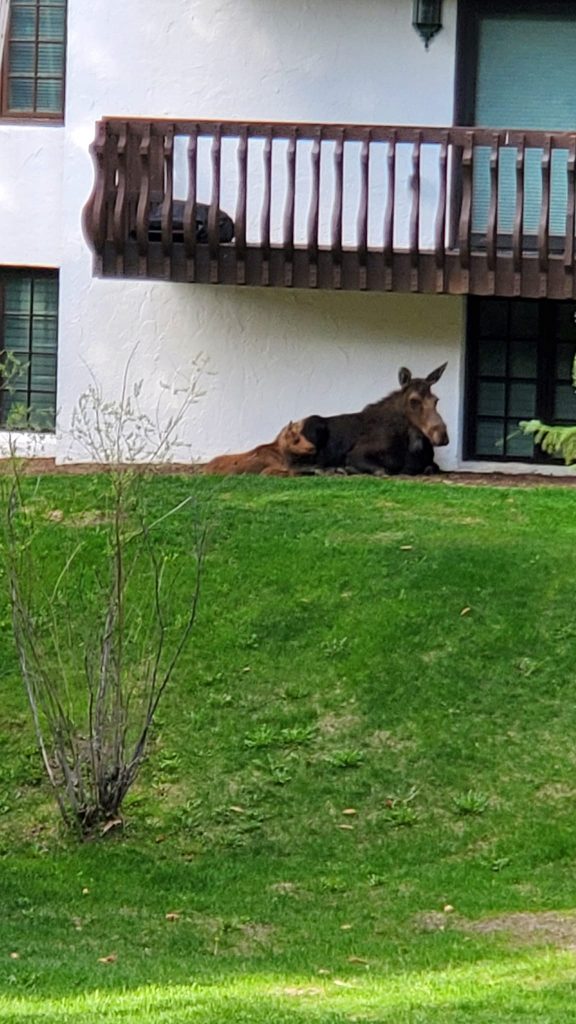
Michele Zerangue and her boyfriend watched a mother moose give birth on a patio in Vail on May 29. When they arrived, the area was being cordoned off by a Vail police officer to give the mother moose space.
Zerangue and her boyfriend were the only two people present during the birth. “It was so calm and quiet,” Zerangue wrote in a message to the Vail Daily.
“It was just a beautiful and peaceful experience for Mama,” Zerangue wrote.
Prepare for aggressive behavior
Calving season is a dangerous time for defenseless calves and fawns. It can also be dangerous for humans and their pets who approach the newborn animals, as the mothers are primed to protect their babies.
Moose are frequently documented protecting their calves from people and animals that get too close. Within the last month, there have been three elk attacks in Estes Park, with a calf discovered nearby every time.
What matters in your community, delivered daily.
Sign up for our morning newsletter at VailDaily.com/newsletter
Ungulates can become particularly aggressive when approached by dogs. For the safety of the moose, elk, deer, humans and dogs, Stutsman emphasized, owners should keep their dogs on a short leash and avoid bringing them to areas where calving or fawning activity is known to occur.
“Not only is that best for the wildlife, and not being disturbed during that period of time, but it’s also for the safety of the dogs and people themselves that are out recreating,” Stutsman said.
Danger of disturbance
Eagle County’s elk population has been measured to be on the decline in recent years, in large part due to a lagging calf survival rate. Human and dog interactions with elk have been identified as a driver of the decline.
“Generally speaking, we expect every calf or female moose to give birth every year,” Stutsman said. “Whether that calf survives to adulthood is a whole other question.”
For an elk population to grow, the ratio of calves that survive to adulthood per 100 cows should be around 60 to 70. Currently, the calf-to-cow ratio in Eagle County is in the mid-30s, a ratio that indicates a shrinking population.
Interactions between humans, dogs and ungulates, “can significantly impact the survival of a calf or fawn,” Stutsman said.
“The primary causes of mortality for calves and fawns is predation or malnutrition of the calf or the fawn itself, but actions that we take can potentially exacerbate those issues,” Stutsman said.
Dogs and humans can incur physical injury upon calves and fawns. But the more common, and equally lethal, impact of humans and dogs on moose, elk and deer is the potential to cause separation between a calf or fawn and its mother.
“If there are enough disturbances between the calf or fawn and the mother, it can lead to that calf or that fawn ultimately being abandoned,” Stutsman said. “Also, if there’s prolonged separation between the fawn and the mother, that could lead to less time that that animal is being cared for and nourished, and eventually, as that calf or that fawn joins the mother … separation could lead to that animal being more vulnerable to predation.”
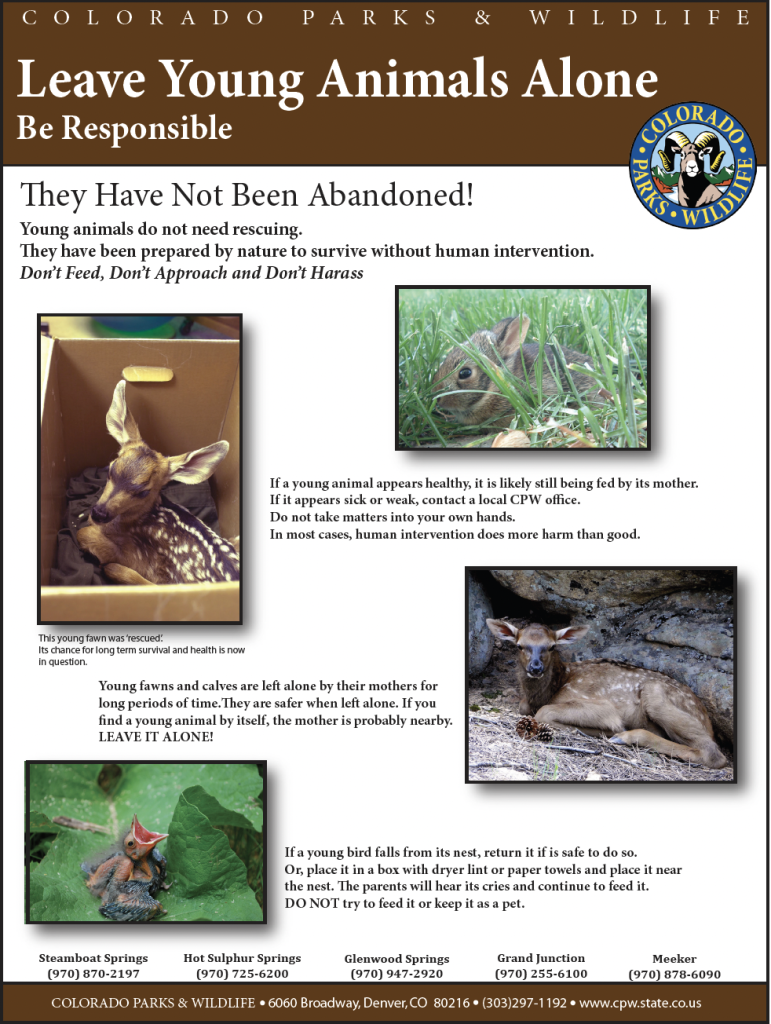
For the health and safety of people, pets and wildlife, avoiding calves and fawns is crucial. Wherever a newborn animal is found, leave it alone, advise others to do the same, and notify Colorado Parks & Wildlife, Stutsman said.
“It’s difficult for calves and fawns to survive to adulthood as it is, so people giving those animals the space and the time they need to be able to nourish themselves and give them the best chance of survival is critical, especially here in Eagle County,” Stutsman said.
Stutsman also emphasized the importance of knowing and adhering to trail closures and posted signs.
“Every little bit helps when it comes to getting calves to survive to adulthood and doing our part is pretty important,” Stutsman said.
Getting to see the elk calf on Adam’s Way trail, Feldman said, “was really amazing.”
But after witnessing others head up the same trail with off-leash dogs, ignoring signs Stutsman posted about the presence of the calf, she worried for the future of the newborn animal.
By the next day, the calf had moved away from the trail, and yet the encounter remained in Feldman’s mind.
“Be mindful of seeing animals out there on the trails, like baby deer and baby elk,” Feldman said. “It’s just really important that we don’t touch them, that we don’t get near them, and especially, we don’t let our dogs get near them, and because they’re having babies, please, please keep your dogs on a leash.”
At the end of the day, Feldman said, “it is nature, and you do have to leave it be.”