It will take $23.9 million for Eagle County to reach 50% decarbonization by 2030. The county is readying to tackle the challenge
New strategic decarbonization plan will take county to zero carbon emissions by 2050 if followed

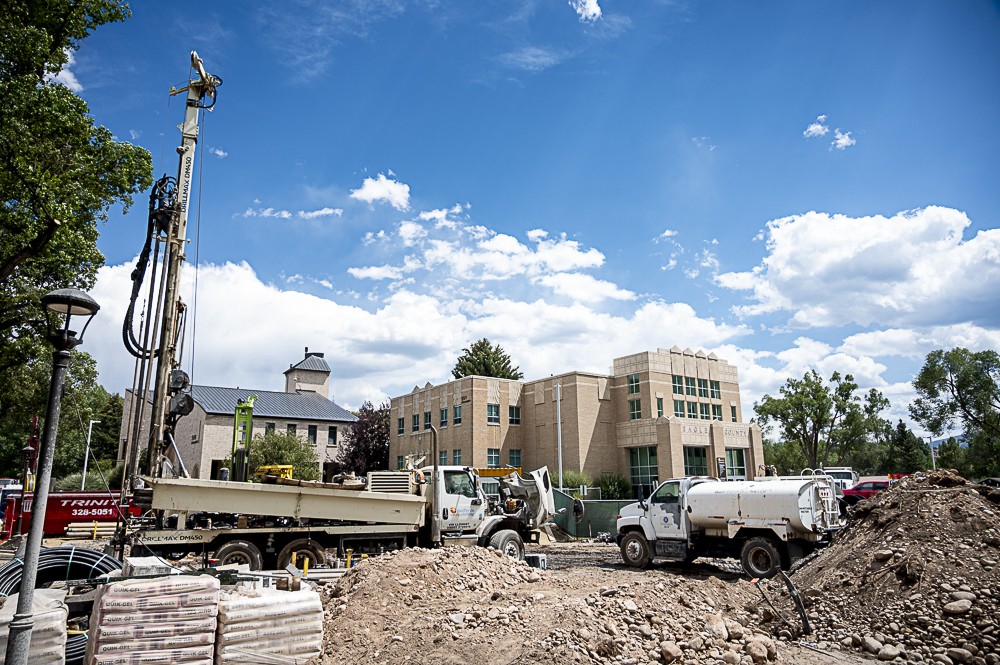
Ben Roof/Special to the Daily
Eagle County now has a strategic plan to achieve its lofty carbon emissions goals of 50% reduction from 2014 levels by 2030 and 100% reduction by 2050.
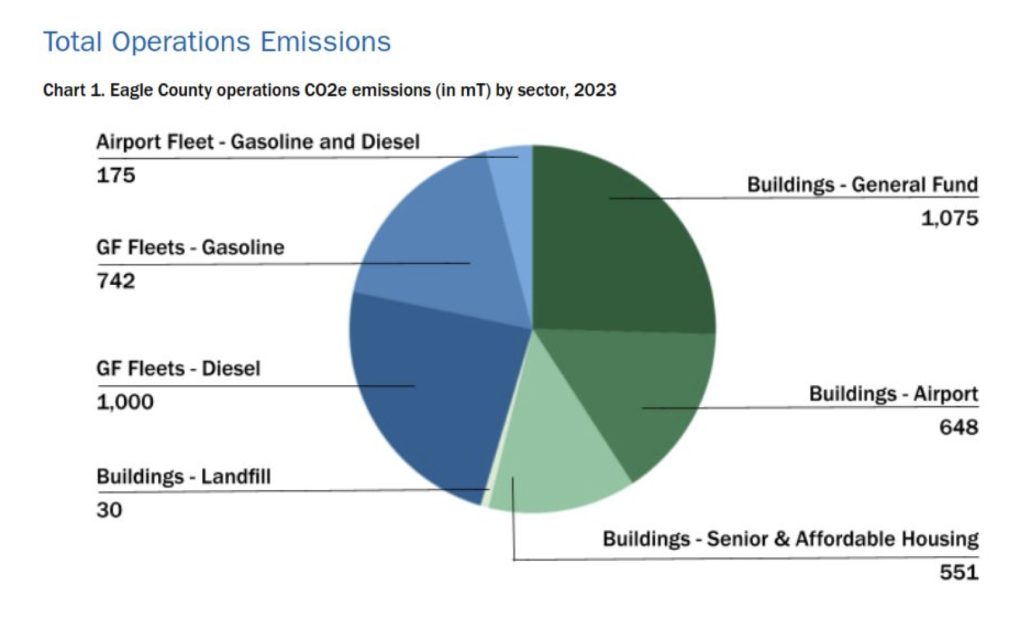
In 2023, an inventory of Eagle County’s carbon emissions showed the county emits the equivalent of about 4,200 metric tons of carbon dioxide per year. Reducing that to zero over the next 24 years will require an overhaul of the buildings and vehicles the county owns.
The Eagle County Board of Commissioners received a presentation on the new decarbonization strategic plan Tuesday.
“We’ve always known where we need to go. We just never knew how to get there,” said Commissioner Matt Scherr.
‘Decarbonization equals electrification’
The plan laid out the strategies and costs of decarbonizing the county’s buildings, representing about 1,750 metric tons of carbon dioxide, and vehicles, the equivalent of about 1,900 metric tons of carbon dioxide. The county’s housing supply, which emits about 500 metric tons of carbon dioxide equivalent per year, was analyzed but not included in the plan.

Support Local Journalism
The buildings, it turns out, are much easier to make carbon neutral than the vehicles.
“For Eagle County, decarbonization equals electrification,” said Lauren Donley, the project manager with consultant Millig Design Build.
Eagle County has access to zero-emissions electricity through Holy Cross Energy, meaning anything electric is carbon neutral.
Decarbonizing the buildings primarily means eliminating the natural gas the buildings use for heating and operating.
The practical approach to this comes in three parts: reducing the total heating needs of the building, recovering heat that is already being produced and generating the remaining required heat from machines powered by electricity, namely heat pumps. Heat pumps are three to five times more efficient than natural gas, Donley said.
The county’s approach to decarbonizing its buildings comes in 50 measures.
Millig split the buildings into four tiers — with tier one making the largest impact for the lowest cost, tier two costing slightly more per metric ton of carbon dioxide saved, and tiers three and four being the cleanup tiers — for all remaining projects.
The process starts with tier zero, or the projects currently underway, estimated to save about 200 metric tons of carbon dioxide equivalent.
Tier one projects will save over 900 tons of carbon emissions for $11.5 million. The largest projects — including moving the Justice Center to heat pumps, at $4.2 million, installing a geothermal fuel system for the maintenance service center, at $3.2 million, electrifying the maintenance service center’s heating system, at $1.3 million — will save nearly half that amount alone.
Tier two projects will save another 300 tons of carbon emissions for $10.2 million. “The deeper we go, the more expensive it is to get there,” Donley said.
It will cost about $1.5 million to save 40 metric tons of carbon dioxide in tiers three and four, which must occur to reach 100% emissions reduction but without the time pressure of 2030.
The plan expects the county to tackle both tiers one and two by 2030 to reach the 50% emissions reduction. But the funding has yet to be allocated.
Fleet decarbonization will be a challenge
While the buildings are “the easy part,” Donley said, reducing emissions from the county’s fleet of vehicles is going to prove much more challenging.
Millig staff collected data on Eagle County’s vehicles in July and August.
Eagle County owns approximately 304 vehicles. Just 49 of them emit nearly 60% of the entire fleet’s carbon dioxide.
These vehicles include heavy equipment and machinery, like loaders, excavators and snowplows, along with trucks and SUVs, like F150s. Many of the vehicles are for emergency services, like the Eagle County Sheriff’s Office, or require off-road capacity.
The lowest emitting 102 vehicles, mainly passenger vehicles, only account for 16% of overall fleet emissions. “Simply addressing those easy-to-electrify vehicles is going to be very expensive and ineffective,” Donley said.
Instead, the plan’s authors suggest the county take a more strategic approach. By 2030, the plan says, the county should try to electrify 29 vehicles for $2.2 million to save 126 metric tons of carbon dioxide equivalent.
The county will use the following 20 years, until it needs to be at zero emissions in 2030, to create policies regarding purchasing electric vehicles, build electric vehicle charging infrastructure and purchase carbon neutral vehicles as new technologies enter the market.
“Electric snowplow replacement may never be a thing because of the conditions and what they need to do,” Donley said.
The county currently has 15 electric vehicles in its fleet, so reaching 29 electric vehicles within four years will not be easy.
Ahead of 2030, the county will lean on decarbonizing its buildings to make up for the deficit in fleet emissions reduction. Forty-six percent of the 50% reduction by 2030 will be in building emissions.
Decarbonizing the county’s housing stock is another step, but it will require buy in from unit owners
The commissioners will meet again in a month to map out long-term climate goal planning. As the strategic plan goes into place, the county will be focusing first and foremost on building the budget, which will practically inform the plan’s implementation.