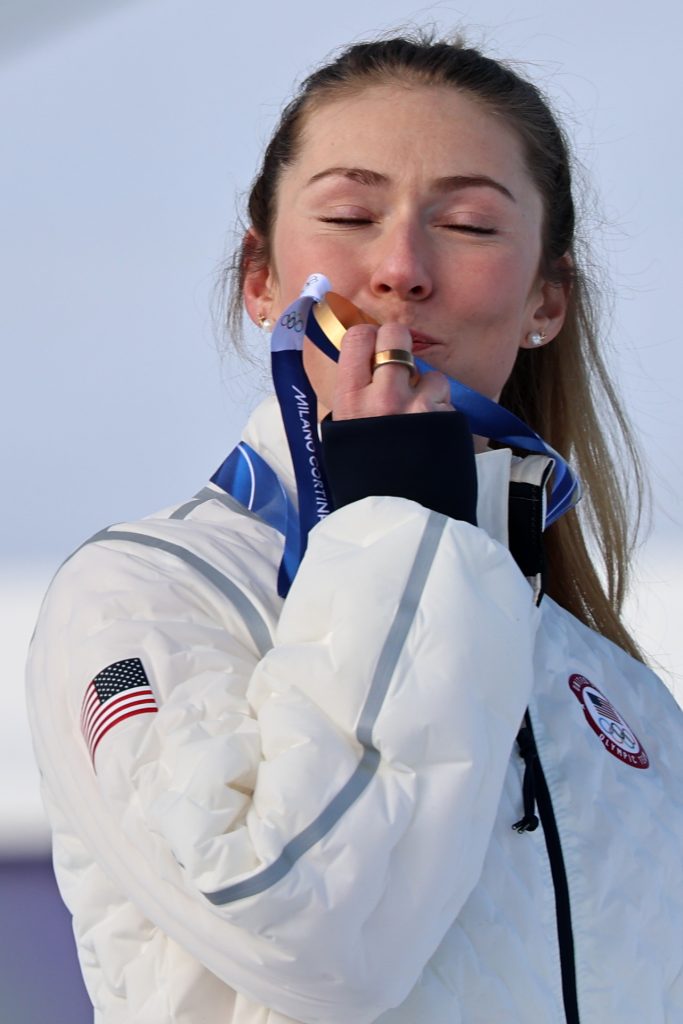
Mikaela Shiffrin wins Olympic slalom title 12 years after first gold medal

Robert F. Bukaty/AP photo
Mikaela Shiffrin‘s Olympic dry spell is over.
On Wednesday morning in Cortina, the nine-time slalom crystal globe winner parlayed a 0.82-second first-run lead into her third-career gold medal — and first since 2018. Ever since her fourth-place finish at those Games, Shiffrin has dealt with the disconnect between her World Cup dominance and the opinion of a general public that only tunes into the sport every quadrennial. The 108-time World Cup winner infamously went 0-for-6 at the Beijing Olympics, dropped from first to fourth in the team combined last week and placed 11th in the giant slalom on Sunday.
“I’ve cared so much about wanting everybody to know the reality and to not want to answer those questions,” Shiffrin said. “I’ve felt that way since taking fourth in South Korea. It’s been so long that I’ve felt tired of questions that don’t feel like they line up with the reality of our sport. But in order to do this today, I needed to accept the possibility that those questions would keep coming.”
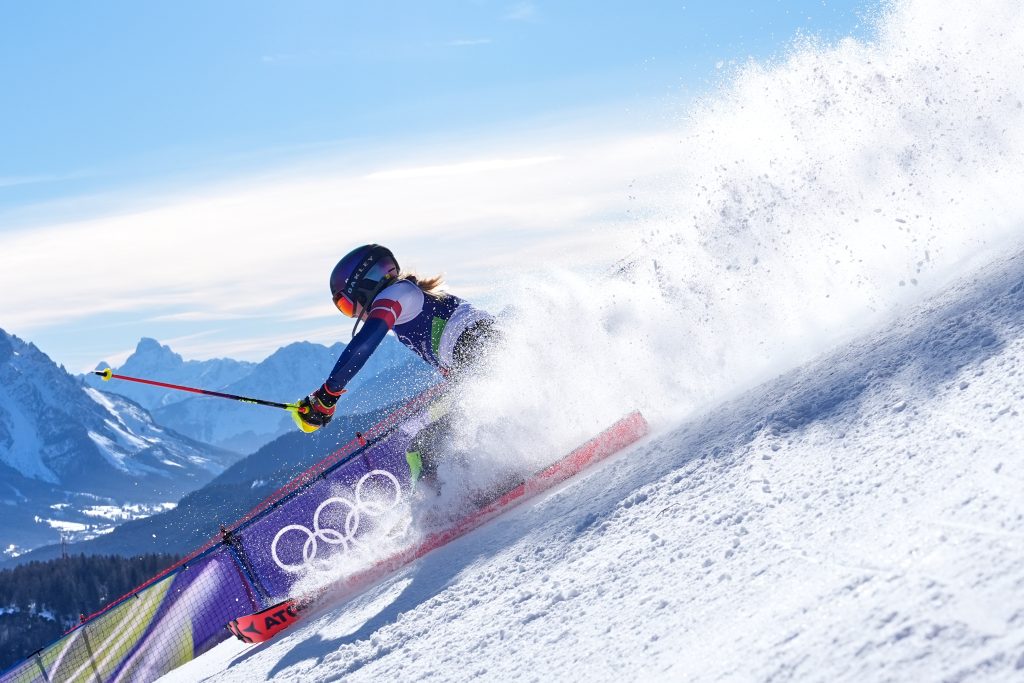
If a single performance could ever provide an adequate answer, this 1.50-second win — the third-largest margin in history — was it. But it wasn’t just the gap between runner-up Camille Rast and bronze medalist Anna Swenn Larsson. It was Shiffrin’s aggressive, pedal-to-the-metal approach — even with a seemingly insurmountable lead — that made the performance perfect.
“I came here for the skiing. I wanted to feel these two runs that I felt today,” Shiffrin said. “That it was on the limit, that it wasn’t easy but I took the risk even when it felt that there was something to lose. But in the end there was everything to earn.”

Support Local Journalism
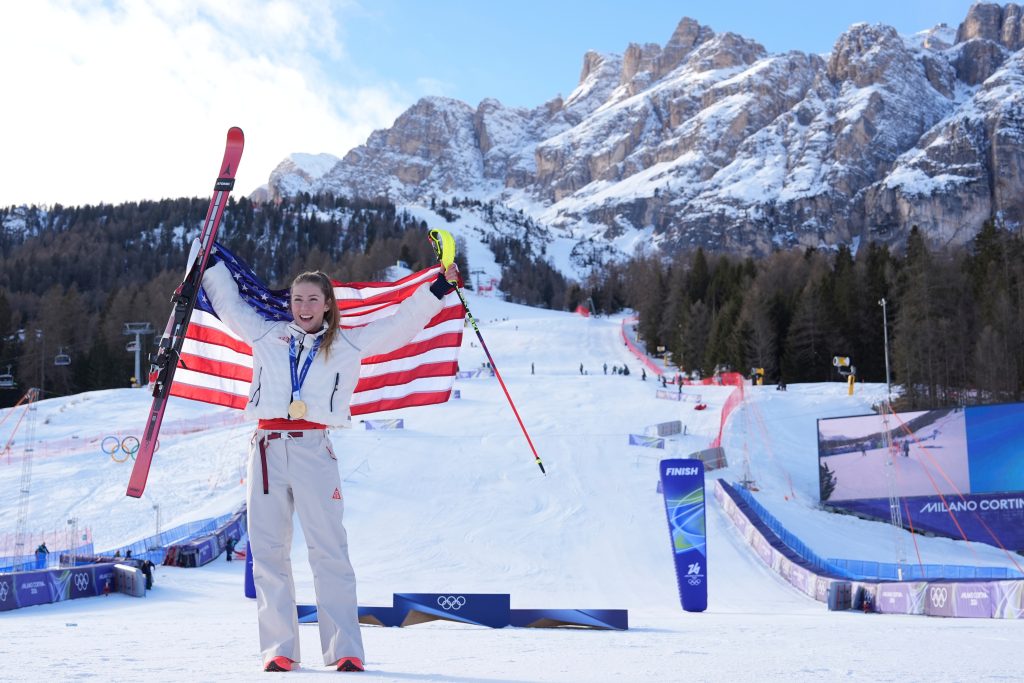
Shiffrin posted the fastest split in all but one sector on run No. 1, stopping the clock in 47.13 seconds. Lena Duerr of Germany was the only athlete to come within a second of Shiffrin’s standard. Sweden’s Cornelia Oehlund sat in third while Rast — who is second to Shiffrin in the slalom and overall World Cup standings this year — was 1.05 seconds back in fourth.
“It was a really good run, for me it felt really clean and really active but also a little bit on the limit,” Shiffrin told NBC after her first run. “There were a couple moments where I thought I could easily be off this course right now, but just keep pushing and keep fighting and in the end, I got to the finish.”
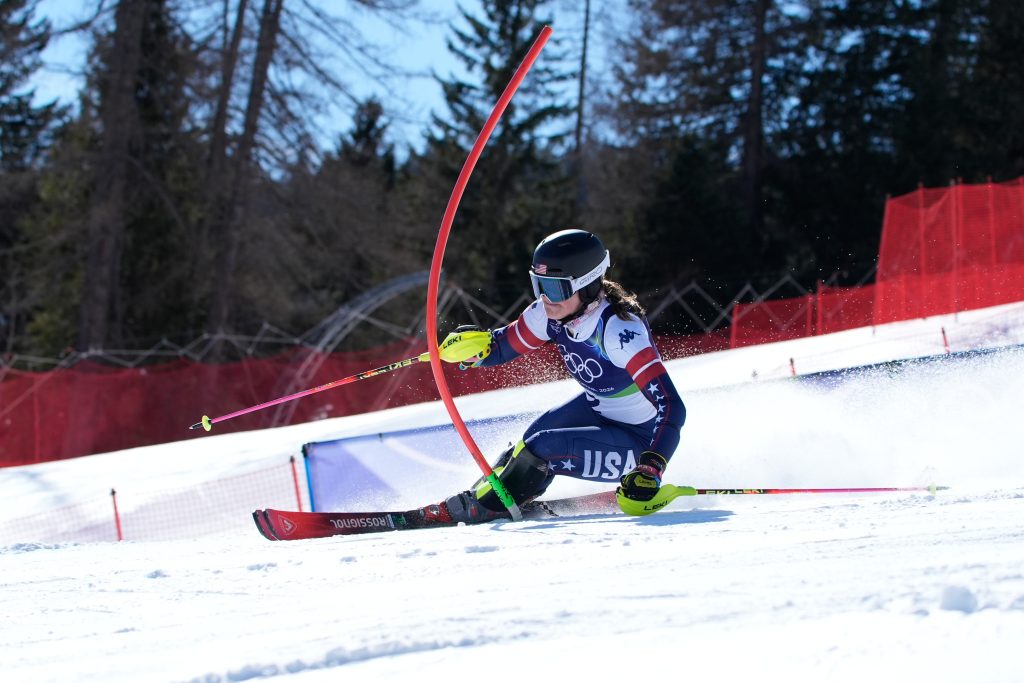
American teammate Paula Moltzan was in the midst of one of the fastest first runs of the day until she got way off the line and nearly had to ski back uphill to avoid missing a gate at the end of the course. Moltzan slid from sixth to 28th in the final sector alone, dropping 2.77 seconds off her teammate’s time. The 31-year-old, who came into her second Olympics with the momentum of a career-high four World Cup podiums so far this season, returned after the break with a vengeance. In her second run, Moltzan posted the fastest split in sectors 1, 3 and 4, moving up 20 places to finish in eighth. Her time was more than a half-second faster than the next best athlete — Shiffrin.
“I kind of went, there’s nothing to lose, so push as hard as you can. This course had a bit more turn to it, fits my style a tiny bit better. But, yeah, I obviously had a little anger after first run,” Moltzan said. “A lot of tears. This is not how I imagined my Olympic slalom going, but I’m happy to put down that second run and show some of the skiing that I do have.”
Oehlund broke a pole and eventually skied off course and Duerr clipped the first gate on her second trip down the Olympia delle Tofane course, giving Shiffrin a 1.05-second advantage in the start gate. The former Ski and Snowboard Club Vail athlete bled some time in the first sector, but pinned it the rest of the way down, gaining 0.26 on the second split and 0.34 on the third. There was no defense. This was the skiing equivalent of lining up in the shot gun with a 20-point fourth-quarter lead.
Having gone without a medal in her last eight Olympic races, Shiffrin cried tears of joy at the finish area, where she embraced her mom, Eileen. The 30-year-old told the media afterwards that her father, Jeff, who died at 65 in an accident at the family’s home in Edwards in 2020, was on her mind the entire time.
“This was a moment I have dreamed about — I’ve also been very scared of this moment,” Shiffrin stated. “Everything in life that you do after you lose someone you love is like a new experience. And I still have so many moments where I resist this. I don’t want to be in life without my dad. And maybe today was the first time that I could actually accept this, like, reality.”
Defending Olympic champion Petra Vlhova finished 20th, one spot behind the third American, A.J. Hurt. The fourth U.S. starter, Nina O’Brien, posted a DNF on the first run. Phoebe Heaydon, an Edwards-based skier competing for Australia, posted a DNF in run No. 1 while SSCV 17-year-old Anabelle Zurbay was 48th for Ireland.
What matters in your community, delivered daily.
Sign up for our morning newsletter at VailDaily.com/newsletter
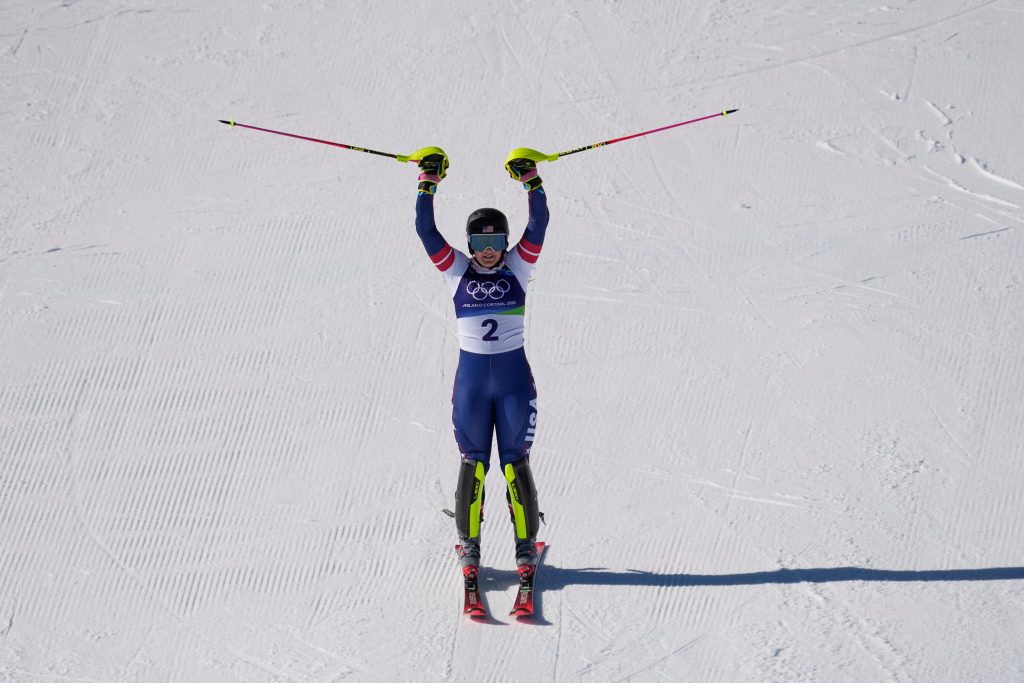
Shiffrin won slalom gold in 2014 as an 18-year-old, becoming the youngest-ever to win the event at the Olympics. With Wednesday’s win, she broke a tie with Andrea Mead-Lawrence and Ted Ligety for the most Olympic gold medals by a U.S. Alpine skier (three).
“Maybe, just today, I realized what happened to me in Sochi,” Shiffrin said.
The victory seemed less like a full-circle moment, however, and more like an epiphany: that winning isn’t guaranteed — even for the greatest.
“The one thing that’s certain is you’re not going to win everything,” Shiffrin said. “Every single time I cross the finish line with great skiing and a victory, it’s not with confidence. I’m wondering if I can do it again.”