Pondering pistes: Meet the Colorado animals who live on the edge
Curious Nature
Adobe Stock Image/Licensed by Walking Mountains Science Center
The resorts work hard to give you a smooth surface of snow — but how often do you think about what’s beneath it? All winter, Rocky Mountain plants and animals find creative ways to survive. If they want to live in ski areas, they must face challenges unique to the altered habitat there.
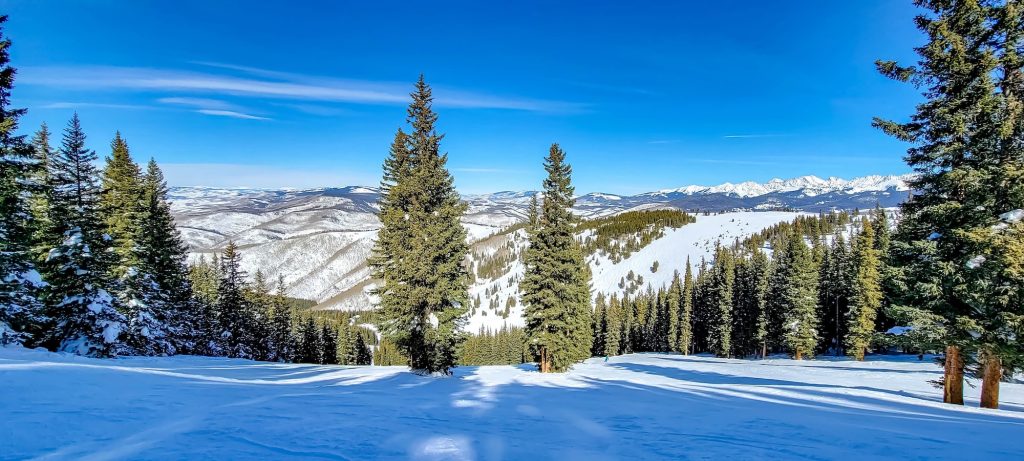
You’ve probably noticed that most ski runs in our valley sit on north-facing slopes. Northern aspects stay chillier, and therefore snowier, than slopes facing the hot southerly sun in winter. Our conifers have a strong preference for this cooler, moister habitat, meaning the densest forests are found exactly where we’d like ski runs to be. To create a new piste, the usual process is to cut down a swath of trees, smooth and shape the grade, then hydroseed the soil to hold it in place.
Some species love this change in scenery. After all, gaps open up in the forest all the time thanks to wind, avalanches, fire, and other natural processes. A myriad of species are adapted to such habitats. Red-tailed hawks, garter snakes, and foxes — to name a few — benefit from access to a mix of trees and meadows. Plants like willows, fireweed, and twinberry, who are the first to fill in when gaps appear, happily occupy the same type of space when it’s human-made.
For other species, this edge effect poses a problem. Obviously, the trees themselves are killed to make way for skiers. Their companions in the forest feel the loss as well. Intact forests ensure their group’s survival in complex ways, such as maintaining higher humidity than in unforested air, sharing resources through their roots, communicating via airborne chemicals, and filtering light to keep young trees from growing too fast.
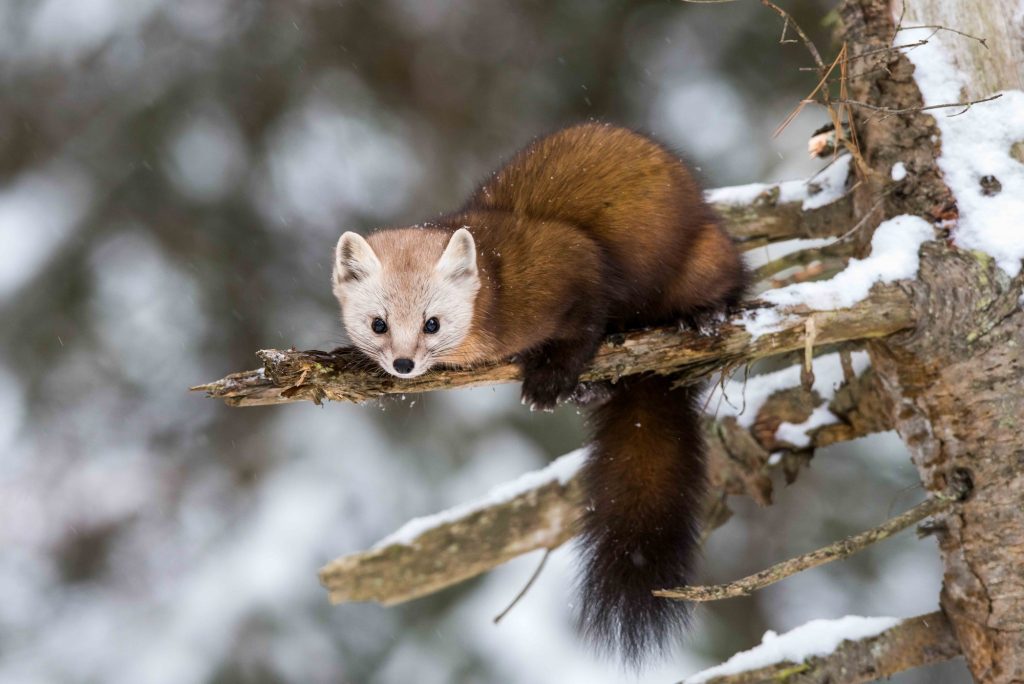
Fungi, which broker the movement of sugars, minerals, and chemical signals between trees, suffer from the loss, significantly decreasing the amount of carbon absorbed by the soil. Animals like crossbills, pine martens, and wolverines are displaced when forests become fragmented and populated by humans.

Support Local Journalism
The plants living on the piste face difficulties that their peers residing in natural gaps do not. For one, they must establish themselves in soil compacted by heavy machinery. A 2018 study found that runs in Breckenridge had more plant species than controls in adjacent, unaltered areas, which is something we humans usually value.
The catch is that there was also a higher percentage of non-native plant species on pistes. Compacted, artificial snow reduced overall plant growth because of prolonged cold temperatures and the mineralization of soil nitrogen. Additionally, artificial snow uses proteins produced by the bacterium Pseudomonas syringae as ice-nucleating agents. In nature, these bacteria use these proteins to injure plant leaves and feed on them. The proteins’ specific effects on plants covered by artificial snow appear to be an understudied area. Even in areas where plant communities seemed to be fully recovered, arthropod populations did not always return to help complete the complex food web that maintains healthy meadow ecosystems.
We, humans, love to tinker with the environment; how we do so is informed by our values. When it comes to skiing, resorts turn forests into patchy fragments that favor edge-loving species. We don’t quite know the extent to which we change a mountain when we add a ski resort to it, but we can’t quantify the connection with nature we feel when we’re outside cruising the groomers or whooshing through the trees, either. Next time you ski or snowboard, take a moment to reflect on how you value the meadows and forests around you.
Lydia Delehanty is the after-school programs manager at Walking Mountains. She’s friends with a pine marten who asked her to write this.