Pitkin County makes ‘historic’ purchase to protect land near Snowmass
The 'once in a generation' opportunity is in partnership with The Wilderness Land Trust
The Aspen Times
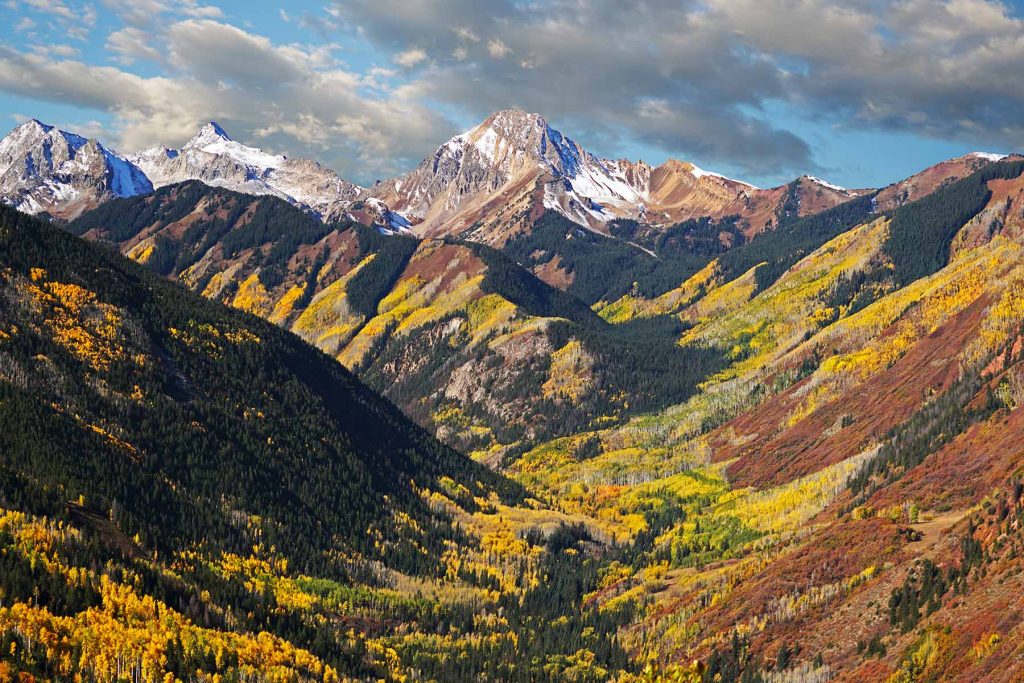
Hall & Hall, courtesy of The Wilderness Land Trust/Courtesy photo
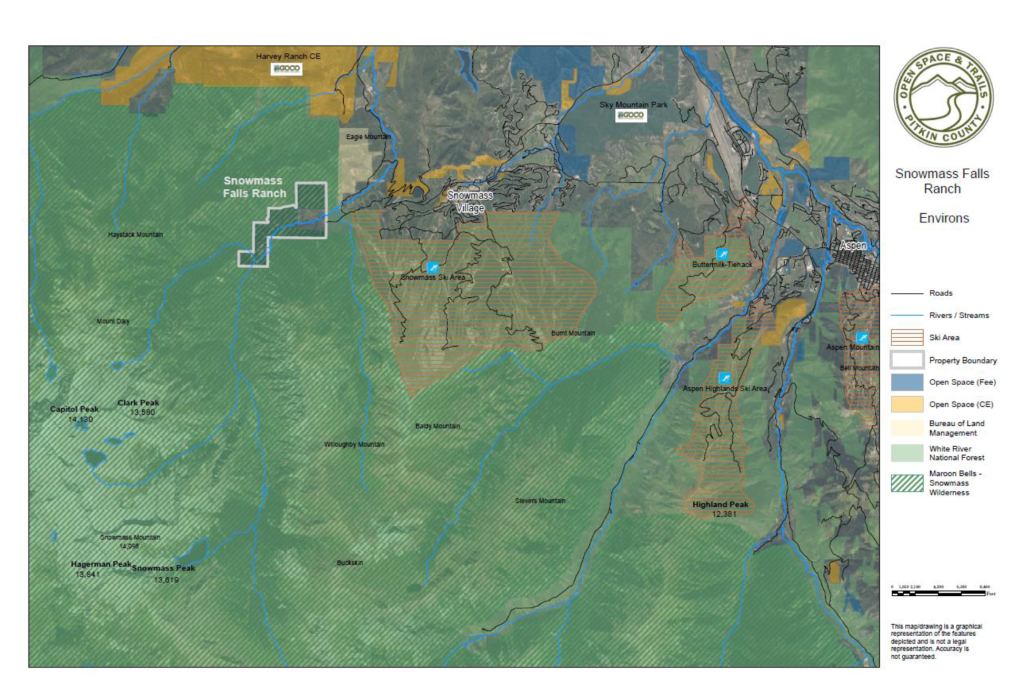
Snowmass Falls Ranch, the largest inholding in the Maroon Bells-Snowmass Wilderness and the gateway to some of the area’s most coveted recreation and wildlife habitat, was acquired in a historic purchase by Pitkin County, in partnership with The Wilderness Land Trust, to protect it from development.
The 650-acre property sits just outside Snowmass Village, at the foot of the Elk Range, with a majority of the property within the boundaries of the Maroon Bells-Snowmass Wilderness. Originally established by Kate Lindvig, known as the “Cattle Queen of Snowmass,” during the original settlement of Aspen, the property was purchased by Pitkin County for $34 million from the previous landowners earlier this year using Open Space Program funds.
“This was a historic purchase for us,” said Dale Will, acquisition and special projects director of Pitkin County Open Space and Trails. “That number is the largest amount we have ever spent on anything … but the property was a holy grail too. I’ve been working for Open Space for 26 years, and it had been weighing heavily on my mind the whole time as a property that needed to be protected.”
Will’s relationship with the property began when he was a teenager back in the 70s, and backpacked into Snowmass Lake.
“The first mile of that trail is inside this property, one of the most beautiful backcountry wildernesses in the world,” Will said. “Nobody wanted to see it developed into luxury homes, which is what would’ve happened if we hadn’t bought it.”

Support Local Journalism
Will noted that purchasing the property, which was originally listed at $50 million in 2021 with no conservation easements or deed restrictions, was possible thanks to recently sold bonds and a $10 million loan from the Great Outdoors Colorado trust fund. Since the purchase, Pitkin County and WLT have been working with the White River National Forest as the agency applies for Land and Water Conservation Funds to transfer property to public ownership as a National Forest, according to WLT Director of Marketing and Communications Margosia Jadkowski.
Land and Water Conservation Fund is funded by revenue from offshore oil and gas leases, and funds are mandatory spending for Congress on everything from local parks and recreation facilities to wilderness inholding acquisitions. Jadkowski confirmed that once WRNF can secure the $34 million, likely in two phases of $18 million and $16 million, and transfer the property, about 600 acres within the wilderness boundary will become part of the Maroon Bells-Snowmass Wilderness.
“This is the biggest inholding by far in the Maroon Bells-Snowmass Wilderness,” said Kelly Conde, one of WLT’s lands specialists. “Nothing compares to the size of the Snowmass Falls Ranch. We’ve had this property on our radar since our beginning. The ecological value of the property is unparalleled — It really has a mosaic of ecology. (It’s) a property that is really something we don’t see a lot and are not able to acquire a lot. A lot of times, we get outbid or don’t even have the opportunity. It really is an incredible once-in-a-generation opportunity for us.”
Jadkowski added, “I think that’s a pretty remarkable thing for Pitkin County to see the value for the community, to see the value of it eventually becoming wilderness and being willing to step up for that … its protection will also benefit well beyond its boundaries, into the surrounding wilderness, by preventing fragmented habitat for wildlife migration, protecting scenic viewsheds, and preserving the Snowmass Creek watershed.”
And it’s not just WLT, Pitkin County, and WRNF that support the project. The project has seen widespread support through the community and the state, with letters of support from Gov. Jared Polis, Senators Hickenlooper and Bennet, Pitkin County Board of County Commissioners, the town of Snowmass Village, the city of Aspen, Colorado Backcountry Hunters and Anglers, Trout Unlimited, The Wilderness Society, Watershed Biodiversity Initiative, Roaring Fork Outdoor Volunteers, Independence Pass Foundation, Wilderness Workshop, Aspen Valley Land Trust, and more.
“As a conservation organization dedicated to actively stewarding our regional public lands, RFOV understands the incredible value that wilderness areas bring to our lives,” said Becca Schild, RFOV’s executive director, in an email to The Aspen Times. “The Snowmass Falls Ranch holds the same qualities as the adjacent Maroon Bells-Snowmass Wilderness and is an important access point to that area. By permanently protecting this site and incorporating it into the wilderness system, those natural qualities will remain intact for years to come.”
In his letter to Tom Schultz, chief of the U.S. Forest Service, Governor Polis highlighted the fishing opportunities and public trails providing access to the wilderness that the Snowmass Falls Ranch offers.
“The statewide significance of the Maroon Bells-Snowmass Wilderness area extends across the 650-acre Snowmass Falls Ranch,” Governor Polis wrote. “By acquiring the Snowmass Falls Ranch and incorporating it into the Maroon Bells-Snowmass Wilderness, the White River National Forest would be filling an important missing piece of the wilderness area and ensuring its enduring protection.”
Senators Hickenlooper and Bennet underscored the significance of the area as summer range habitat for elk, bear, moose, mule deer, and mountain lions. Additionally, a complex of beaver ponds, wetlands and Snowmass Creek contributes riparian habitat and streamflow to the larger Colorado River Basin.
“The partnership of Pitkin County and the Wilderness Land Trust to secure permanent public ownership of this 650-acre inholding speaks to the local support for this opportunity to protect the recreational, habitat, and watershed benefits that this property offers,” their joint letter states. “In recognition of this special property and the recreational, watershed protection, and species benefits it offers, we strongly support FY 2026 LWCF funds for the White River National Forest to acquire Snowmass Falls Ranch.”
Independence Pass Foundation Executive Director Karin Teague also expressed support, telling The Aspen Times that she, her board and the organization are all in favor of expanding wilderness.
“I can’t tell you what a blessing that is,” Teague said. “It brings with it so many protections. Maroon Bells-Snowmass Wilderness bumps up against the Collegiate Peaks Wilderness, which is Independence Pass, so we’re delighted to see our neighbors protecting that landscape. I don’t think any of us regret having ever protected more of our most spectacular land.”
Due to the property’s conservation values and extensive local support, Snowmass Falls Ranch scored “very high” in the competitive national rankings for LWCF. Funding for this project is included in both the Senate and House appropriation bills. According to Jadkowski, the ranking considers recreation access of a property, ecological values, community support, and much more.
Conde confirmed Snowmass Falls Ranch ranked number one in Colorado’s region, which includes other states like Nebraska, Kansas, and Wyoming, and was brought by White River National Forest to the national office as their number one project for LWCF funding.
“You don’t have to look too far to find people who really care about this property,” Will said.
If Congress passes another continuing resolution at the end of January, which means LWCF would continue to be funded at the last fiscal year’s level, the first phase of the transfer is expected to be funded this year at $18 million. If Congress passes an appropriations bill, both phases of the transfer are expected to be funded this year at the full $34 million, when Pitkin County can recoup the purchase price to reinvest in additional conservation and community projects.
Conde and Jadkowski did acknowledge that there is a “very, very low chance” that the funding won’t come through after several attacks on LWCF this year and efforts under the current Trump administration to change what the funds are spent on or to defund it altogether.
“We’re sort of in a never-say-never moment in terms of what might be tried, but what has been consistent this year is that every attempt to weaken (LWCF) has failed,” Jadkowski said. “Whether it happens this year or in the coming years, I think we really feel strongly that because of the value of this project and the community support, we hope to see it funded.”
Will confirmed that if the worst case scenario were to occur and funding didn’t come through, Pitkin County would remain committed to protecting the property. The risk, he said, is that Pitkin County needs to pay back the $10 million loan by 2027.
“If the funding doesn’t come through on this, I don’t see that the property will be threatened,” Will said, “but our capacity to do other things to protect land and the watershed will be significantly compromised.”
Both Jadkowski and Conde emphasized the gratitude WLT has to Pitkin County’s dedication to the project despite the risk.
“It isn’t always the case that you find a partner that’s as willing as Pitkin County has been to really step up and be a great partner,” Jadkowski said. “For me, one of the most special parts of the story is the private/public partnership. This is a bright spot in seeing that there is still so much support and momentum for protecting places like this.”
Conde added, “This partnership will serve as a template moving forward for other projects for a variety of reasons. We all need to be more flexible in how we approach conservation. This is such a great example of how that can work.”
For more information on WLT, visit https://wildernesslandtrust.org.