Prop 137 sparks debate around wildfire mitigation, TABOR refunds and state budget
The ballot measure would raise an additional $175 million for the state government to spend on existing outdoors programs, including those that aim to mitigate wildfires

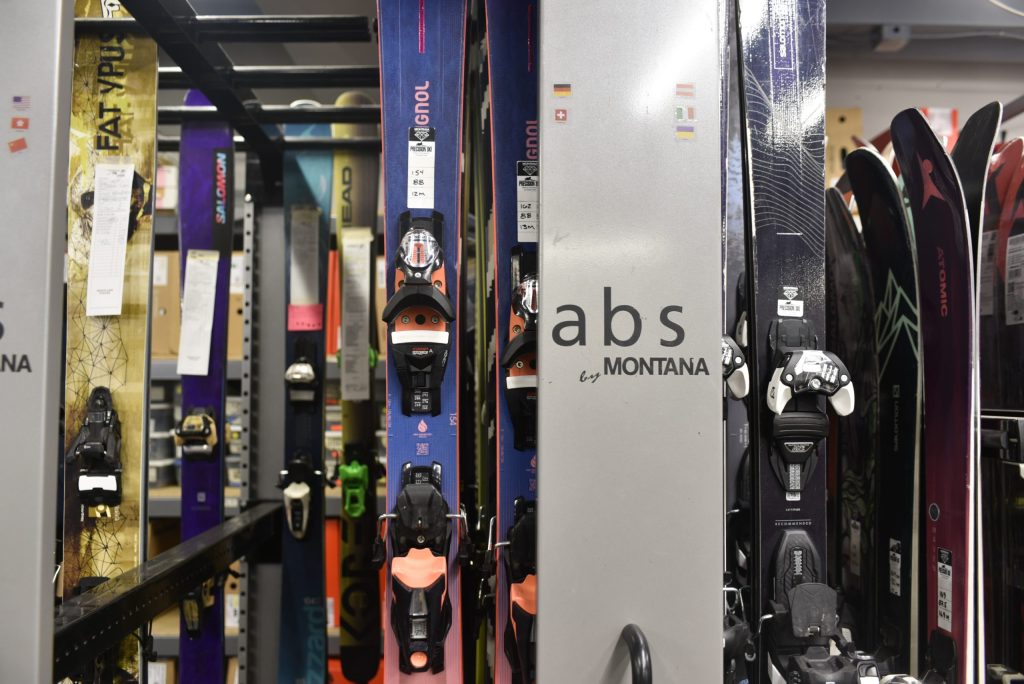
Jessica Sachs/Summit Daily News
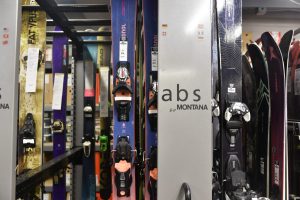
Colorado voters in November will decide on a ballot measure that would allow the state government to keep more of the taxes it collects from outdoor sports equipment sales.
Proposition 137 instructs the state government to direct a portion of taxpayer refunds collected from this sales tax to create a pool of about $175 million for conservation, wildfire risk mitigation projects and outdoor recreation programs. The ballot measure has ignited a debate over its potential fiscal impacts to the state’s budget as well as whether the funds support the right kind of wildfire mitigation and conservation efforts.
The ballot measure, if approved, would reduce TABOR returns by between $26 and $83 for single filers, or double that for joint filers, in some years, according to the official 2026 Ballot Information Booklet.
“Prop 137 is in response to some of the state’s most pressing problems, namely more severe and frequent wildfire, record-breaking low snowpack, widespread drought and the reality that the state lacks funding to meet even the most urgent of those needs,” said Tarn Udall, a senior attorney with Western Resources Advocates, who helped bring the ballot measure. “It came from an estimate around the lack of funding to protect communities from catastrophic wildfire and ensure that the state has enough resources to conserve land and water and keep our outdoor recreation economies strong.”
The ballot measure would raise about $175 million in the first year, according to the official ballot information booklet. It would dedicate 47.5% of that to the Great Outdoors Colorado program, known as GOCO, which funds parks, trails and wildlife projects through grants; another 47.5% toward wildfire risk mitigation, forest management and watershed restoration projects; and the remaining 5% to outdoor recreation, economic development and equity programs.

Support Local Journalism
Prop 137 has the backing of a widespread coalition that includes The Nature Conservancy, Denver Water’s board of water commissioners, local groups such as the Routt County Wildfire Mitigation Council, Eagle Valley Land Trust and SOS Outreach, as well as major political players in Colorado, including former Interior Secretary Ken Salazar, former U.S. Sen. Mark Udall and former Gov. Bill Ritter.
Proponents of the ballot measure argue that it funds existing programs that Coloradans support and creates a dedicated stream of funding to invest in wildfire mitigation work that will reduce risk and protect communities.
“Proposition 137 meaningfully connects the outdoor equipment bought across the state and the places and communities that make those experiences possible,” said Seth Ehrlich, the chief executive officer of the youth development nonprofit SOS Outreach. Ehrlich said the funding created a more reliable funding source for grant programs that support organizations like his, allowing for better long-term planning.
But the ballot initiative has also seen pushback.
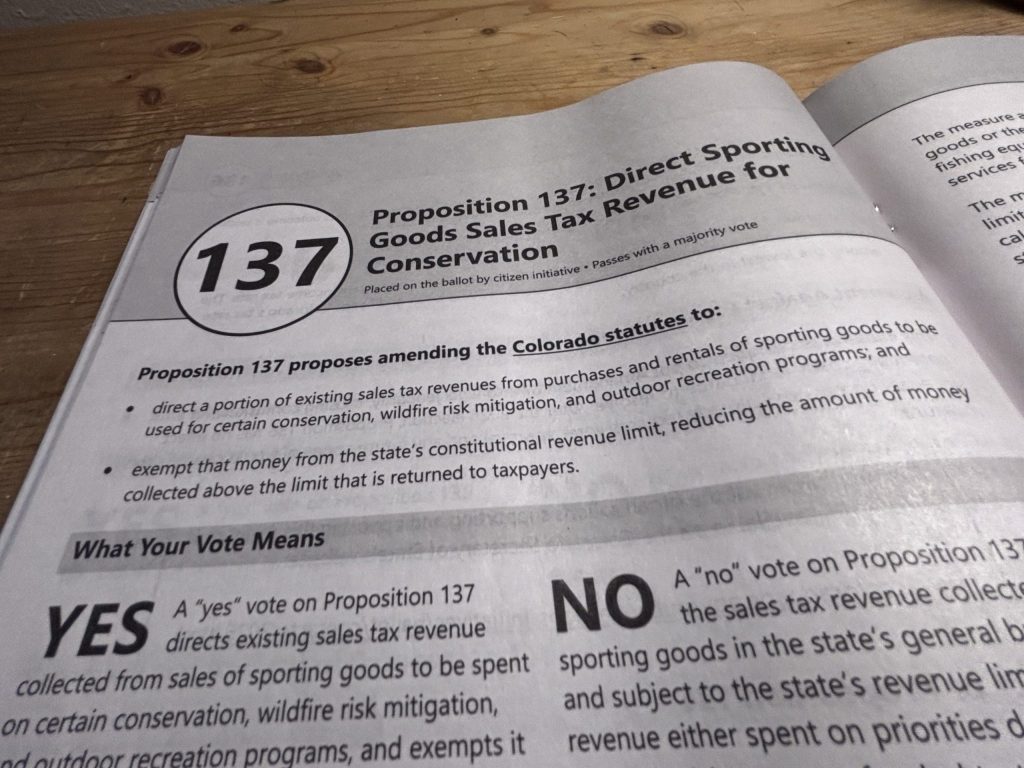
Some Coloradans have raised concerns since the proposal will reduce the amount of money taxpayers receive on their state Taxpayer Bill of Rights, or TABOR, returns.
Other groups, such as the League of Women Voters of Colorado, announced their opposition to Prop 137 over concerns that it restricts the judgment of legislators to prioritize the use of the general fund. The Colorado Democratic Party’s State Central Committee voted to oppose the measure over concerns from state legislators about its impact on the state’s budget.
Prop 137 also has seen opposition from a group of environmental advocates, including the Eco-Integrity Alliance and John Muir Project, which have questioned the effectiveness of the wildfire mitigation work that the ballot measure proposes to fund. These groups have raised concerns about too many trees being cut down in Colorado in the name of wildfire mitigation and argue state funds would be better spent on projects that harden homes and are in the immediate vicinity of communities.
“The ballot is framing this as conservation, but I would argue there’s definitely not a scientific consensus on that perspective,” said Estes Park resident Nick Schritchfield, a former Rocky Mountain National Park ranger who is opposed to the ballot measure.
TABOR impact
Under TABOR, tax revenue collected in excess of a specific limit must be refunded to the taxpayers unless the voters approve a measure to allow the government to keep and spend it.
Prop 137 would exempt the sales tax revenue from the purchase of outdoor sporting goods from being refunded. According to the ballot book, this would result in an estimated $83 million for GOCO and $83 million for wildfire mitigation, forest management and watershed restoration projects in the first year. It would also create more than $8 million for state outdoor recreation and equity programs.
In years that state revenue collections fall below the TABOR limit, the measure will reduce the amount of money the state has available for other uses, according to the ballot information booklet. Groups like the League of Women Voters raised concern that this “earmarking” of funds could limit the ability of the legislature to prioritize items like healthcare and education when the state’s budget is limited.
Udall pushed back on these concerns, stating that Prop 137 was “designed to have long-term fiscal responsibility in mind” and allows the legislature to reduce spending on its dedicated programs in years when the state does not have a budget surplus.
In years when state revenue collections are above the TABOR limit, Prop 137 would not impact other state funding but would decrease the amount refunded to taxpayers.
“TABOR exists to protect Colorado taxpayers from runaway government spending,” said Mike Rawluk, a member of the opposition group Protect Colorado’s Land, Communities, and Tax Dollars. “Proposition 137 would shred Colorado’s constitution by redirecting $175 million tax dollars yearly to unelected government agencies and unaccountable (non-government organizations).”
Proponents of Prop 137 argue that the $26-$86 each individual would lose on their TABOR returns is a small price to pay to support programs that have direct impacts on Coloradans.
“From my perspective, Prop 137 would deliver significant benefits to mountain communities,” Udall said. “I think of it as funding to support the fabric of what makes these communities great places to live, as well as protect them for the future.”
Debate over wildfire mitigation
Of the 47.5% dedicated to wildfire mitigation, Prop 137 would put $10 million toward creating a prescribed fire claims cash fund. The remaining $73 million would be split between existing programs at the State Forest Service and Department of Natural Resources.
At the State Forest Service, additional funding created by the ballot measure would go toward the Forest Restoration and Wildfire Risk Mitigation Grant Program or the Healthy Forests and Vibrant Communities Fund, according to the text of the proposition. At the Department of Natural Resources, the funds would support the Wildfire Mitigation Capacity Development Fund or the Colorado Water Conservation Board’s construction fund.
“Prop 137 is trying to send funding to state grant programs that are using science-backed tools to reduce wildfire risk and enhance watershed health,” Udall said. “This is to protect communities and drinking water. These tools include reducing barriers to getting more prescribed fire on the landscape, so using good fire in the right places at the right time, and forest thinning.”
Proponents of Prop 137 argue that Colorado needs to invest in wildfire mitigation projects to reduce the risk of catastrophic wildfires, noting that some of the largest and most destructive wildfires in the state’s history have occurred in recent years.
Former White River National Forest Supervisor Scott Fitzwilliams, who led the nation’s busiest national forest for 15 years, said Prop 137 is “critical” for Colorado.
“It’s just essential for the situation we find ourselves in in Colorado and the West as far as wildfires and the growing water scarcity and water issues we have — because it’s going to provide a stable and significant funding source without a new tax,” Fitzwilliams said.
Supporters of Prop 137 say there is good science, including from the U.S. Forest Service, to show that mechanical thinning can reduce subsequent fire severity and decrease forest mortality, especially when combined with pile burning.
But some opponents of Prop 137 have questioned the efficacy of wildfire mitigation efforts like large-scale fuels reduction and forest thinning, and point to various studies to argue that it’s not settled science that these projects benefit the environment or protect communities.
Schritchfield, the former park ranger opposed to Prop 137, said he has concerns that the forest management and wildfire mitigation techniques funded by the ballot measure would damage the ecological integrity of Colorado’s forest ecosystems. He said that forest thinning and fuel breaks do little to stop the kind of fast-moving wildfires, usually driven by high wind and extreme fire weather, that cause the most destruction in the West.
“If current funding priorities are any indication of how the funds from Prop 137 would be used, we would see expansive landscape-scale logging projects that degrade our forests. They often counter the science,” Schritchfield said. “They may increase risks to communities, and by shifting that funding away from homes, you’re reducing the funding available for the work that makes the greatest impact: Home hardening and home ignition zone mitigation.”
Proponents of Prop 137 disagree, arguing that the proposed wildfire mitigation is science-based and stating that the ballot measure was not influenced by logging interests.
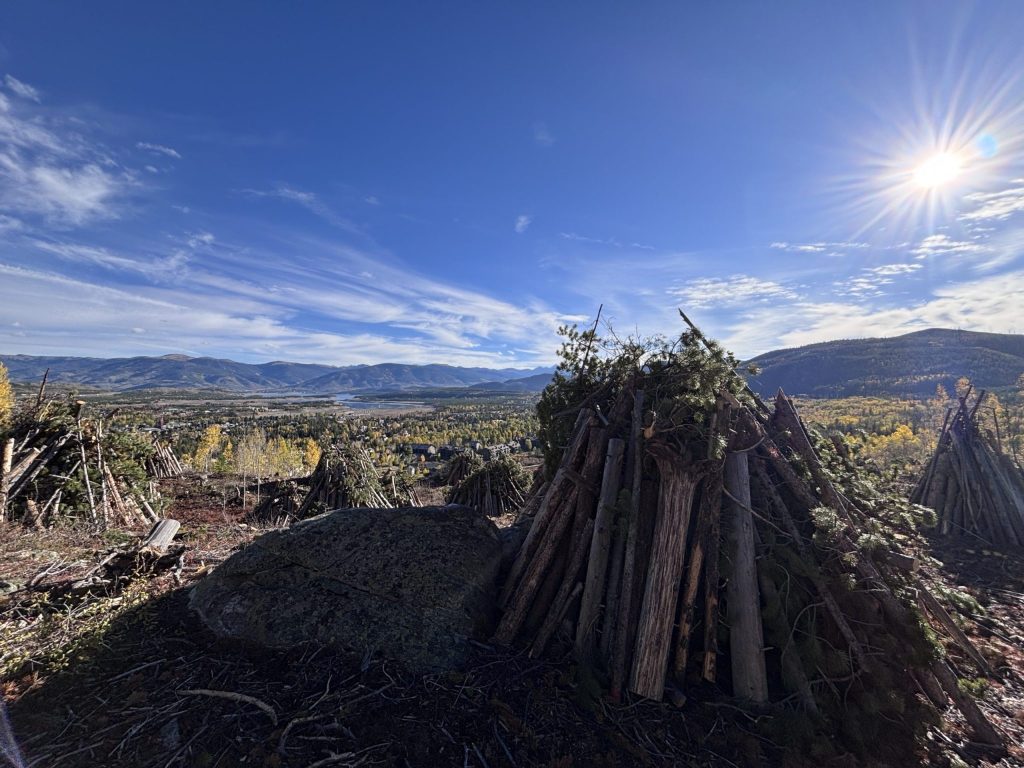
Supporters of these wildfire mitigation projects point to examples like the Buffalo Mountain Fire near Silverthorne in 2018, where firefighters credited a fire break project with preventing the fire from reaching the nearby Wildernest neighborhood.
“If we don’t deal with the fuels mitigation and protecting these watersheds further up on the hill, it won’t matter,” Fitzwilliams said. “It won’t really matter because if these fires get a head of steam, they do things we’ve never seen before. That’s why it’s so important to treat the lands, the landscape at the right scale around these communities, around homes, around the water systems and other infrastructure.”
Schritchfield and other opponents of Prop 137 argue that focusing on home hardening, which can include things like upgrading roofs, gutters, siding and vents to be more resistant to embers, is better than spending taxpayer money on large-scale fuels reduction projects that will have to be repeated in a decade.
Udall said Prop 137 doesn’t provide funding for home hardening, but added that “the proponents recognize that the state needs to be doing more to fund home hardening as well.”