Recurring bear sighting at Gore Creek Campground triggers USFS order banning soft-sided tents
kkampner@vaildaily.com
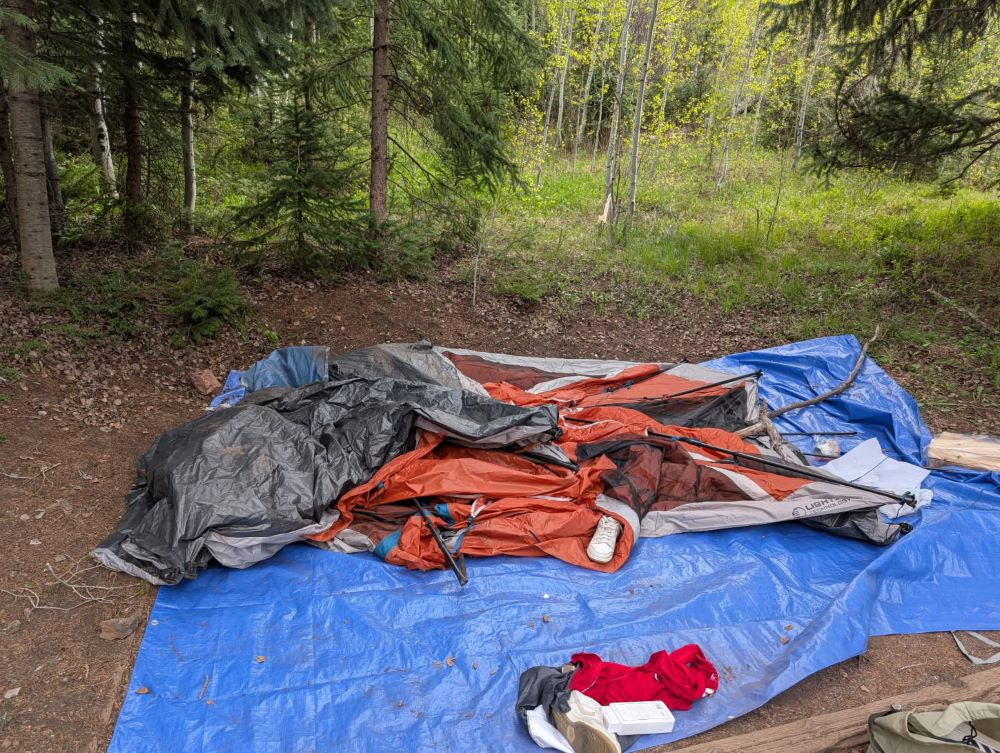
Photo courtesy of U.S. Forest Service
On a warm day in May, a black bear wandered through the greenery of Gore Creek Campground on the lookout for food. The bear’s keen sense of smell brought it to a tent, which was instantly torn through and trampled on during the hungry animal’s search. Having found an easy meal in the tent, the bear found a place worth returning to.
When that same black bear kept reappearing at the campground, rangers in the area knew something needed to be done.
On Tuesday, the U.S. Forest Service issued a public safety order banning soft-sided camping shelters such as tents, truck-bed tent campers and pop-up tent trailers at the Eagle County site. Hard-sided campers and trailers, however, are still allowed.
The order is part of an effort to rid the area of recurring bear activity, the Eagle-Holy Cross Ranger District’s Leanne Veldhuis said. “This year we happen to see an uptick in incidents around our Gore Creek campground.”
While the cause of the increase is not entirely known, current drought conditions are not out of the question, Veldhuis said.

Support Local Journalism
The decision to implement the hard-sided rule came after the same bear was seen on the camping grounds on multiple occasions, she said. The Forest Service reported two incidents of unoccupied tent damage — once in late May and another in early June — and had at least one other sighting in the area.
“We’re starting with this hard-sided camping, in the hopes that that will limit what the bear can get access to,” Veldhuis said.
In the safety order, campers were also instructed to store their food properly in locked, hard-sided vehicles or in bear-resistant food lockers, which are provided at campsites.
Veldhuis said both steps are an attempt to avoid the bears becoming familiar with humans and the potential for more serious situations.
During her six years on the job, the Eagle-Holy Cross ranger has never had to implement a hard-sided camping order; however, this is not the first time the White River National Forest has ordered one.
“It’s something we’ve done in the past at other locations, and it seems to have worked there so I’m hoping that it’ll have the same effect here and move the bear along,” she said.
Rachael Gonzales, the northwest public information officer Colorado Parks and Wildlife, said that bears will keep returning to easy food source opportunities.
One quality of black bears is their strong memory and another is their sharp sense of smell, which can track food up to 5 miles away, according to the Vail Public Safety Communications Center.
“Bears are just gonna do bear things,” Gonzales said. “What we’re seeing with this particular bear is that it just figured out that human food is a lot easier to get to.”
Black bears show a lot of activity around this time into the fall as they pack whatever calories they can get before hibernating in the winter, she said. That could include cardboard or trash that is found in trash cans or in tents.
She said that over time, as bears continue to consume trash and human food they can’t digest, it could kill them.
“We don’t want them to lose their fear of humans because that is when things tend to happen. But at the end of the day, it is a health issue for the bear as well,” Gonzales said.
During the ban, the Forest Service will monitor the bear’s activity and work with Colorado Parks and Wildlife to figure out next steps to take if the bear doesn’t leave the grounds.
Veldhuis said that this could look like scaring the bear off, relocation or even euthanization.
“That’s one of the unfortunate side effects of people leaving out or feeding wildlife, in some cases too, as you are actually doing a great disservice to that animal and are probably hastening their demise,” she said. “You’re making them used to something that isn’t natural for them, and it’s going to cause them problems down the line.”