Time Machine: 60 years ago, a dangerous weekend in Eagle County

Vail Trail/Vail Daily archive
30 years ago
Jan. 5, 1996
The Eagle County Commissioners unanimously approved St. Clare of Assisi’s sketch plan for a 113,000-square-foot religious and educational campus in Edwards, the Vail Trail reported.
“St. Clare’s has been billed as an outgrowth of Archbishop J. Francis Stafford’s 1994 controversial pastoral letter, ‘The Heights of the Mountains Are His,’ a directive issued on development of Colorado’s Western Slope,” the Trail reported.
The first phase of the project — a gymnasium and elementary school — was set to open in the fall of 1997 at a cost of $6.4 million, serving 225 kindergarten-through-eighth grade students.
Quoting Rick Pylman of Peter Jamar Associates, the project’s planning consultant, the Trail reported that the 1997 opening date was dependent upon fundraising.

Support Local Journalism
“The Archdiocese will continue with different phases of the project as it gathers more donations,” Pylman said.
40 years ago
Jan. 3, 1986
Colorado officials were considering four costly cleanup alternatives for the massive amount of sulphur-rich mine tailings near Minturn that were polluting the Eagle River, the Vail Trail reported.
The sulphur in the tailings was creating an acid when mixed with water, “and there is evidence that the smaller aquatic life in the Eagle River — insects, plants, and the like — are being destroyed as a result,” the Trail reported. “The fish count in the area of the tailings pond was very much reduced when compared to areas upstream.”
While nearly a century of mining had occurred nearby, pollution actually worsened after operations stopped and lime was no longer being added to the tailings to neutralize acidity, the Trail reported.
“The state filed a $50-million lawsuit against current and former owners of the mine, seeking a court mandate to clean up the tailings,” the Trail reported. “Meanwhile, the Environmental Protection Agency has proposed the tailings as a candidate for cleanup under the Super Fund program. No decision on that has been issued, however, and some people say that any funding is contingent upon the outcome of the lawsuit.”
50 years ago
Jan. 9, 1976
While Vail Mountain’s December attendance was up nearly 25 percent over the previous year, the mountain did not set a new single-day attendance record. The high number remained at 12,300 — set Dec. 30, 1974.
Vail Associates president Richard L. Peterson was “pleased to note” that the December 1975 single-day attendance high had not topped that of 1974, the Vail Trail reported.
“He commented that Vail’s payless season pass and Colorado Card programs, which restrict skiing privileges to non-peak periods, had successfully contributed to reducing this year’s peak day,” the Trail reported.
60 years ago
Jan. 8-9, 1966
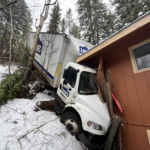
A particularly dangerous weekend of automobile travel in Eagle County saw a fatality and numerous other accidents, the Eagle Valley Enterprise reported.
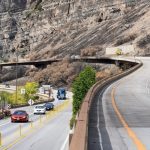
On Dec. 8, Aniceto Gerald Gallegos, of Minturn, was driving west on Battle Mountain Pass with passenger Johnny Vigil, of Montrose, and as they rounded a curve, they hit a large rock and went off the road, continuing 72 feet down the mountainside.
“Vigil started to jump from the car and was dragged by it down the mountain,” the Enterprise reported.
He was treated at the Gilman hospital for a fractured skull, and arm and leg injuries.
On that same day, 17-year-old Shirley Peters hit an icy spot just east of Eagle and skidded 111 feet before running off the right side of the highway. She was not injured.
A day later, Gerald Douglas Romine became the first highway fatality of 1966 in Eagle County when his truck went over the bank eight miles west of the Summit County line on Vail Pass.
“He was driving west when the large vehicle went out of control and skidded 187 feet on the westbound side, then 193 feet in the opposite lane and on the shoulder, then went over the bank.” the Enterprise reported. “The driver was thrown out and the vehicle came to rest 300 feet from the highway, knocking down trees as it went.”
70 years ago
Jan. 5, 1956
Western Colorado business and civic groups were intensifying efforts to build a year-round highway tunnel under the Continental Divide, the Eagle Valley Enterprise reported.
Proponents argued that the tunnel should serve both Highways 6 and 40, eliminating Berthoud Pass on Highway 40 and Loveland Pass on Highway 6.
“With issuance of $16 million in revenue bonds, as previously recommended to finance a tunnel, it will be necessary that traffic flow from both highways thru the tunnel,” the Enterprise reported. “Traffic from only one of the two highways will not pay off bonds, plus interest, fees and operating costs.”
Proponents argued that access to the state’s key industrial areas would create the tunnel’s economic viability.
“A tunnel that will serve these two routes will serve the principal mining districts of our state — the Leadville area, the Minturn area, and the vast deposits of uranium located in southwestern Colorado and southeastern Utah,” the Enterprise reported.