Trailblazers: Andy Daly’s ski exec to Vail mayor odyssey included allegations of a Trojan Horse

Special to the Daily
Editor’s note #1: This is the ninth installment in a series highlighting the Vail Public Library’s Vail Valley Voices Collection of oral-history interviews featuring prominent local figures and conducted by the Vail Daily’s Tony Mauro and sometimes David O. Williams and other journalists.
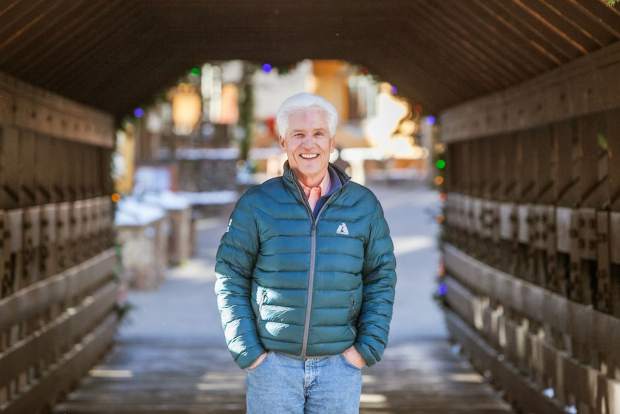
Andy Daly holds a unique distinction among Vail’s former mayors. When he served in that role between 2011 and 2015, Daly — a member of the Colorado Ski and Snowboard Hall of Fame — became the first and so far only former president and CEO of the Vail Resorts ski company to also serve as mayor of the town at the base of the world-famous ski mountain.
But in his conversation with the Vail Daily’s Tony Mauro and David O. Williams in 2022 for the Vail Library’s Vail Valley Voices oral history collection, it was clear Daly saw himself as a ski industry stalwart who got into politics because he was recruited by departing council members who wanted someone with both a business acumen and a solid sense of the ski industry.
Daly started off in the ski business in 1970 in Aspen, spending three years there before heading to Copper Mountain for 15 years. At that point he decided he wanted to do his own thing.
“So, I reopened Eldora in 1987. It had been closed for a year or two. And so, I’d been there about a year or so — trying to put together a couple other small ski areas — when (former Vail owner) George (Gillett) and (Alterra’s) Mike Shannon came to me and said, ‘Well, why don’t you come up and run Beaver Creek?'”

Support Local Journalism
Japanese money had just come into the Colorado ski market around then, buying up Breckenridge and Steamboat, Daly said of the state of Colorado’s ski industry at the time.
“So, I could no longer do what we used to call ‘a leveraged buy-out,’ so, I said, ‘Sure, that might make sense,'” Daly said. “I talked to them — Mike’s still a really good friend of mine and George is a very dynamic, creative guy — and I said, ‘Sure, I’ll come up and do that,’ and I sold them an interest in Eldora, and they also were managing the Broadmoor (ski area), so I managed the Broadmoor, Eldora and Beaver Creek.”
Daly was at the helm of Vail Associates during both the tumultuous financial transition from Gillett’s bankruptcy to Wall Street ownership under Apollo Ski Partners in the early 90s and its transition to Vail Resorts, when it went public on the stock exchange and took its first steps toward becoming the global outdoor recreation powerhouse it is today.
“I knew going in that George was having financial problems. But I said, ‘OK, you look at this brand, and other than the Aspen brand, (it is) probably — certainly — the strongest brand in Colorado and one of the strongest brands in the United States. So, I wasn’t worried. In 1991 or 1992, George loses the company and (Apollo’s) Leon Black appoints me as the COO, and I’m an operations guy, basically. But in any case, it was a fascinating experience. Leon treated me very well and I respected the relationship I had with him. And curiously enough, the two guys I worked with were Mark Rowan and Rob Katz. Rob Katz was the last member of the Apollo team that came from the predecessor company. And so, I did that for 10 years.”
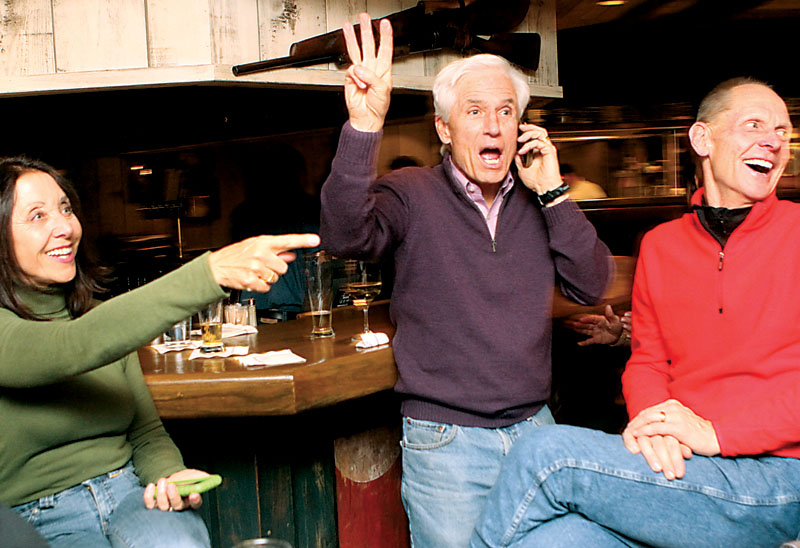
Daly wound up leaving the company in 2002 at the age of 56 — a year after he said he wanted to get out of the ski business.
Two departing Vail Town Council members, Kent Logan and Rod Slifer, suggested to Daly that he should consider a run for council. That was 2007.
“There was no one else that they’d been able to identify with a business background that could maybe come onto the council and just act as a stabilizing rudder,” Daly said, adding he had a long-running relationship with the town’s elected officials during various ski expansions and other major infrastructure projects over the years.
“I spent a lot of time with (former council members) Peggy (Osterfoss) and Merv (Lapin) … Tom Steinberg,” Daly said. “We were trying to make the town a better place and make the mountain a better place. So, there was a real effort to work together and do what’s best for building the brand.
“So, I came on the council, and it was hilarious the first couple years because most people thought I was a Trojan Horse,” Daly said. “And so, they didn’t trust me worth a damn.”
But eventually that sense of Daly being a ski-company plant faded.
“Our greatest challenge was the great recession,” Daly said of the 2008 housing bubble. “So, here you are with the town moving forward with this great (redevelopment) renaissance and the market absolutely collapses because of what’s happening in the high tech and real estate markets. So, what we did is we said, ‘OK, we’ve got to position Vail so that when we are coming out of this great recession, Vail is top-of-mind for everyone that is thinking about taking a vacation and hasn’t been able to afford to… Whereas, a bunch of other places — Aspen and Snowmass -— they ended up with holes in the ground and incomplete projects.”
With the advent of the Epic Pass multi-resort season ski passes innovated by current Vail Resorts CEO Katz in 2006, Vail in the ensuing 20 years saw massive growth in skier days.
Daly tells the related story of his son coming to him and asking to do his senior high school project in the tiny Himalayan kingdom of Bhutan, which Daly fully embraced.
“So we go to Bhutan … and the king of Bhutan had a basic philosophy. It was quality over quantity. And so, he would rather have people of means coming to Bhutan and appreciating the culture rather than flooding the place with tourists. I think (Vail’s) challenge now is the owners are focused on quantity, not quality. And Vail as a brand is all about quality. So, I think that’s our biggest challenge,” Daly said.
As for his own leadership in Vail, Daly said, “I was delighted to be elected mayor. I was flattered. It makes me question sometimes whether the mayor should be elected by the population or the mayor should be elected by the (Vail Town) Council. What I found on the council was … it was more political than I thought.” Council members choose the mayor in Vail.
Editor’s note #2: This is the ninth installment in our Trailblazers series highlighting the Vail Public Library’s Vail Valley Voices Collection of oral histories. Click on Kent Rose for part 1, Dick Cleveland for part 2, Pete Seibert Jr. for part 3, the Vail Trail for part 4, Rob LeVine for part 5, Jack Eck for part 6, Joe Staufer for part 7, and Buck Allen for part 8.