Trust our Land: How agricultural lands help wildlife
Eagle Valley Land Trust
I readily admit that when I first started working in conservation, it wasn’t out of any particular passion for protecting agricultural lands. I wanted to conserve wildlife habitat — the rugged, untouched landscapes where charismatic species of every shape and size roam the land freely, as they have for centuries. The kinds of places that take your breath away with their wild, pristine beauty.
But Eagle County is steeped in agricultural heritage, from the potato fields of the Brush Creek and Gypsum Creek Valleys in the early 1900s, to the lettuce farms in Minturn and Avon in the 1920s, to the present-day cattle and sheep ranches scattered throughout the county. And as it turns out, thoughtfully managed agricultural lands can make for outstanding wildlife habitat.
Take Gates Ranch, for example. Originally homesteaded in 1893 and permanently protected under a conservation easement with Eagle Valley Land Trust since 2007, this 740-acre expanse of pastures, wetlands and forests in the heart of the Derby Mesa provides plentiful habitat for elk, mule deer, mountain lions, bighorn sheep, bald eagles and numerous other species. It does this while also boasting more than 200 head of cattle in a family operation that has been humming along for five generations.
How are agricultural lands able to support such a rich and diverse abundance of wildlife? To answer this question, I sat down with Allegra Waterman-Snow, program manager with the Eagle County Conservation District. “Producers know the land better than most everyone else, and they understand that when you have a healthy tract of land, the entire ecosystem benefits,” Waterman-Snow told me.
The Conservation District has a long track record of supporting local producers in the stewardship of their land through tools, resources and innovative programs. One of their initiatives, the Colorado Soil Health Program, provided financial assistance and implementation support for projects such as no-till drilling and compost and biochar applications. At the height of this program, the Conservation District had six producers in the Burns-Gypsum-Eagle area engaged in soil health projects in everything from hay fields to fruit orchards.

Support Local Journalism
“Producers know that a healthy landscape begins with the soil,” explained Waterman-Snow. “Effective soil health practices lead to healthy vegetation, and healthy vegetation leads to healthy habitat for wildlife.” And indeed, this ecological domino effect has resulted in regular sightings of black bears, large herds of pronghorn and elk, and many other species on local agricultural lands. That’s something wildlife lovers everywhere can celebrate.
Another initiative with considerable benefits for wildlife is virtual fencing, an innovative approach to grazing management. The Conservation District provides financial assistance for virtual fencing towers and collars, which send participating ranchers the real-time locations of their cattle. The program allows ranchers to effectively manage grazing areas and protect against overgrazing, particularly in sensitive riparian zones, which are crucial for biodiversity. A lot of this work is done on federal public lands where local ranchers hold leases.
“No one is twisting the producers’ arms to do this,” said Waterman-Snow. “They participate in this program voluntarily because of their connection to the land and their willingness to try new things to steward it.” At the height of the virtual fencing program, Eagle County had six participating ranchers representing 3,000 head of cattle, making it one of the top counties in the nation for utilizing this technology.
Virtual fencing offers ranchers the possibility of taking down actual physical fencing, which has massive implications for wildlife movement. Waterman-Snow notes that while perimeter fencing may always have to remain in place, the removal of interior fences — particularly if they’re made of hazardous barbed wire — can dramatically improve wildlife corridors and ensure safer migration.
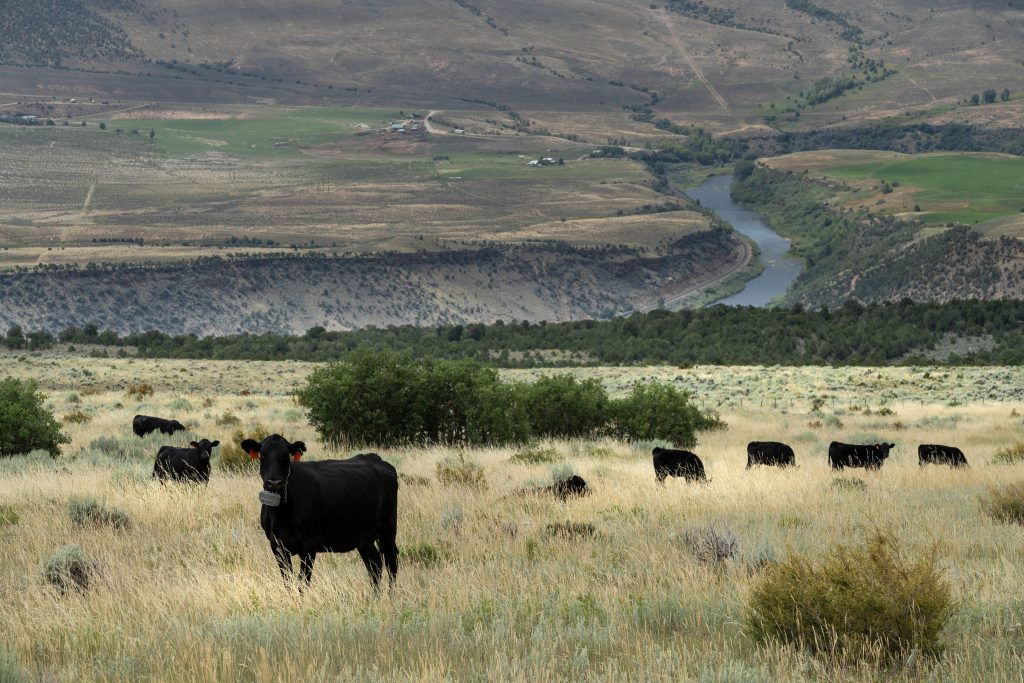
This has been the experience of Clayton Gerard and Lacey Bair, fourth-generation ranchers in Eagle County. They’ve participated in both the soil health and virtual fencing programs, and through the latter, they were able to remove interior fencing on Forest Service lands where they hold leases. This is just one example of many improvements they’ve made to the land.
“We build relationships with the Forest Service, Bureau of Land Management, Colorado Parks and Wildlife, and the Conservation District,” Bair told me. These relationships have led to projects like constructing water savers, which collect rainwater and snowmelt without disturbing the soil and bring water into areas where it wouldn’t otherwise be. This is a huge boon for both cattle and wildlife.
“Ranching and wildlife conservation go hand in hand,” said Gerard. “All of the work we do on ranchland is to benefit wildlife as well. And without homesteads like ours, there’d be no winter range for wildlife, since the rest of the land is developed.”
My understanding of the work that local producers do is still growing, but one thing I fully grasp is that those of us who care about conservation in this valley should care about the grit and determination that producers have for stewarding agricultural lands. These individuals are the guardians of legacy landscapes — significant swaths of land that, when managed sustainably, have the potential to remain as they are: open, intact and thriving. And in a region of rapid growth and development like Eagle County, the value of relatively natural, unfragmented landscapes cannot be overstated.
After all, these are the lands that define our heritage, and with conservation-minded stewardship, they will help safeguard a future for both us and wildlife.
Keri Inouye is the community engagement manager with Eagle Valley Land Trust. She coordinates EVLT’s community conservation programs. To learn more about EVLT’s mission and work, please visit evlt.org