New wave movement: Vail studying surf features while Eagle looks to improve its whitewater park

Courtesy image
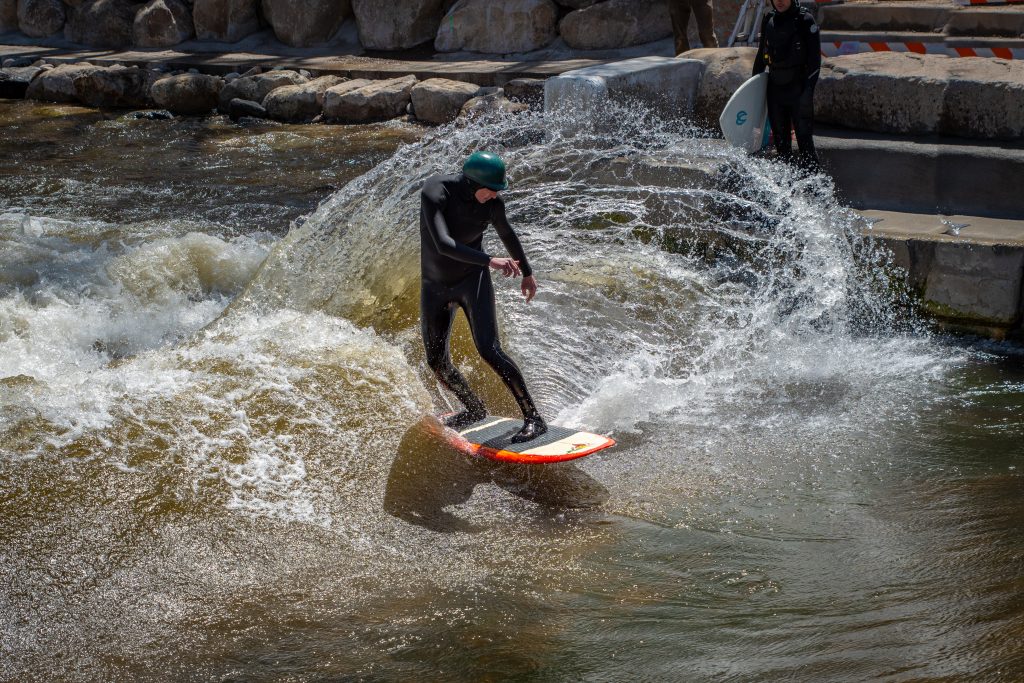
When it comes to river surfing in Colorado, not all waves are created equal.
A discussion about standing waves at the Vail Town Council’s August 20 meeting has had the unintended consequence of highlighting the good and bad aspects of other whitewater parks around the state, including nearby Eagle.
Standing waves are manmade features that allow rivers to be surfed like oceans. They have seen a recent rise in popularity, with several new waves installed around the state over the last decade in places like Denver, Eagle and Salida.
In Eagle, voters passed a .5% sales tax increase in 2016 to build a whitewater park that contains a standing wave, a campaign made memorable by supporters’ “Surf Eagle” bumper stickers.
But surfing wasn’t all the whitewater park builders had in mind, says Town Manager Larry Pardee. That park was meant to appeal to tubers, kayakers and whitewater rafters, as well, and in trying to appeal to all of those groups, the surf Eagle aspect of the park appears to have been washed downstream.

Support Local Journalism
“The rafters messed up the Eagle one,” local surfer Bob Aubrey told the Vail Town Council. “They hired a company that wasn’t a surf company to build it originally, they put in rocks, now they’re trying to hire the company that built Salida to fix that wave.”
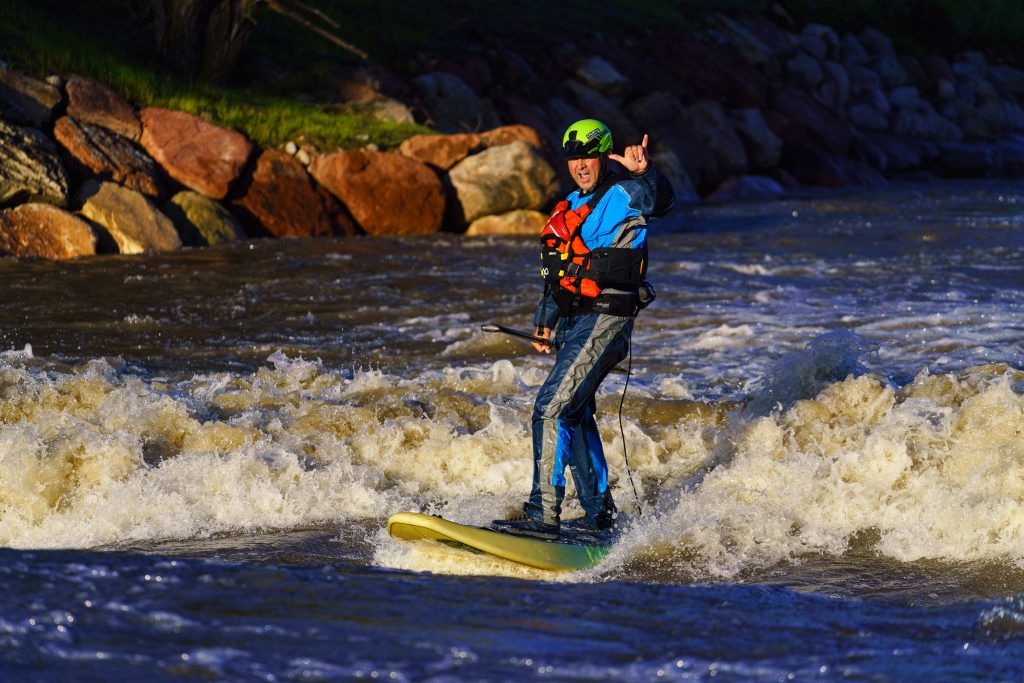
Pardee said the team that was hired to build Eagle’s park, S2O Design, specializes in Kayak-style park designs and used manmade obstacles called RapidBlocs to create the wave.
“The decision to use rocks and Rapidbloc technology rather than a concrete slab design was most likely based on factors during the visioning, design, and construction stages,” Pardee said.
Unfortunately, some of the rocks used in the construction have shifted over time, Pardee said, impacting the wave’s functionality.
“We are aware of these issues and are actively exploring options for improvement,” Pardee said. “We are currently discussing this with various experts, including Recreation Engineering and Planning (REP), who have extensive experience with different technologies that could help enhance our wave features.”
Recreation Engineering and Planning designed the standing wave at Salida’s whitewater park, where Aubrey says he’s been surfing this summer.
“It surfs from 240 (cubic feet per second) to 2,950, and then it gets too big to surf for about two weeks,” Aubrey said.
In Vail, Gore Creek is much closer to the low end of that range, making it more comparable to the waves built for Denver’s River Run Park on the South Platte River.
The Vail Town Council recently requested town staff to present research on the feasibility of a standing surf wave for Gore Creek, and the town’s public works department reached out to S2O and another design firm, River Restoration, to gather information on the concept.
But some of the information provided has proved to be controversial.
A memorandum from the Vail Department of Public Works to the Town Council said “One designer noted that at Denver’s River Run Park, six features were constructed but only one functions properly.”
Aubrey told the council that statement is “a complete farce,” saying that the waves built in Denver are working as intended.
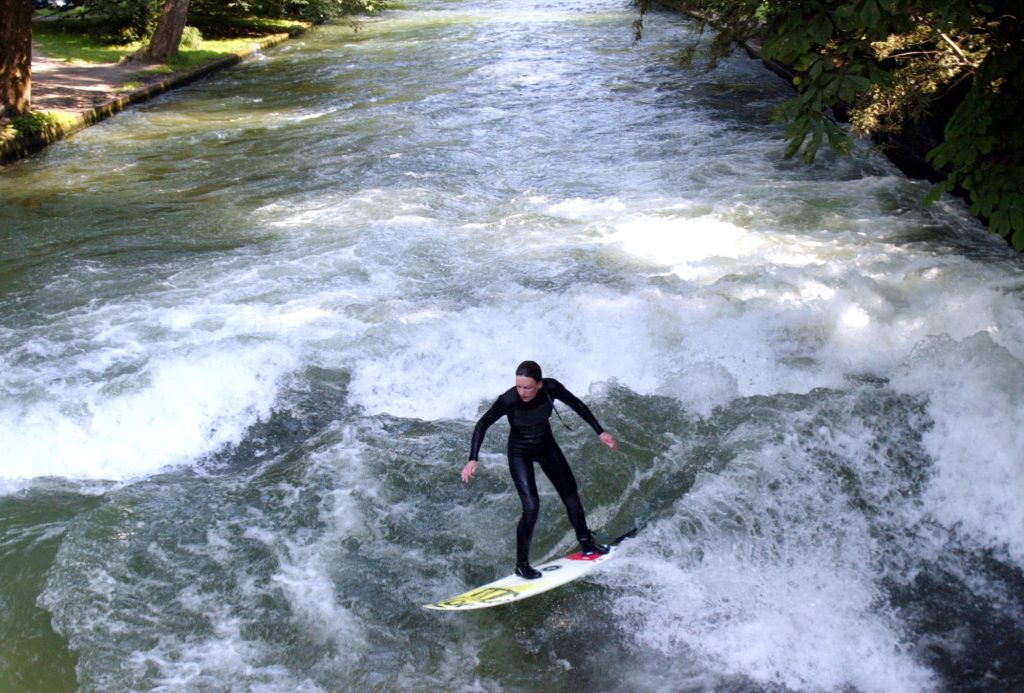
Rick McLaughlin with McLaughlin Whitewater, the company that built the waves at River Run Park, said any claim that the features in Denver were not working properly “is patently false.”
“There are two low-flow surf features — the first of their kind in North America,” McLaughlin said in an email. “These attract surfers from all over the state and even outside the state — impressive for operating at flows less than 300 cubic feet per second. There is a great SUP feature, and the rest are kayaking features. All are performing well, as intended, and have not required any reconstruction.”
The low-flow style waves used in the South Platte River would be perfect for Vail, Aubrey said.
“The 200 to 300 cfs that we have here would be amazing,” he said.
The Vail Town Council expressed concern over the cost of a potential wave feature for Gore Creek, as well as the environmental impact, mentioning the ongoing effort to delist the creek from Colorado’s inventory of impaired waterways by restoring bug populations in the creek.
“I would hate to all of a sudden impact a watershed or a creek that we’ve been working to reverse the impacts for the last 10 years and spending a pile of money to do it,” said Council member Reid Phillips.
While the creek is listed on the state’s impaired waterway inventory, it is also considered a Gold Medal brown trout fishery from the confluence with Red Sandstone Creek to the confluence with the Eagle.
“The key question would be finding out just if we were to put a slab of concrete from one side of the creek to the other, what does that do to that gold medal status?” said Gregg Barrie with the town’s public works department.
Barrie said he would try to answer that question and also find out how much a preliminary design study would cost.
“I think that the environmental impacts have certainly been considered and mitigated in places where these are successfully constructed,” said Council member Barry Davis. “I think it’s important for us to look at the way people are recreating in the mountains, and river surfing is very popular right now.”