Where the locals go: Town of Vail searches its soul for vibrancy DNA in renovation boom

Chris Dillmann/Vail Daily
Note to readers: This is the first in an ongoing series on the vitality of Vail. As iconic buildings erected in a hurry in the early ’60s boom days require renovation, developers are looking to high-end retail to pay the way, sometimes forcing out iconic local businesses that can’t afford the rent. The town of Vail is looking for ways to keep Vail’s fun, funky stores, restaurants, bars and clubs in town as it adds hundreds of new residents with its massive investment in local’s housing.
As Vail Town Manager Russ Forrest settles in front of his desk in his Vail Municipal Building office on a recent weekday as a rare-for-this-winter snow squall spits fat flakes past his windows, he wonders out loud what the town can do to maintain its vibe in the face of a redevelopment push that’s changing the look and feel of Vail’s famed, faux-European, Tyrolean charm.
Forrest starts by describing recent trips town officials took to two other mountain-resort destinations that have long been Vail’s top rivals in the ski industry arms race for more high-end guests who stay longer and spend more to fill town tax coffers and the bank accounts of hoteliers, retailers and food and beverage businesses — all of whom have suffered this season.
Vail officials were impressed with the vibrancy of both Whistler Village in British Columbia, Canada — a ski area that’s also owned by Vail Resorts — and Aspen One’s Snowmass Village near Aspen. In both places, Vail officials talked to guests and got a sense of the mix of music, events, family fun and overall vibes that drew people from all over the world.
In Whistler, an electronic dance music (EDM) DJ brought partiers from all over North America willing to reserve tables for $300 to $400 a pop. Traditional bands were also playing in numerous bars and restaurants, each with its own vibe and all of them “going off.”

Support Local Journalism
“A lot of them didn’t even ski, but they were coming for that experience, for that vibe,” Forrest said. “And that made us think, ‘Huh, you know, is this a way to diversify our economy and just make us a more vibrant, fun place?’ We also saw there were lots of locals there.
“So that’s kind of where that comes from, is can we create policies that help foster that?”
In Whistler, Forrest said it starts with municipal policies such as communicating there will be amplified music in a downtown core and that those buying real estate in such an area should expect it. Then he said businesses need to work to contain that amplified music in a way that builds their vibe without impacting nearby businesses and residents. Other ideas include revisiting open consumption in certain contained areas — which happened in Vail right after COVID but then went away — to create “more of a Bourbon Street” type vibe.
Trust what you read. Stay informed with us.
Sign up for daily or weekly newsletters at VailDaily.com/newsletter
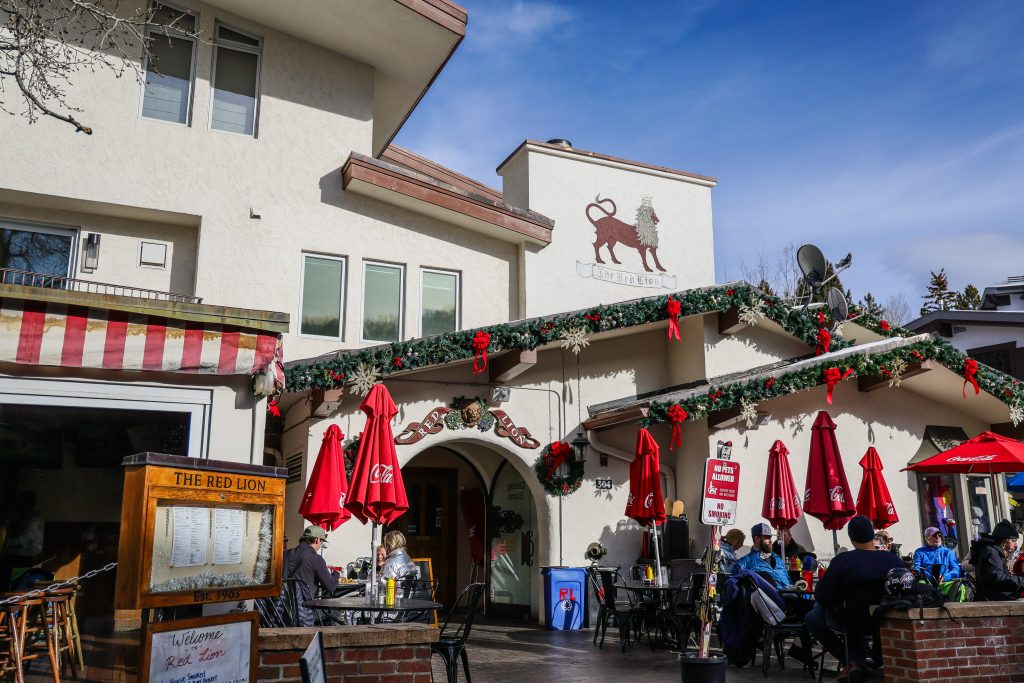
Beside wanting to offer more alternatives to snow sports in a low snow year and an overall warming world, the workshopping Vail is doing on its vibe has been prompted by a number of factors, including the renovation of the iconic Red Lion Building into a restaurant facing Hanson Ranch Road with high-end retail facing Bridge Street and an indoor music venue underneath.
Master plan amendments approving that project were finalized by the Vail Planning and Environmental Commission late last year, meaning the project does not require a hearing before the Vail Town Council. It’s currently being reviewed by the advisory Design Review Board in terms of exterior upgrades. Some of the longtime local businesses in the building, built in 1963 and in bad need of repairs, were not happy to lose their prime locations.
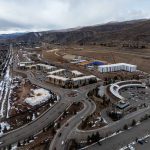
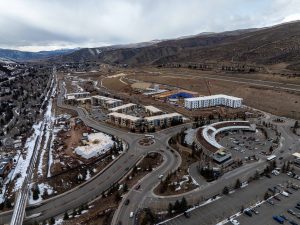
Other factors in Vail’s vibrancy navel gazing include a big influx of year-round residents back into Vail, where the population peaked at 5,305 people in 2010 and has since declined by nearly 1,000 people to an estimated 4,446 in 2026 due to a lack of local’s housing. Through subsidies and nearly a quarter of billion dollars in taxpayer funding of three massive housing projects, Vail is on track to bring those 1,000 people back into town.
“If I’m an entrepreneur and I see all these new bodies that are going to probably be younger in their demographic living here in Vail, there should be a business opportunity with that,” Forrest said. “And we have the need to also make sure we’re serving this part of our community, but we still have got to find space that is attainable for entrepreneurs that can do food and beverage.
“So again, what’s in the toolkit? We can do what we’ve done with no net loss,” Forrest added in reference to last summer’s emergency ordinances aimed at preventing the loss of food and beverage space to retail. “We can play landlord. We can plan for the future. We can create incentives. The question there is, how do you make that fair and equitable? And is it enough?”
With rents topping $200 a square foot, Forrest says, a business that’s managed to survive on $100-a-square-foot rent may not really benefit from a subsidy of $25 a square foot. Whatever the solution, Forrest says ski towns from Aspen to Steamboat and beyond are all grappling with the same issue, and it was the talk of the recent Colorado Association of Ski Towns meeting.
Another factor in Vail’s vibe visioning is the need for modernized land-use codes in a new era of big-government development of housing and entertainment infrastructure such as the Dobson Ice Arena renovation. With more than $400 million in taxpayer dollars being pumped into housing and an entertainment venue, Vail is betting big on itself while still trying to figure out its future.
“A developer, to put together a big project, whether it’s something happening on Bridge Street or something happening in a larger space, it’s a huge capital investment to even get your plan approved,” Vail Mayor Barry Davis said. “So what happens is the opportunity for the weird gets cut out because of what it costs … you have to homogenize it to make it.”
Davis moved to Vail to snowboard, work in local restaurants, live seven guys to a five-bedroom condo and wound up getting his MBA, starting a couple local bars and becoming mayor. He knows vibe.
“That’s how you get what you get,” Davis said of regulatory hurdles and the cost of redevelopment. “In a way, I feel like the greatest gift we could give future councils, give our town, is give ourselves a more streamlined, understandable, simple code, with real definitions of what we think Vail’s DNA and our vibrancy standards are so that developers can leave room for uniquely, I want to say the weird, but like, leave room for uniquely Vail experiences.”
That would give the new residents something to celebrate and would also attract tourists who love the local’s vibe, Davis argues.
“Like, the type of housing you build sets the stage for the kind of community you’re going to have,” Davis said. “So we need to think about this as we create community. We need to think about this as we create land-use code to inspire Vail to stay Vail. We need to set these stages that continue to attract and become a home for independent thinkers. Like, this is still the best place on the planet to live, even in a snow year like this. Like, it’s wonderful up there.”
Jim Telling of East West Partners, the developer of the proposed West Lionshead project once known as Ever Vail when Vail Resorts was still in the development business (VR and the town are both partners on West Lionshead), also has local residents in mind as much as high-end homebuyers. He understands the commercial mix must cater to those 1,000 souls moving in across the highway and just a quick walk via the $26 million Simba Run Underpass away.
“We’re going to be really trying to delve into that in greater detail here in the next year, if you will, as to what is the right mix of tenants, retail tenants, food and beverage, exciting places, really, because … it’s not only the new residences Vail’s doing, but our goal is to do our housing requirement onsite in West Lionshead as well,” said Telling, whose project has gone quiet of late as it works with CDOT on the realignment of the South Frontage Road.
“We’re going to have people living there full-time, and that obviously is a little bit different than a second homeowner,” Telling added. “And we want to have some places that people can hang out and enjoy. That’s an appeal to second homeowners to be able to rub elbows with locals, right? I moved up here in ’82, and I’ve seen a lot of change. But yeah, it’s neat to see Vail come back, because Edwards kind of stole the downtown, if you will, for a period of time. So it’s nice that there’ll be people returning back up-valley into Vail to energize the various villages and the town itself. It’ll be exciting to continue to work on that over the next couple of years.”
NEXT: The Businesses: What makes a bar, restaurant, club or retail store a “local’s business,” and who should get a local’s discount or some sort of government incentive to serve locals?
Where the locals go: Town of Vail searches its soul for vibrancy DNA in renovation boom
As Vail Town Manager Russ Forrest settles in front of his desk in his Vail Municipal Building office on a recent weekday as a rare-for-this-winter snow squall spits fat flakes past his windows, he wonders out loud what the town can do to maintain its vibe in the face of a redevelopment push that’s changing the look and feel of Vail’s famed, faux-European, Tyrolean charm.