Wildfire management top of mind for western governors in meeting with US Forest Service chief
Agency’s top official fields questions on funding, NEPA and forest thinning as fires burn across the West

Robert Tann Follow
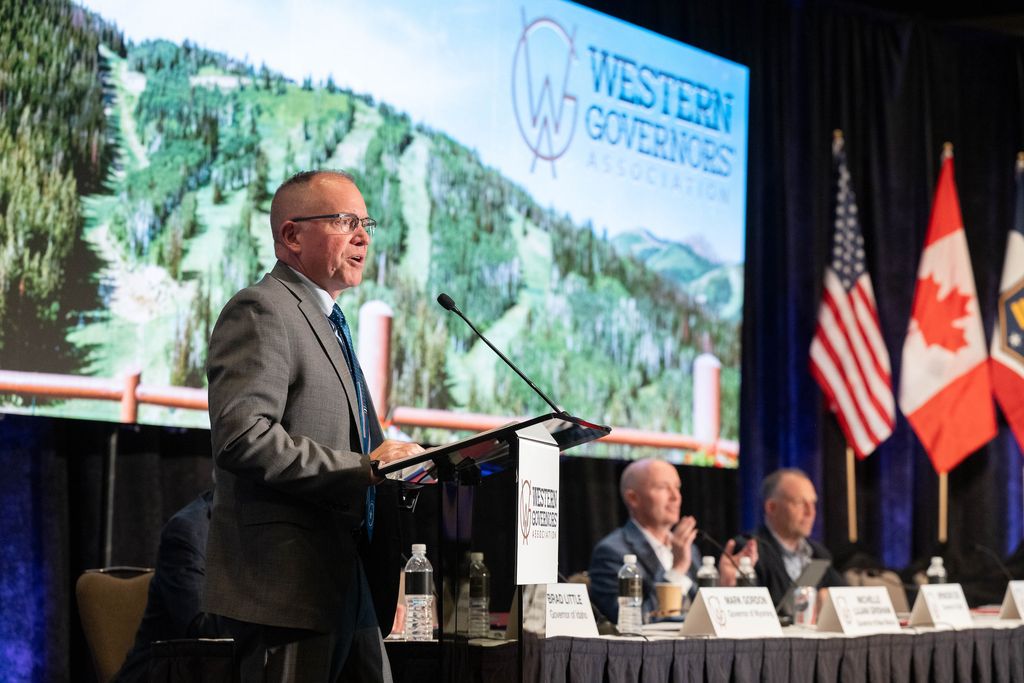
Western Governors’ Association/Courtesy photo
As wildfires rage across the West, governors are asking the U.S. Forest Service how state and federal agencies can better partner on management and prevention.
The question hung over a panel discussion during a June 30 meeting of the Western Governors’ Association in Deer Valley, where six Western state governors, along with state and federal public lands officials, discussed the need for shared land management strategies.
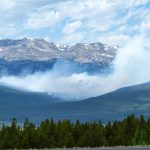
Major wildfires are currently burning across several Western states, including five in Colorado, that have collectively scorched more than 193,000 acres as of Thursday.
“We all know wildfires don’t know the difference between federal, state, private and tribal lands, so we need a management strategy that really reflects that,” said Dan Gibbs, executive director of the Colorado Department of Natural Resources. “Given the checkerboard landscape, especially throughout the West, removing jurisdictional silos through shared stewardship is really the only way that we can achieve this.”
Approximately one-third of Colorado’s land is owned by the federal government. In Utah and Nevada, the federal government owns roughly 64% and 85% of the land, respectively. State leaders say it makes collaboration with the federal government imperative to wildfire prevention and control.

Support Local Journalism
Utah Gov. Spencer Cox, a Republican, asked U.S. Forest Service Chief Tom Schultz, a former timber industry executive, how the federal government can better support forest thinning projects. Cox said that the National Environmental Policy Act, or NEPA, has at times slowed projects due to required environmental reviews.
“We all have millions of acres that we know need to be treated to prevent some of these catastrophic wildfires,” Cox said. “How do you feel about the progress we’re making there?”
The Trump administration has overhauled NEPA through a series of administrative and legislative changes, including reducing review timelines and shortening public comment windows. Administration officials have framed the changes as a way to make government processes more efficient, though environmental groups say the administration has weakened the bedrock federal law meant to safeguard the environment.
Schultz defended the changes to NEPA, saying, “Is NEPA an impediment? You know, I would say it can be, but we’ve made some NEPA reforms. I’m not worried about NEPA stopping thinning projects.”
He added, “What I wanna make sure the audience understands is we are not reducing environmental standards in the work that we’re doing … I’m much more concerned about the threat of catastrophic wildfire than any treatments that we put on the landscape, but we need to do a lot more.”
New Mexico Gov. Michelle Lujan Grisham, a Democrat, asked Schultz whether the Forest Service had the resources it needed for wildfire mitigation.
“I know you can’t lobby for a budget that the White House isn’t interested in — or your boss,” Lujan Grisham said in reference to President Donald Trump, whose administration has sought to reduce the agency’s funding and staff and is implementing a major restructuring that includes closing regional offices and relocating the Forest Service’s headquarters from Washington to Salt Lake City.
The Forest Service lost nearly 6,000 jobs in 2025, though Schultz said the agency now has more firefighters staffed this year than last, with almost 11,800 hired — 500 more than its hiring goal of 11,300. Schultz credits that, in part, to pay increases for federal wildland firefighters passed last year by Congress as part of a bipartisan legislative package.
But he also acknowledged the agency’s budget for fuel reduction projects, including prescribed burns, has been flat at about $130 million this year, and that the Forest Service lost some funding from legislation like the Inflation Reduction Act, a sprawling climate bill passed under former President Joe Biden that has seen significant rollbacks from congressional Republicans.
Schultz said it’s an opportunity for other entities, such as states and nonprofits, to help fill the void.
“We’ve got a lot of folks that have done a lot of fuel work on our behalf, including states that have done some of this work,” he said. “… Our funding is flat for our base funding. It’s not decreased. It’s not increased. It’s about where it’s been. But the issue of fuels needs ongoing discussion and dialogue about the role of states, partners and what are (the) realistic numbers?”
Lujan Grisham said the agency’s flat budget makes her “very nervous” amid an exponential increase in wildfire risk.
“Certainly, we’ve been talking about leveraging state resources, but those aren’t going to be enough either to deal with the onslaught of fires over the next decade,” she said. “It’s something I think that Western governors and you all ought to really be thinking about because there’s just no way that we can rely on the current system to meet the demand.”