Curious Nature: Where recycling goes
Curious Nature
Courtesy photo
Inside of a blue bin may be the last place you see that aluminum can you bought at an AvonLive! event, or during a trip with friends to Vail Craft Beer Classic. However, the blue bin doesn’t mark the end of that can’s life. Here in Eagle County (EC), many use curbside recycling services. There are two types of recycling offered: single and dual stream. If you separate your paper and cardboard from everything else, that is known as dual stream. If you throw all of your recyclables into the same bin, that is single stream. All single stream recycling is taken to Denver to be sorted. Any individuals and businesses who have more recycling than their bins can hold or do not have access to curbside, are able to drop their recycling off at any one of the 6 dual stream recycle drop sites This simply means all paper and cardboard products are separated from other commingled items, such as glass, plastics, and metal. The drop sites can be found at these six locations:
- Vail – West of the Community Development Building at 75 South Frontage Road
- Red Cliff – Red Cliff Community Center, 400 Pine Street
- Avon – Town of Avon Public Works, 375 Yoder Ave (just past Home Depot)
- Edwards – 450 Miller Ranch Rd Edwards, CO 81632 (West side of the Mountain Rec Field House)
- Eagle – 1050 Chambers Avenue at the Town of Eagle Public Works Facility
- Gypsum – Northwest corner of Ridley’s Market parking lot
Once recycling is picked up from any of these sites, it’s taken to the Materials Recovery Facility (MRF). This point in the journey of that recycled can is where most confusion lies.
A lot of misinformation circles online spaces where users claim that none of what gets put in a recycle bin is actually ever recycled. In EC, there are whispers of recycle trucks dumping loads of recycled materials into the landfill instead of actually recycling it. It’s first important to note that the MRF is located directly next to the landfill, which may lead to some of that confusion. The MRF is located in Wolcott, off a winding road surrounded by hills that keep the smell from escaping. The name, MRF, is representative of what actually goes on in this facility, which is not the active recycling of disposed materials, rather the main purpose of the MRF is to sort.
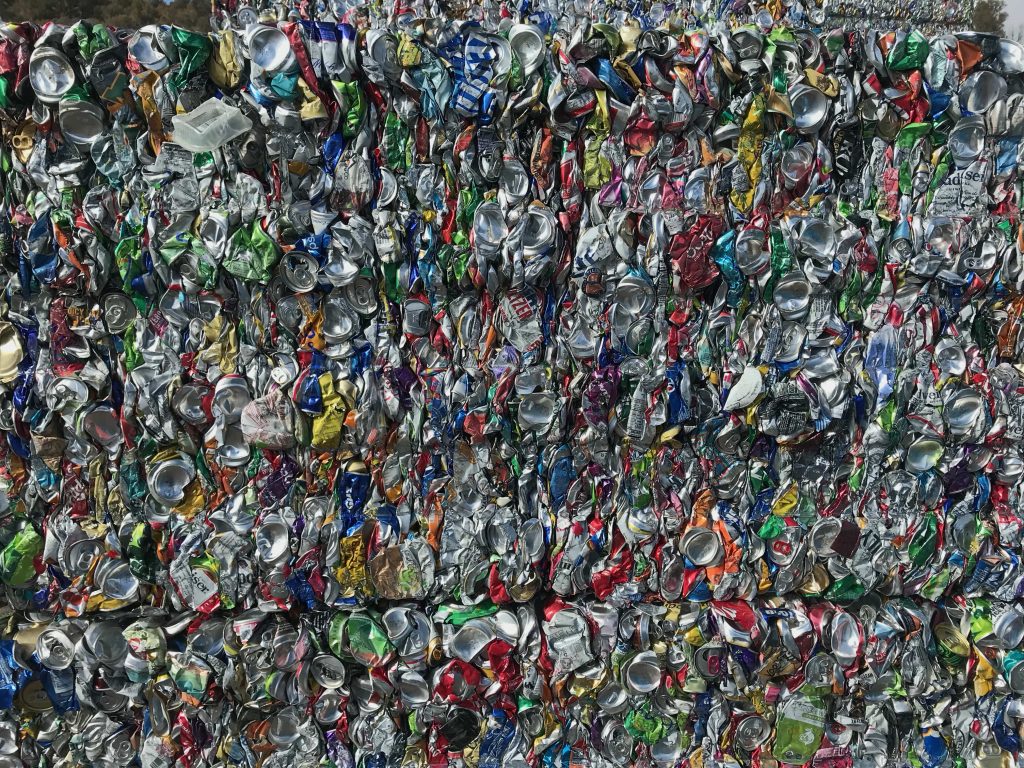
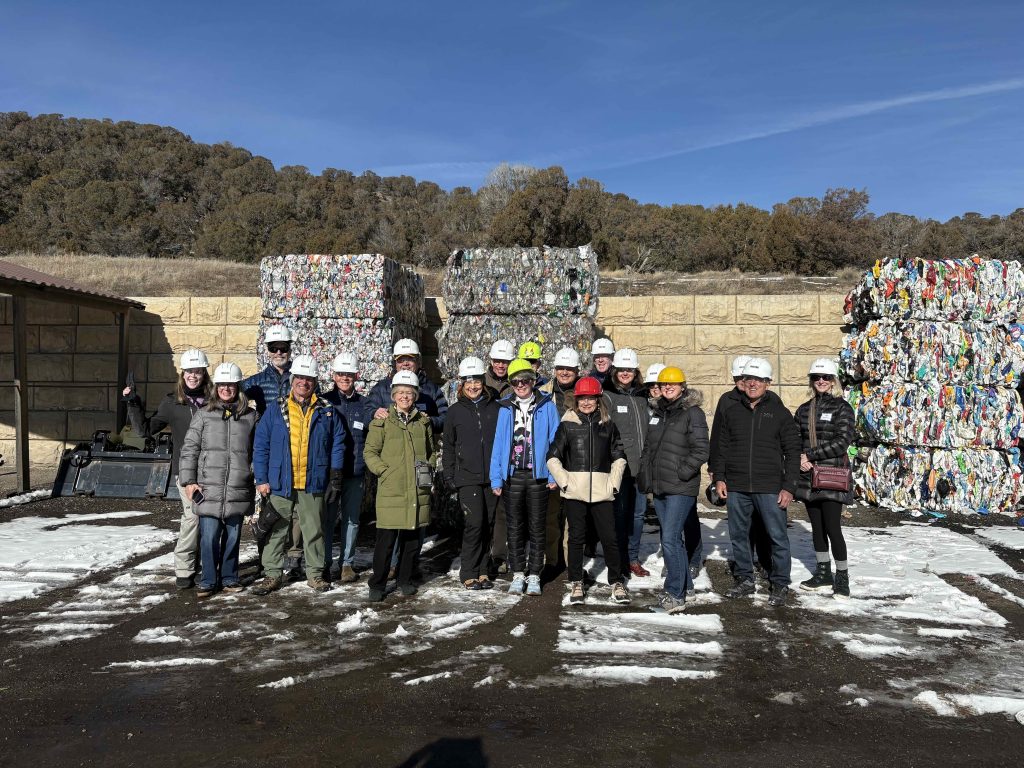
Sorting recycled materials is critical in the process of preparing them to be shipped off and turned into new products by their buyer. The MRF plays an essential role in ensuring everything put into those blue bins is actually recycled. The equipment, technology, and workforce the MRF depends on to do this sorting and preparation work is impressive. There are multiple levels of machinery which sort all of the commingle recycling that comes from the dual stream bins. First, large magnets are used to sort out tin. The MRF uses an optical density sorter which shoots streams of air to separate different types of plastics and aluminum cans from one another. The strength of the airstream depends on the weight and density of the recycled goods. At the end of the line people stand at the conveyor belt to hand sort any remaining recyclables and to ensure everything is going to the right place. After all of this sorting, huge monolithic bales are made of aluminum cans, cardboard, and plastics. These bales are then sold nation-wide to manufacturers who will recycle the materials.
Having an end market for recycled goods is critical in keeping those materials out of the landfill and in the production cycle. Some recycled goods are more valuable than others. For example, natural colored High-Density Polyethylene (milky white, very durable plastic) is the most valuable bale at the EC facility, selling for an average of $1,325 per bale, with an average bale weighing 1,640 pounds. At approximately $96.24 per bale, paper is the least valuable bale, weighing around 1,635 pounds. After selling, most of these bales travel hundreds of miles to be repurposed. Of the materials recycled at the EC facility, office paper goes to Utah, #1 plastics go to Georgia, aluminum goes to Kentucky, tin and steel go to Illinois, cardboard goes to Oklahoma, and #2 plastics go to Minnesota. While most of these bales travel far to reach their markets, the nearest recycled goods market is right here in Colorado! In Golden and Fort Collins, Coors and New Belgium purchase glass, recycling it to distribute their nationally popular beers.

Support Local Journalism
While recycling can seem like a complicated process and is often difficult to understand, what’s important to remember is that the ultimate goal is to repurpose useful and redeemable material. Otherwise, once something is in the landfill it’s there to stay. If you’re interested in learning more, you can join a Walking Mountains Free Community Recycling Tour, the next tour being March 24, 2026. When possible, we should try to divert goods that can still be valuable to us from ending up in the landfill. This can be done by continuing to use the items you already own, fixing or mending anything broken, repurposing items, and finally, recycling when something is no longer of use. This reduces the energy, water, and natural resources required in the process of extracting, refining, and producing new goods. So, next time you toss a bottle of Coors in the recycle bin, remember it isn’t the last time your county will see that glass.