Salomone: Midges, mayflies and more for early spring conditions

Michael Salomone Follow
Michael Salomone/Courtesy photo
Food sources have been routine for trout. Midges have been the staple for months. Fish have been feeding on the mini bits of sustenance in an eat, eat, eat mode just to survive the cold, lean months.
The early spring brother of the midge is the Blue Wing Olive. The first mayflies of the year begin to present an alternative food source to the saturation of winter midges. BWOs tempt the feeding patterns of trout with a new food option. The prevalence of BWO nymphs in the watershed is gaining importance. The nymphs are growing in numbers and increasing activity as the water temperatures creep upward.
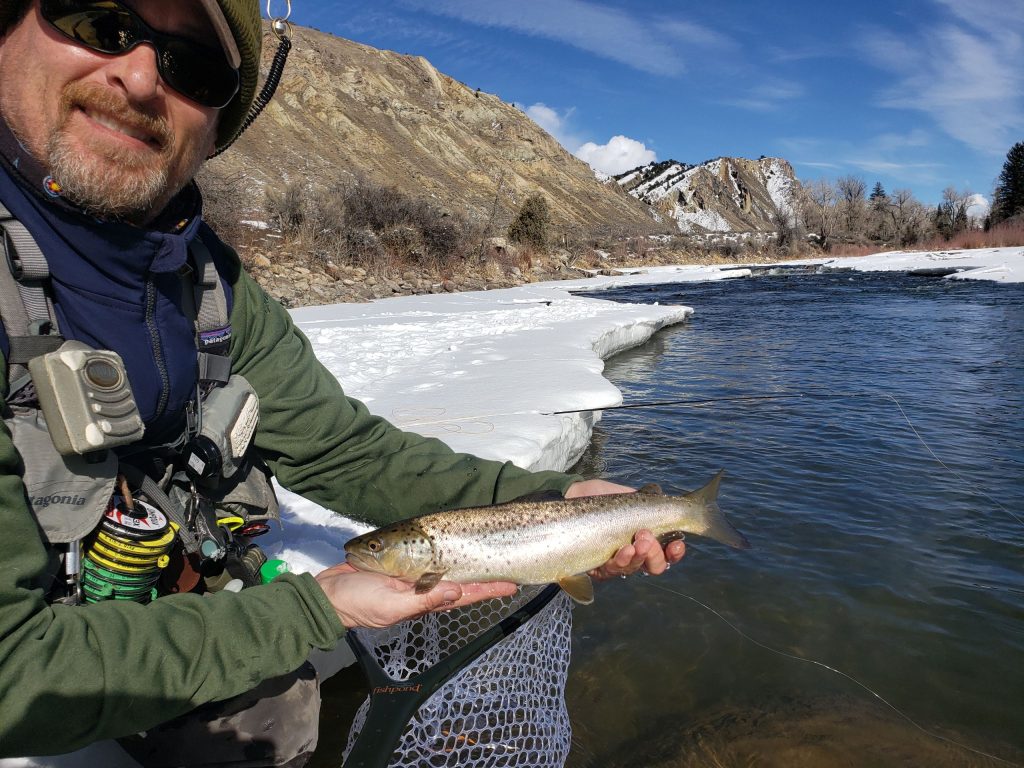
It is still a nymphing game for the most part. Aquatic insects are becoming increasingly more active in the river. The action is amplified by numbers. Spring is coming and so is the hoard of insects that follow. But for now we are experiencing early spring conditions. The calendar tells a different tale with winter still in the photos but the river is what you need to read. Observation is key.
River ice is breaking open rapidly. More access, increased water temperatures and elevated aquatic insect activity give trout the chance to feed vigorously. Trout are willing to eat so give them the correct flies in the right places to achieve success.
Don’t put away your midge offerings just yet. Even in the midst of summer hatches a midge imitation is going to catch fish. The conditioning trout have endured throughout the winter months has fish looking for the familiar. Most trout are comfortable feeding on the monotony of midges.

Support Local Journalism
The beadhead Zebra midge is a necessity in any fly box. The miniscule flies take up very little space in your lineup but carry the confidence to achieve success all year long. Simple red, green and black are good choices to fish softly and quietly along the river bottom. Glitzed up varieties with sparkle and flash work well up in the water column when the midges are actively hatching and moving towards the surface.
A good midge emerger like the Top Secret uses a foam back for lift and visibility. Contrast imitates movement and signals the vulnerable transition phase. With the warmth of the day the midges will get active. Fish a midge emerger when activity occurs.
On the Eagle River, a red Copper John is going to move early season fish. There are lots of colors for Copper Johns. Red is the color you want for the Eagle. Small stoneflies are becoming increasingly active in the river rocks and get knocked loose in riffle water. Dredging a red Copper John in tandem with a zebra midge downstream of riffle water will produce fish.
The Juju baetis is a sleek little fly. The small imitation can pass for emerging midges but works wonders when the Blue Wing Olives begin to hatch. Fish the Juju down deep and up into the water column as the hatch progresses with an easy, slick presentation.
The soft hackle pheasant tail creates a bold silhouette, is action driven and best fished mid column to just subsurface.
An RS2 can be fished subtle or loud depending on your presentation. Fish it everywhere, deep, midwater or right up top.
While I am always looking for a chance for dry flies, a simple parachute Adams in size 18-20 covers the dry fly needs.
Fish are hungry. A Pat’s rubberlegs stonefly nymph produces the shock and awe to tempt hungry trout. Not your largest Pat’s but something substantial.
A vast amount of BWO nymph imitations born from dark, winter, fly tying desks are going to work for those that spin their own arsenal. Names and variations abound and now is the time to test them out. Stick with olive as your color and it can come in different tones from light and bright green to deep, dark greens. The key is to have some form of contrasting back like a split case, bubble or flash that imitates the struggling movement exhibited during transition.
A midge nymph in various forms covers the spring midge activity. Blue Wing Olive nymphs, whether store bought or twisted up in your own vice, fish well with a smooth subtle action or with active movement during the hatch. And stoneflies begin to fill the winter void. A variety of aquatic insects are on the move. But make no mistake, midges and mini-mayflies drive the feeding patterns of trout in early spring.
Michael Salomone has lived in the Eagle River valley since 1992. He started his professional guiding career in 2002 and currently guides for Vail Valley Anglers. He lives on the bank of the Eagle River with his wife, Lori, his youngest daughter, Ella and a yellow Labrador named Poppy. His published writing has appeared in Southwest Fly Fishing, Fly Rod & Reel, Eastern Fly Fishing, On the Fly, FlyLords, the Pointing Dog Journal, Upland Almanac, TROUT, American Fly Fishing, USA Today Hunt & Fish and Fly Fisherman magazines.