Eagle County commissioners: ‘Big, beautiful bill’ may greatly impact Eagle County
Valley Voices
Courtesy photo
We write this column to prepare our community for what may come to pass this summer in Washington D.C.: A historic elimination of federal support for many of our longstanding local health, environment, and human service programs; severe cutbacks to Medicaid; and a provision to sell off public lands that includes vast areas of public land in Eagle County.
As of now, the One Big Beautiful Bill Act is going through the slow-motion ping-pong process of moving from the U.S. House of Representatives to the U.S. Senate and back again. The legislation, which is packed with many of President Donald Trump’s policy objectives and campaign promises, has undergone several changes, but the overall picture is becoming clear.
The bill has grave and immediate impacts on Eagle County.
Our focus in this column is on the most consequential effects of the One Big Beautiful Bill Act.
Large-scale sale of public lands
Sen. Mike Lee of Utah introduced a provision into the bill to promptly sell more than 2 million acres of public land, and to make an additional 250 million acres eligible for later sale. These lands, taken together, represent vast swaths of Eagle County, including tracts that are parts of our local ski areas and along the banks of the Colorado River.

Support Local Journalism
This is unacceptable and a betrayal of the public trust. We have more to say on this issue. Please join us for a public hearing on July 1 at 1:30 p.m. at the Eagle County Building, where we will discuss and vote on a resolution on the matter.
Medicaid cuts
Congress has not yet figured out how to repair our broken health care system. Until it does, Medicaid remains indispensable to maintain a healthy workforce, to keep our federally qualified health centers (like Mountain Family Health Centers) open, and to protect against increased health system costs for untreated health issues.
Among many startling data points to choose from, here’s one example: In Eagle County, 12.82% of the population is enrolled in Medicaid (7,144 individuals). We estimate up to 780 people in Eagle County could lose coverage.
Supplemental Nutrition Assistance Program cuts
SNAP funding is under scrutiny, and the costs of the program may be negatively affected. Counties effectively administer SNAP benefits in Colorado, and federal financial support of this program to cover the benefits is a cornerstone of our system to keep American families and children ready to work and learn.
SNAP helps to feed approximately 5,800 individuals in Eagle County.
How federal funding cuts impact us all
We understand that some of our family, friends, and neighbors support the administration that is backing this bill. However, we also believe that everyone who takes the time to understand this bill’s negative impacts in our county, and yet still supports the bill itself, will be very small.
Let’s take a closer look at why:
Along with our strong response against the sale of public lands, we also write to prepare the community for what may become a very difficult environment for those who rely on some key health, medical, and social services.
These services are provided behind the scenes because they are private matters. Most people don’t mention if they are on SNAP, or provide the details of their bank-breaking medical issues, or explain how a county staffer helped them understand finances so they could hold onto their home. They don’t talk openly about the heroic help a social worker has given to protect their children or themselves from an abusive spouse.
So, perhaps these programs don’t serve you each day, but they almost certainly serve someone who, in turn, serves you each day.
These long-standing programs are a hidden and fundamental source of stability, a baseline anchor of our local economy.
Compounding these possible changes in D.C. is a state budget that had to be trimmed by $1.2 billion, primarily due to the steeply rising cost of Medicaid, but there are other reasons as well. Many argue that the state isn’t spending wisely. While this has pockets of credence, we believe the other major driver of our current deficit is that Colorado’s Taxpayer Bill of Rights makes tough times worse. As only one example, TABOR restricts our state’s ability to hold revenue in “good” years so that we can later adjust and respond to cost overruns in “bad” years. With insufficient help from Washington on Medicaid, our state is left holding the bag.
Counties, as de facto branches of the state, get to join in the pain. We are still gathering information to determine how state funding gaps will impact Eagle County government operations.
Rest assured, we remain optimistic. A big reason for that is that we are surrounded by a community that understands the need to take care of one another, to partner to solve tough problems, to plan carefully, to make pragmatic choices, and to do what’s best for the greater good.
We welcome your input and hope you are using your voices to express concerns to your elected officials. We are closely following state and federal actions and are already anticipating what comes next if the One Big Beautiful Bill Act is passed. Let’s hope by the time you read this, that its most confounding components have already been heavily amended or entirely eliminated.
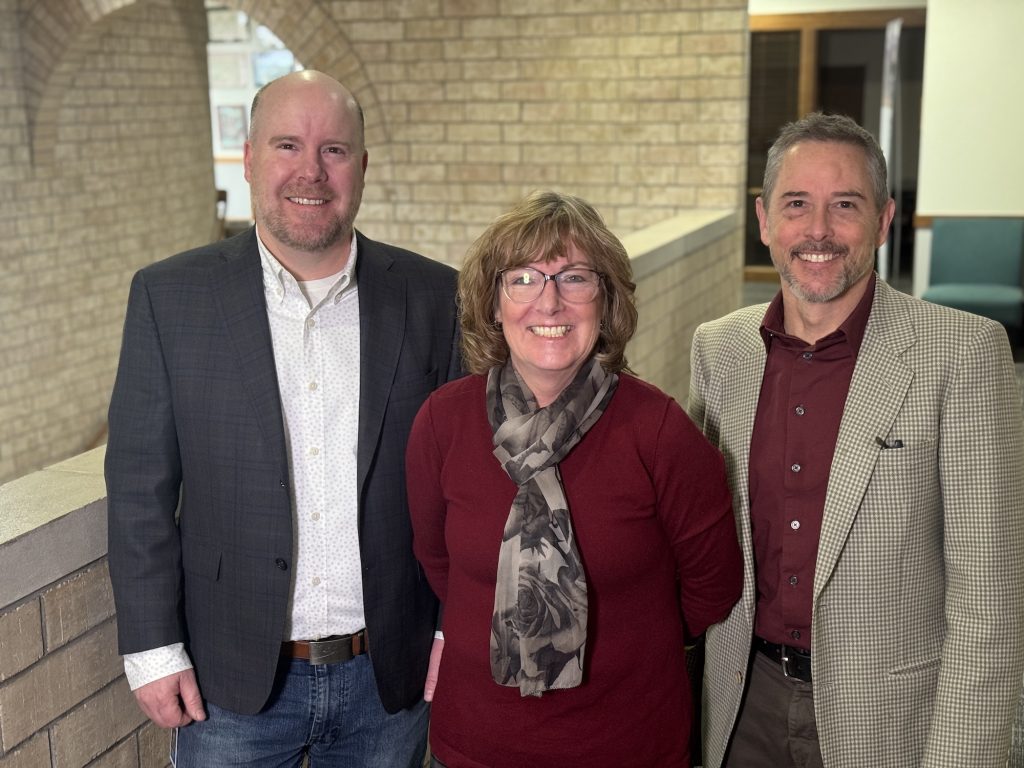
Jeanne McQueeney, Tom Boyd and Matt Scherr serve on the Eagle County Board of Commissioners.