Salomone: Multi-species on the fly

Michael Salomone Follow
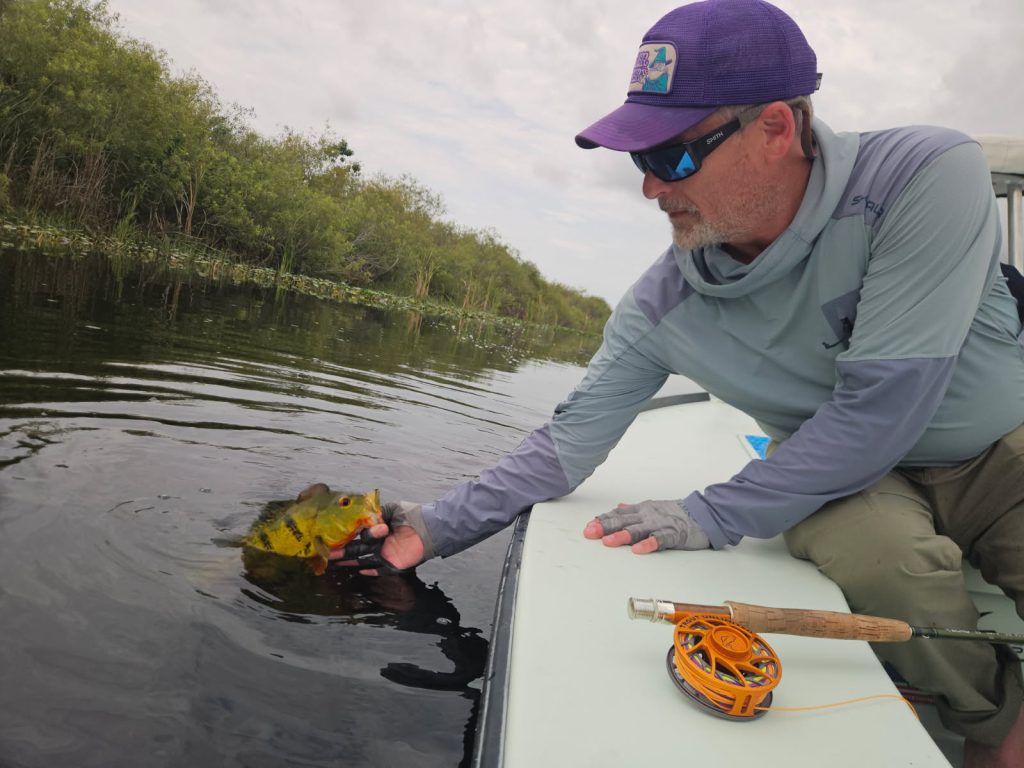
Michael Salomone/Courtesy photo
Nowhere is the old adage about “variety being the spice of life” more accurate than when fly-fishing in South Florida.
The region’s unique proximity to both freshwater and saltwater puts anglers in the best place to fish a wide variety of species willing and ready to engulf a fly. The ocean holds its own myriad offerings and the Everglades possess an ever-growing number of fish — fueled in part by the uncontrollable rise in invasive species. For a fly-fisher who wants to land as many species as they can in one day, an outing in the Everglades is hard to beat.
Native species provide a familiar list of targets, particularly the largemouth bass — a fish beloved across the entire United States. Resilience has led to largemouth bass being stocked everywhere, but Florida is their home. They are a classic target that smashes topwater flies.
Bluegill is a generic term for any panfish in the sunfish family. Brim, pumpkinseed, yellowbellies, longear, bronzenose, shellcracker, sunnies, stumpknocker, and spotted sunfish are just a sampling of names these fish are known across different regions of the U.S.
The invasive species list is constantly evolving. The sub-tropical nature of the Everglades makes the habitat ideal for foreign species to take hold and flourish. Most have been introduced unknowingly to the Florida Wildlife Commission. Only the peacock bass was purposely introduced, and that to help control the exploding population of foreign invaders.

Support Local Journalism
Peacock bass are voracious feeders and target the many invasive species currently reproducing at an uncontrollable rate. But peacock bass have a certain limiting factor or failsafe aspect that prevents the fish from infiltrating waterways to the north. When water temperature drops below 68 degrees, the fish begin to become lethargic. Below 65 degrees and these tropical fish die. As a result, the fish are controlled by a thermal niche.
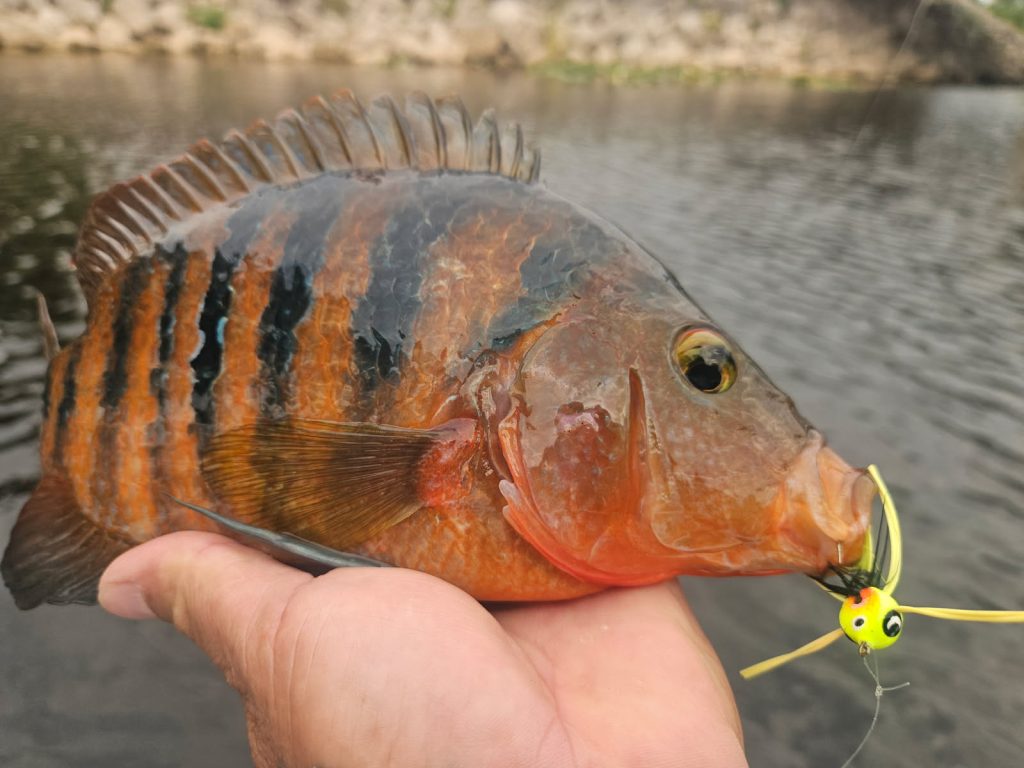
A massive amount of foreign species fall into the “panfish” category. These fish are smaller than peacock bass but still fun to fight and willing to eat a fly. A few targetable species would be Mayan cichlids, jaguar guapotes, oscars, midas cichlids and a variety of tilapia.
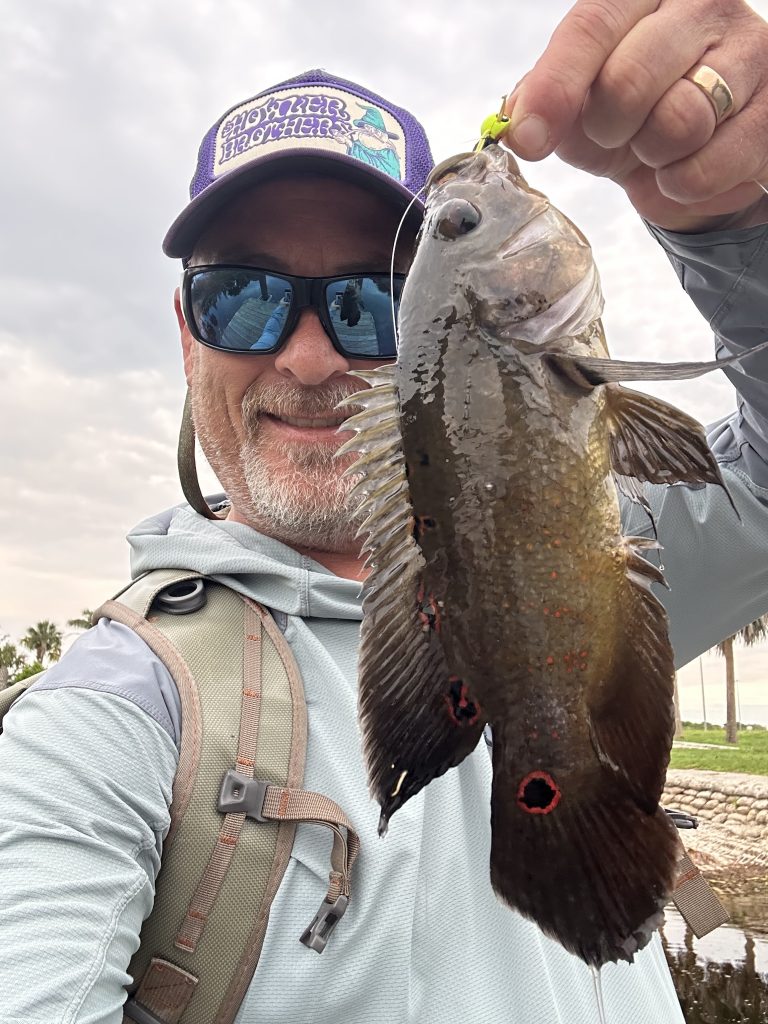
A new challenger on the scene is the snakehead. These fish are true dinosaurs, complete with a menacing face, aggressive attitude and a resilience no other species possess. Snakeheads can live a longtime out of the water. These fish can gulp air and “walk” on their pectoral fins like legs, moving across dry ground to access new areas when necessary. Certain areas of South Florida are holding some massive snakeheads. These are fish not in the couple of pounds demarcation but fish in the 10, 12 and 15-pound category.
All of these fish — native and non-native — inhabit the Everglades. An area of the Everglades named Alligator Alley has seen the likes of fly-fishing’s greatest anglers. Pioneers like Lefty Kreh and Flip Pallot explored the area and elevated the fly-fishing status in this large stretch of freshwater. Captain Justin Nguyen is my guide to the Alley and only guides fly-fishers.
Flies for the Everglades need to be resilient. Flies like cork, foam and deer hair poppers all produce effectively along Alligator Alley. Top-water flies provide an exciting and engaging approach to multiple species. It is hard to over use a popper when targeting fish like peacock bass. The louder and more splash the fly creates, the more productive the fly becomes. But on days when smash and flash don’t produce, an old school, round-headed popper called a Round Dinny is my go-to fly for topwater action.
Scale your topwater flies to focus on the species you intend to target. A small popper will work more effectively for anything in the panfish size and will entice larger fish like peacock bass and largemouth bass into eating.
Streamers work incredibly well in the Everglades. While the water is classified as freshwater, I prefer flies that have stout, saltwater hooks that can withstand brutal abuse and brackish conditions. Both weighted and unweighted streamers should be in your fly box. With massive amounts of invasive species and rapid reproductive rates, any small minnow fly that imitates a juvenile invasive species will produce consistent action.
Nine species on the fly in one day is my best catch for multiple species. With both native and non-native species thriving and willing to take a fly, the Everglades is a fly-fishers nirvana when it comes to variety.
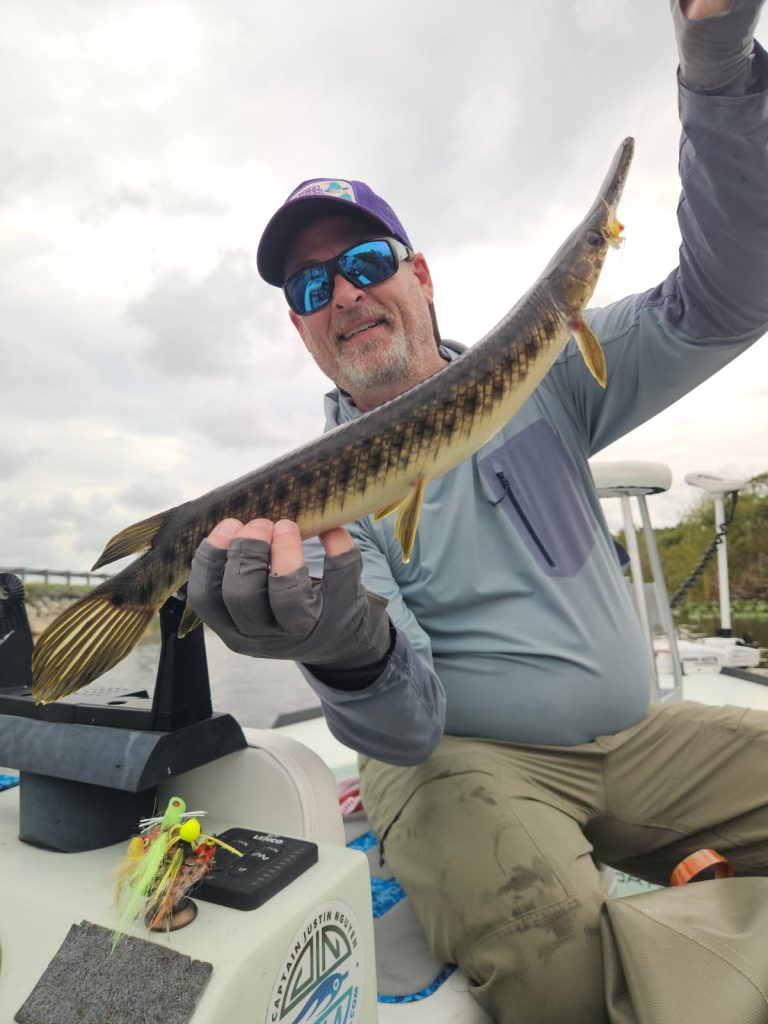
Michael Salomone has lived in the Eagle River valley since 1992. He started his professional guiding career in 2002 and currently guides for Vail Valley Anglers. He lives on the bank of the Eagle River with his wife, Lori and his youngest daughter, Ella. His published writing has appeared in Southwest Fly Fishing, Fly Rod & Reel, Eastern Fly Fishing, On the Fly, FlyLords, the Pointing Dog Journal, Upland Almanac, TROUT, American Fly Fishing, USA Today Hunt & Fish and Fly Fisherman magazines.